Discover what website performance optimization means for startups and how faster sites improve rankings, conversions, and user experience.
Website performance optimization is the process of improving how quickly and smoothly your website loads for every visitor. It directly affects search rankings, user experience, and how many visitors become paying customers.
Most startup founders invest heavily in ads and design without realizing their site speed is costing them conversions. When a page takes more than three seconds to load, people leave. Google knows this, which is why page speed has become a confirmed ranking factor.
Performance optimization covers everything from server response times to how images render on mobile screens. For startups competing against established brands, a fast website is one of the easiest advantages you can build early.
Why Does Website Performance Matter for Startups?
Slow websites cost real money. A one-second delay in load time can reduce conversions by up to 7%. Here is what performance optimization actually impacts:
• Search rankings improve because Google prioritizes faster websites.
• Bounce rates drop when pages load within two seconds or less.
• Conversion rates climb as visitors stay longer and engage with content.
• Mobile experience improves, which matters since over 60% of traffic comes from phones.
If your startup is investing in the SEO and AEO growth strategy, site speed optimization needs to be part of that foundation. Search engines and AI platforms both favor content that loads fast.
How Do You Optimize Website Performance?
You do not need to tackle everything at once. These are the areas that make the biggest difference:
• Compress and resize images before uploading them to your site.
• Enable browser caching so returning visitors load pages faster.
• Minify CSS, JavaScript, and HTML files to reduce unnecessary code.
• Use a content delivery network to serve files from servers near each visitor.
• Eliminate render-blocking resources that delay the initial page display.
• Implement lazy loading so media only loads when visitors scroll to it.
Getting this right from the start matters. If you are still building your site, check out this guide on the best website structure for B2B companies to lay your foundation correctly.
What Are Core Web Vitals and Why Should You Care?
Core Web Vitals are Google's metrics for measuring real user experience. They focus on three areas that directly influence rankings:
• Largest Contentful Paint measures how fast the main content becomes visible.
• First Input Delay tracks how quickly your site responds when someone clicks or taps.
• Cumulative Layout Shift measures unexpected page layout shifts during loading.
Check these metrics for free using Google PageSpeed Insights. Aim for an LCP under 2.5 seconds, FID below 100 milliseconds, and CLS under 0.1.
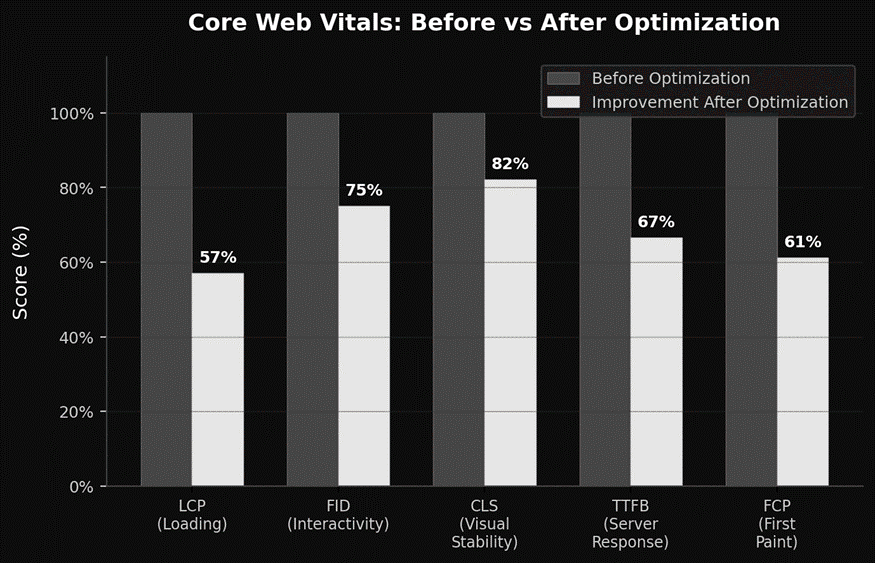
Startups that invest in professional website design and development from the beginning score significantly better on these metrics. Retrofitting a slow site is always harder than building it right the first time.
The Bottom Line
Website performance optimization is not optional anymore. It is a growth lever that touches everything from search rankings to revenue. Startups that prioritize speed early build a stronger digital foundation that compounds over time.
If your site is slow, you are losing visitors, leads, and credibility every day. Most performance fixes are straightforward once you know where to look.
Ready to build a faster website that ranks and converts?
Visit Viral-Impact and let us help your startup grow smarter from day one.