Learn what should be included in brand guidelines to help your startup build a strong and recognizable identity.
Brand guidelines should include your logo usage rules, color palette, typography, voice and tone, imagery style, and spacing standards. These elements work together to keep your brand consistent across every platform and touchpoint.
When a startup launches without brand guidelines, it usually ends up with a scattered identity. Your website says one thing, your social posts look different, and your emails feel like they come from a totally separate company. That inconsistency confuses potential customers and weakens trust before you even get a chance to pitch.
Brand guidelines solve this by giving everyone on your team a single reference point. Think of them as the rulebook for how your brand looks, sounds, and feels everywhere it shows up.
What Are the Core Elements of Brand Guidelines?
Strong brand guidelines cover both visual and verbal identity. Here is what every startup should include from day one:
• Logo Variations and Usage Rules. Define your primary logo, secondary marks, icon versions, and minimum size requirements. Specify clear space around the logo and show examples of incorrect usage.
• Color Palette. List your primary and secondary brand colors with exact hex codes, RGB values, and CMYK breakdowns. Include guidance on when to use each color.
• Typography. Choose primary and secondary fonts. Define heading sizes, body text styles, line spacing, and weight variations for both digital and print.
• Voice and Tone. Describe how your brand speaks. Is it casual and friendly, or formal and authoritative? Include examples of on-brand and off-brand copy so everyone stays aligned.
• Imagery and Photography Style. Set guidelines for image types, filters, illustration styles, and icon usage. This prevents random stock photos from diluting your identity.
• Spacing and Layout Rules. Define margins, padding, grid systems, and alignment principles so your designs stay clean and predictable.
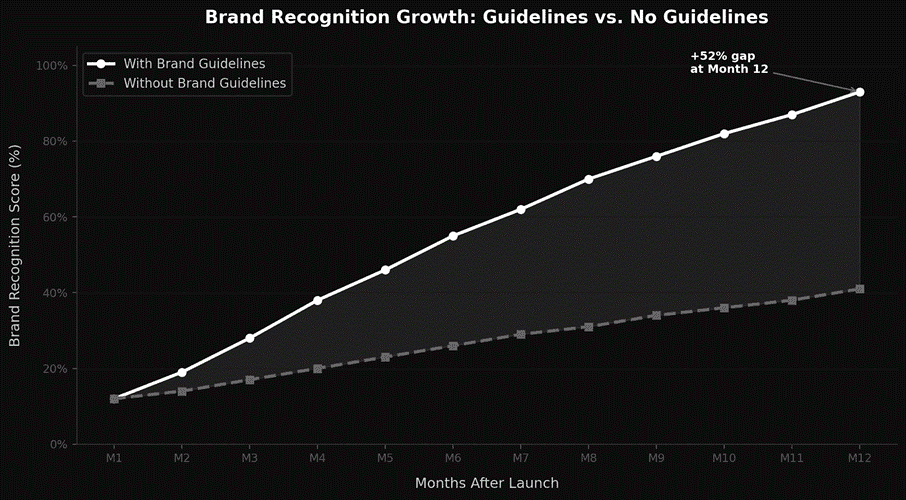
Startups that invest in professional brand identity development early see faster audience recognition and stronger trust signals from the start.
Element | What to Include | Why It Matters |
Logo Usage | Primary, secondary, icon marks, sizing, clear space | Prevents distortion and misuse across platforms |
Color Palette | Hex, RGB, and CMYK codes for primary and secondary colors | Ensures visual consistency in digital and print |
Typography | Font families, sizes, weights, and line spacing | Creates readable and recognizable text hierarchy |
Voice and Tone | Brand personality, writing examples, dos and don’ts | Keeps messaging aligned across all channels |
Imagery Style | Photo types, filters, illustration, and icon guidelines | Builds a cohesive visual story for the brand |
Layout Rules | Margins, grids, alignment, spacing standards | Maintains clean and professional design output |
Why Do Startups Need Brand Guidelines?
Brand consistency is not just a design preference. It directly affects revenue and customer trust. Research shows that consistent brand presentation across platforms can increase revenue by up to 23 percent. Yet most early-stage startups skip this step entirely.
Here is what happens when you do not have brand guidelines:
• Team members create off-brand content without realizing it.
• Freelancers and agencies interpret your brand differently each time.
• Customers struggle to recognize or remember your startup.
• Your marketing materials feel disconnected and unprofessional.
A well-designed website that reflects your brand guidelines creates a stronger first impression and keeps visitors engaged longer.
How Do You Create Effective Brand Guidelines?
Building your first set of brand guidelines does not need to be complicated. Follow these steps:
• Start with your mission and values. Your visual identity should reflect what your startup stands for. Write a short brand story that anchors every design decision.
• Audit your existing assets. Collect every logo file, color, font, and template your team has used. Identify inconsistencies and pick what works best.
• Document everything visually. Show examples, not just rules. Include side-by-side comparisons of correct and incorrect applications.
• Make it accessible. Store your guidelines where your team can easily find them. Update the document as your brand evolves.
• Train your team. Guidelines only work if people use them. Walk through the document with every new hire and partner.
Understanding why startups need a strong brand identity helps reinforce the real business impact behind these guidelines.
The Bottom Line
Brand guidelines are not a luxury reserved for large corporations. They are a practical tool that helps startups look professional, build recognition faster, and communicate with one clear voice. When every piece of content follows the same visual and verbal rules, your audience begins to trust your brand before they ever speak to your team.
If you are ready to build a brand that stands out and stays consistent, visit Viral-Impact and let our team help you create a growth-ready identity from day one.