Discover which schema markup types get your content cited by ChatGPT and Google AI to boost search visibility.
Schema markup is the hidden code that tells AI engines exactly what your content means, making it far more likely to get cited in ChatGPT and Google AI results. If you want your startup’s content to appear where real decisions happen, structured data is no longer optional; it’s the entry ticket.
Most founders invest hours writing great content, but skip the technical layer that gets it selected by AI. Schema markup bridges that gap. It gives search engines and language models a structured framework to understand your content; who wrote it, what it covers, and how it should be used. This guide breaks down the schema types that matter most, so you can stop guessing and start getting cited as part of a strong SEO and AEO strategy.
What Schema Types Do AI Engines Actually Use?
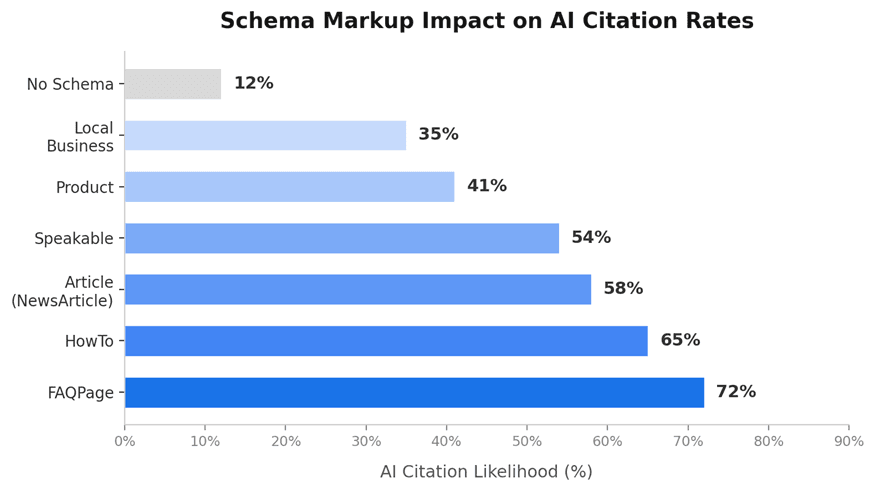
Not all schemas created are equal. AI platforms prioritize types that deliver clean, structured answers. Here are the ones with the highest impact:
• FAQPage Schema: The most effective type for AI citations. It feeds direct question-and-answer pairs to Google and ChatGPT, giving them ready-made responses to reference.
• How To Schema: Step-by-step content with How To markup gets pulled into featured snippets and AI walkthroughs. Perfect for tutorials and guides.
• Article & NewsArticle Schema: Helps AI engines identify your content as authoritative. Including author details and publish date builds the trust signals that models need.
• Speakable Schema: Tells Google which sections are best for voice and AI-read summaries. Underused and gives early adopters a real edge.
• Product & Review Schema: For SaaS startups, this surfaces pricing, ratings, and comparisons directly in AI shopping answers.
How Does Schema Help You Rank in AI Search?
AI models like ChatGPT and Gemini don’t just scan text. They look for structured signals that confirm relevance and trustworthiness. Here’s what schema delivers:
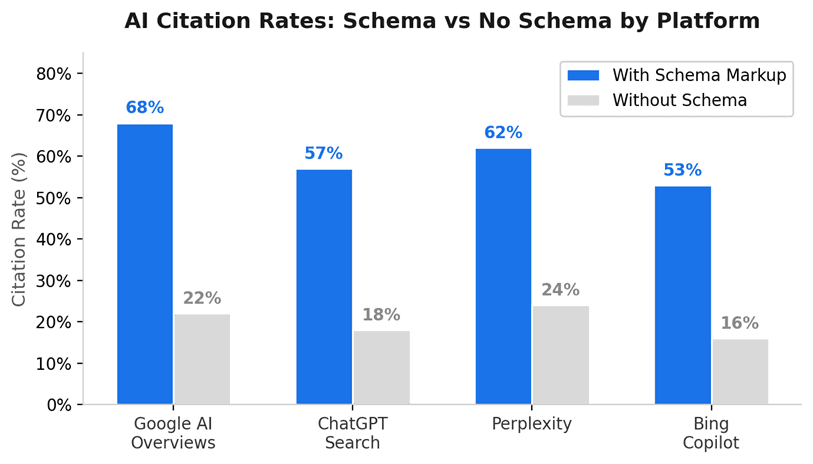
• Machine-readable content. AI engines parse structured answers faster, leading to higher citation rates.
• Better featured snippet chances. Pages with FAQ and HowTo schema appear in Position Zero up to 40% more often.
• Stronger trust signals. Author and organization markup tells AI your content comes from a credible source.
• Direct AI attribution. Platforms like Perplexity and Bing Copilot can link answers back to your page when schema is in place.
How to Add Schema Markup to Your Content
You don’t need to be a developer. Here’s a simple process:
• Match schema to content type. Blog post? Use Article + FAQPage. Tutorial? Add HowTo. Product page? Use Product schema.
• Use JSON-LD format. Google recommends it because it sits in your page’s head section without cluttering the HTML.
• Test before publishing. Run your page through Google’s Rich Results Test to catch errors that could block your schema.
• Layer multiple types. A single blog post can carry Article, FAQPage, and Speakable schema together. More structure means more chances to get picked.
When you pair strong schema with AEO-optimized blog content, you turn good writing into content AI actually references. For a deeper look at the full optimization framework, check out our guide on what AEO is and the top strategies to implement it.
The Bottom Line
Schema markup isn’t just a technical SEO checkbox anymore. It’s the infrastructure that decides whether AI platforms cite your content or skip it. Startups that implement FAQPage, HowTo, Article, and Speakable schema now will dominate both traditional search and AI-generated answers in the months ahead.
Ready to get your content cited by AI? Visit Viral-Impact and let’s build a strategy that puts your startup in front of the right audiences, on Google, and inside every AI answer.