Learn why AI search engines keep citing the same few websites and how citation velocity controls your visibility.
AI engines like ChatGPT and Perplexity don't randomly pick sources. They favor websites that are frequently and consistently cited across the web. This pattern is driven by citation velocity, and it's quickly becoming the most important factor in whether your content gets picked up by AI or ignored.
If you've ever asked an AI tool a question and noticed the same websites showing up every time, you're not imagining things. It comes down to how often a source gets referenced across the web within a short window. For startups trying to build visibility, understanding this is essential.
What Is Citation Velocity, and Why Does It Matter?
Citation velocity measures how quickly a webpage earns new mentions, references, or backlinks. Think of it like momentum. A blog post that picks up 30 new references in a week sends a much stronger signal than one that earned 30 links over two years.
AI search engines use citation velocity as a quality filter. Here's what they look for:
Recency of mentions: Content that earns fresh citations signals relevance right now, not just historically.
Volume within a time frame: A sudden spike in backlinks or mentions tells AI models this source is worth surfacing.
Diversity of sources: Being cited by multiple independent domains carries more weight than repeated mentions from one place.
Consistency over time: Steady citation growth beats a one-time viral spike that disappears after a week.
This is why the same publications keep dominating AI answers. They have editorial calendars, PR machines, and guest contributors that keep their citation velocity high without even trying.
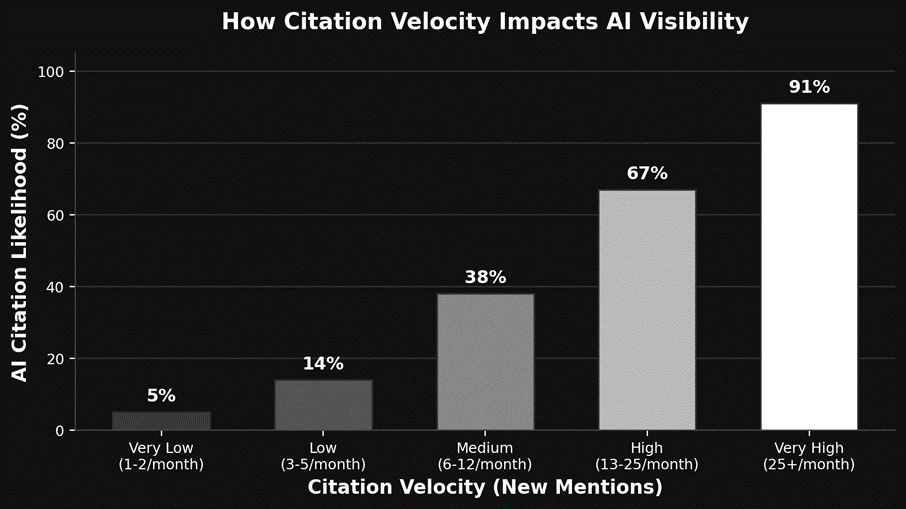
Why Do AI Engines Keep Choosing the Same Sources?
When AI tools generate real-time answers, they rely on retrieval systems that pull from indexed web content. These systems rank sources based on trust signals, and citation velocity is one of the strongest.
When your content has low citation velocity, AI tools tend to skip it. Here's the cycle that makes it worse:
• Your content doesn't get cited by AI → fewer people discover it → fewer websites link to it → citation velocity stays flat → AI keeps ignoring it.
Breaking this cycle takes a deliberate strategy. Most startups get stuck here; they publish great content but never build the surrounding ecosystem of mentions and references needed to trigger citation velocity.
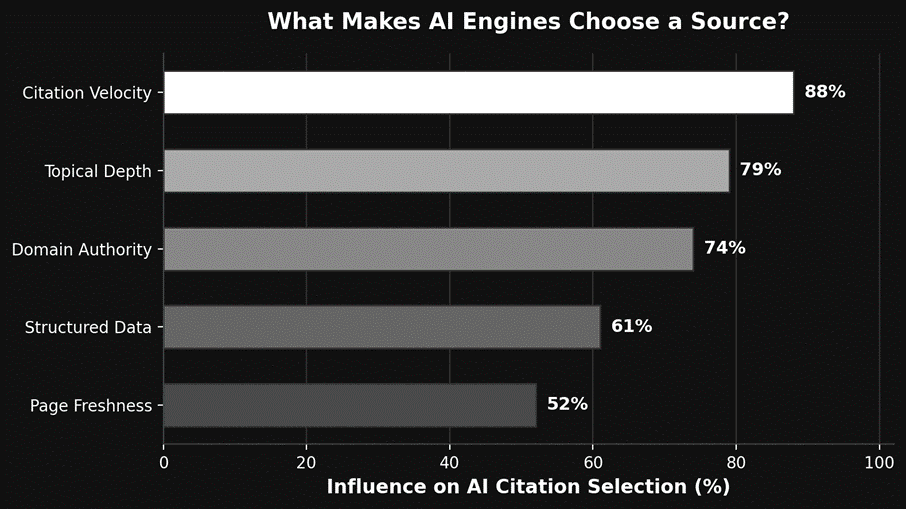
How Can Startups Build Citation Velocity From Scratch?
You don't need a massive budget to start building citation velocity. But you do need a plan. Here's what works:
Publish AEO-optimized content regularly. Structure your blog posts with clear question-answer formats so AI models can easily cite your content. A strong SEO and AEO strategy makes this much easier.
Use guest posts and PR strategically. Each guest post or press mention on a high-authority site adds a fresh citation signal. Distribute them consistently rather than all at once.
Create content worth referencing. Original data, unique frameworks, and detailed guides naturally earn mentions. Our guide on answer engine optimization strategies covers this in depth.
Update and republish existing content. Refreshing older posts with new stats or insights can reignite citation velocity without starting over.
Build a structured AEO blog content calendar. Consistent publishing signals ongoing authority to both Google and AI platforms.
The Bottom Line
AI search isn't a black box. The websites that keep getting cited share one thing: they maintain high citation velocity through consistent content, strategic link building, and structured optimization. Startups that move fast, publish with purpose, and build deliberate mention strategies can break into AI citations faster than most people think.
Ready to stop being invisible to AI and build a digital presence that gets cited?
Visit Viral-Impact to see how our team builds citation velocity for startups every single day.