Learn why your content doesn't appear in AI search results and discover proven strategies to fix it fast.
Most content doesn't show up in AI search because it lacks direct answers and structured formatting that AI models can easily extract. If your pages aren't optimized for how AI reads and processes information, you're invisible to tools like ChatGPT, Perplexity, and Google AI Overviews.
You've probably noticed something shifting. When people search for answers today, they don't always click through to a website. Instead, they get responses right inside AI-powered tools. And if your content isn't part of those answers, you're losing traffic you didn't even know existed.
So what's going wrong? Let's break it down.
What Makes AI Search Different from Traditional Search?
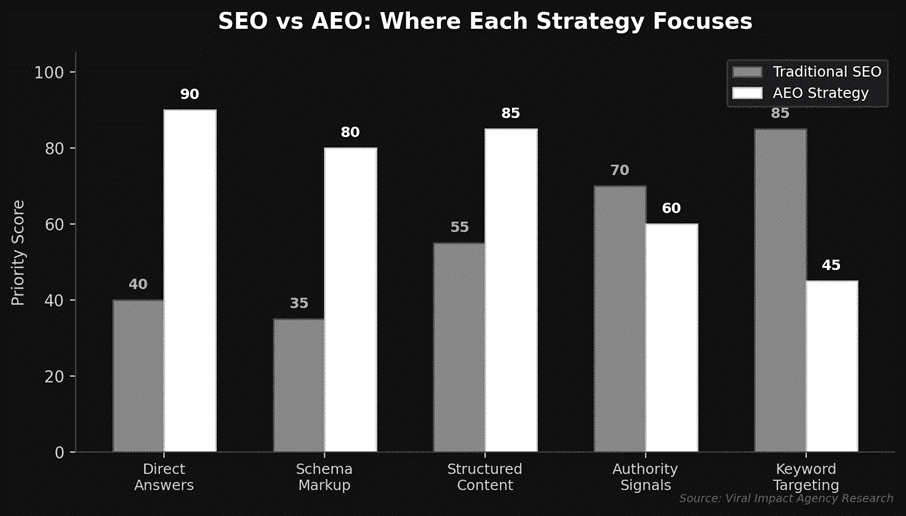
Google's algorithm ranks pages based on relevance, authority, and technical SEO. AI search engines work differently. They scan content, pull out the most useful answer, and present it directly, often without a click.
That means your content needs to do more than just rank. It needs to be quotable, well-structured, and easy for machines to understand.
Top Reasons Your Content Isn't Showing in AI Results
Here's what usually holds content back from being cited by AI platforms:
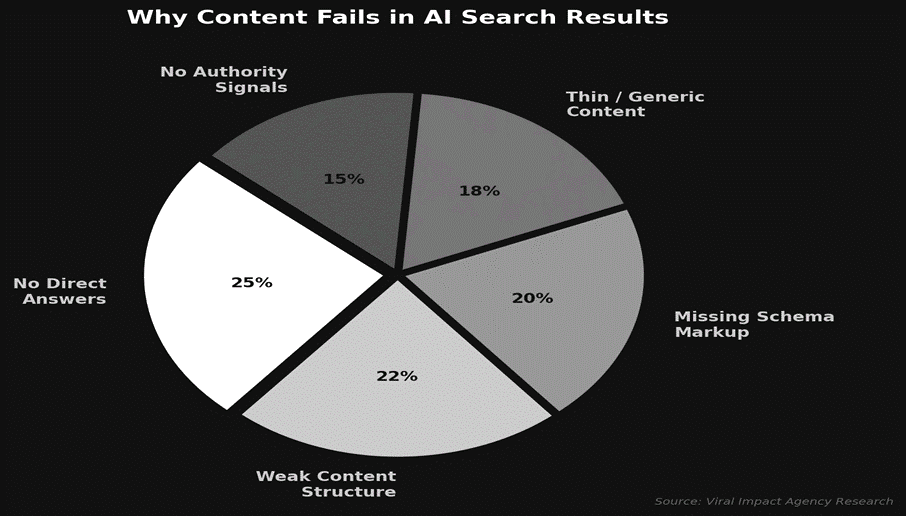
• No direct answers. AI tools look for content that answers questions clearly in the first few sentences. If your opening is vague, it gets skipped.
• Weak content structure. Without proper headings, bullet points, and logical flow, AI struggles to identify what your content is about.
• Missing schema markup. Structured data like FAQ schema and HowTo schema helps AI engines understand your content's purpose faster.
• Thin or generic content. AI favors depth. If your article doesn't offer original insights or detailed explanations, it won't get selected.
• No authority signals. Backlinks, brand mentions, and domain authority still matter. AI trusts content from recognized sources.
How to Fix It: Actionable Steps That Work
Getting cited in AI search isn't magic. It takes intentional optimization. Here's what to focus on:
Lead with a clear answer. Start every page or blog post with a bold, direct response to the main question. Write the snippet AI will quote.
Use question-based subheadings. Structure content around the questions your audience actually asks. This aligns with how AI processes queries.
Add structured data. Implement FAQ schema, article schema, and breadcrumb markup. A solid AEO blog writing approach makes this much easier to execute.
Go deeper than competitors. Cover subtopics, add real examples, and include data. AI tools cite content that is thorough and well-researched.
Build authority externally. Earn backlinks through guest posts and PR. A combined SEO and AEO strategy strengthens both your Google rankings and AI visibility at the same time.
What Happens When You Get It Right?
Brands that optimize for AI search see compounding results. Their content gets cited across multiple platforms, not just Google. They earn trust faster because AI recommendations carry serious weight with users. And they capture traffic that competitors don't even realize they're missing.
If you want to understand the full picture of how this works, this guide on what AEO is and the top strategies behind it covers everything you need to know.
The Bottom Line
AI search isn't replacing Google; it's running right alongside it. And the brands that adapt their content strategy now are going to own both channels. If your content still isn't showing up, the problem is almost always structure, depth, or authority. The good news? All three are completely fixable.
Ready to stop being invisible and start getting cited? Viral Impact helps startups and SaaS brands build content systems that work across every search platform, traditional and AI. Visit Viral-Impact and let's make your content impossible to ignore.