AEO vs SEO: What Every Startup Must Know in 2026
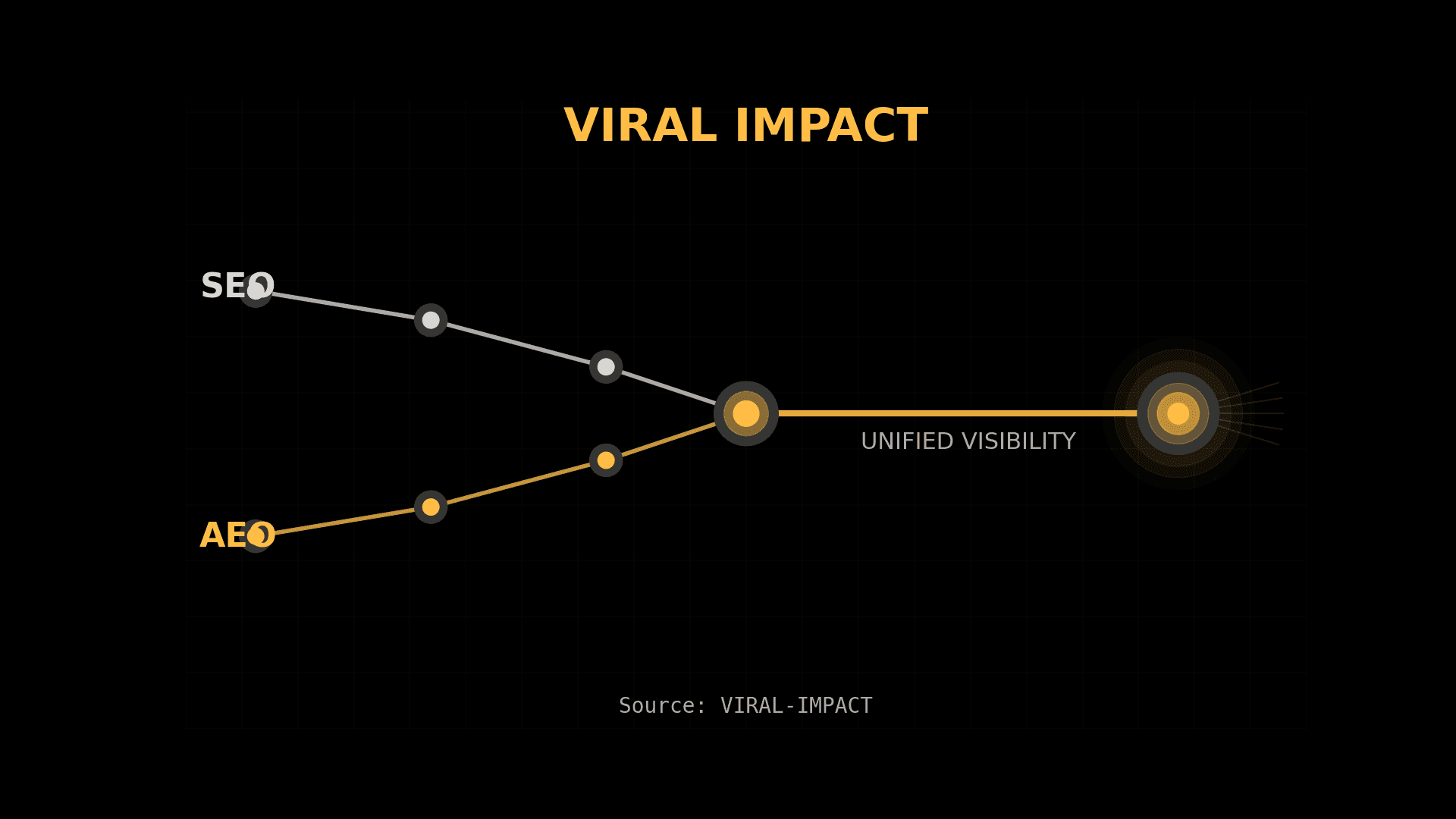
SEO (Search Engine Optimization) focuses on ranking your pages in Google's organic results, while AEO (Answer Engine Optimization) focuses on getting your content cited in AI-generated answers from platforms like ChatGPT, Perplexity, and Google AI Overviews. Both share a common foundation but require distinct content structures and optimization strategies to execute effectively.
What Is SEO and How Does It Work?
SEO is the practice of optimizing web pages to rank higher in search engine results. It combines technical improvements, on-page content optimization, and backlink acquisition to signal relevance and authority to Google's crawlers. For startups, SEO is the foundational layer of digital visibility, the difference between being discoverable and being invisible to potential customers.
A strong SEO program covers three reinforcing pillars:
• Technical health: site speed, crawlability, mobile performance, and Core Web Vitals.
• On-page optimization: keyword targeting, semantic coverage, heading structure, and intent matching.
• Off-page authority: backlinks from relevant, high-authority domains that validate your content's credibility.
These pillars work together. A technically sound site with well-optimized content and a strong backlink profile is what a solid SEO strategy is built around, and it is the prerequisite for everything that comes after.
What Is AEO and How Is It Different?
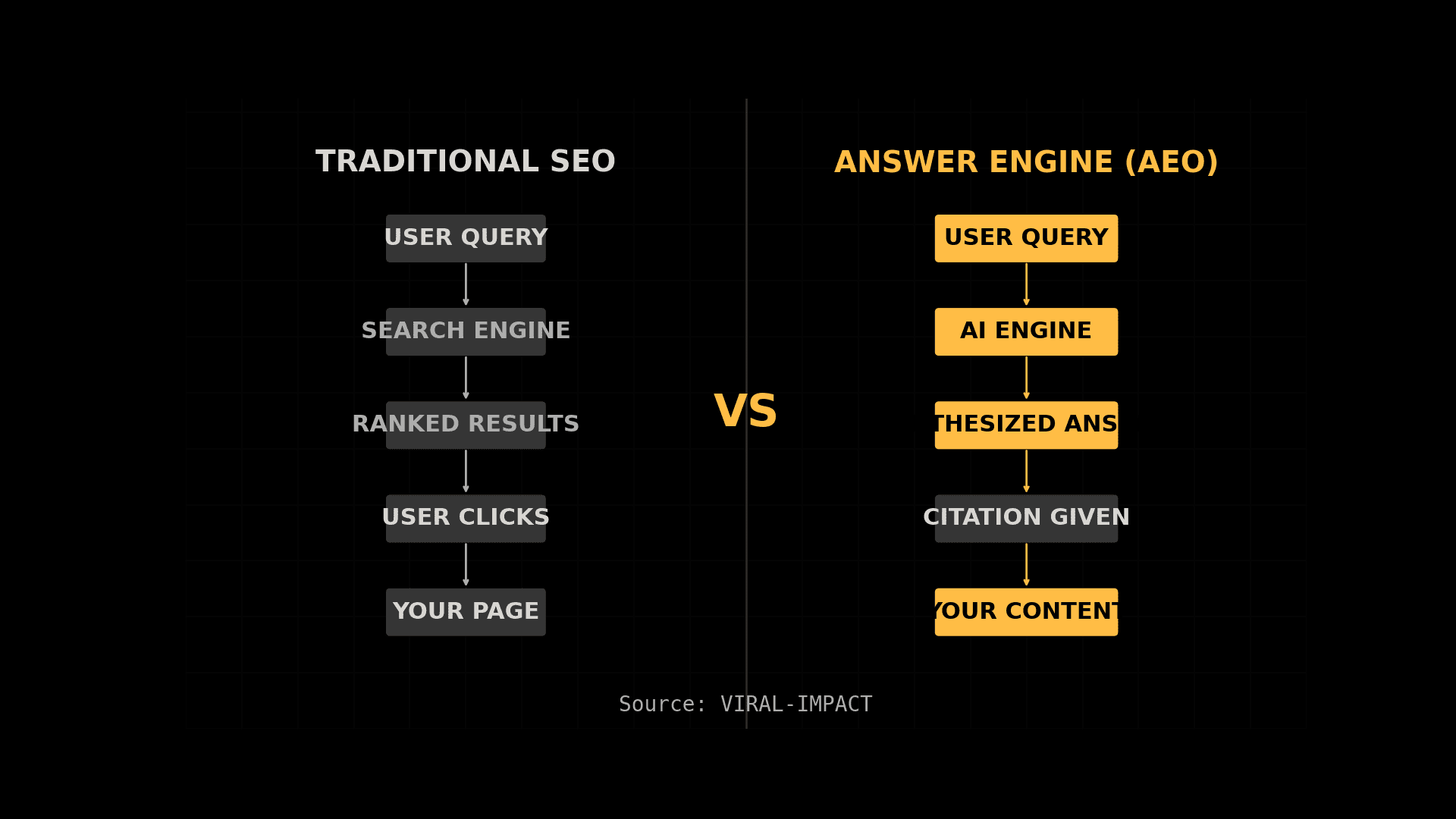
AEO is the practice of structuring content so that AI platforms extract it as a direct answer to user queries. Where SEO aims for a position on a results page, AEO aims for a citation inside the AI's synthesized response. The platforms doing the citing include Google AI Overviews, ChatGPT with web search, Perplexity, and Microsoft Copilot.
The critical difference is how content is consumed. Traditional search shows users a list of links and lets them choose. AI search synthesizes an answer from multiple sources and attributes the information directly. If your content is not structured for the extraction of clear definitions, direct answer blocks, structured data, and question-based headings, it will not be cited regardless of its ranking position.
Effective AEO writing requires every section to open with a direct, self-contained answer that AI can extract without surrounding context, a different discipline from traditional SEO content written to be read in full.
Table 1: AEO vs SEO (Core Differences)
Factor | SEO | AEO |
Primary Goal | Rank in Google organic results | Get cited in AI-generated answers |
Target Platform | Google, Bing search results pages | ChatGPT, Perplexity, Google AI Overviews |
Content Structure | Keywords, intent match, depth | Q&A format, direct answers, schema |
Success Metric | Ranking position, organic traffic | Citation frequency, AI mention rate |
Link Signals | Backlinks from authority domains | Third-party mentions, citations |
Timeline | 3–6 months for measurable lift | 4–8 weeks with proper structuring |
Best Content Type | Long-form guides, landing pages, blogs | FAQs, definitions, comparison posts |
Why Startups Need Both, Not One or the Other
The instinct for resource-constrained startups is to pick one channel. That framing is wrong. SEO and AEO are not competing priorities; they are layered. Strong SEO makes content more likely to rank. Content that ranks is more likely to be crawled and cited by AI platforms. And AEO-optimized content, which relies on clear structure and authoritative writing, performs better in traditional search anyway.
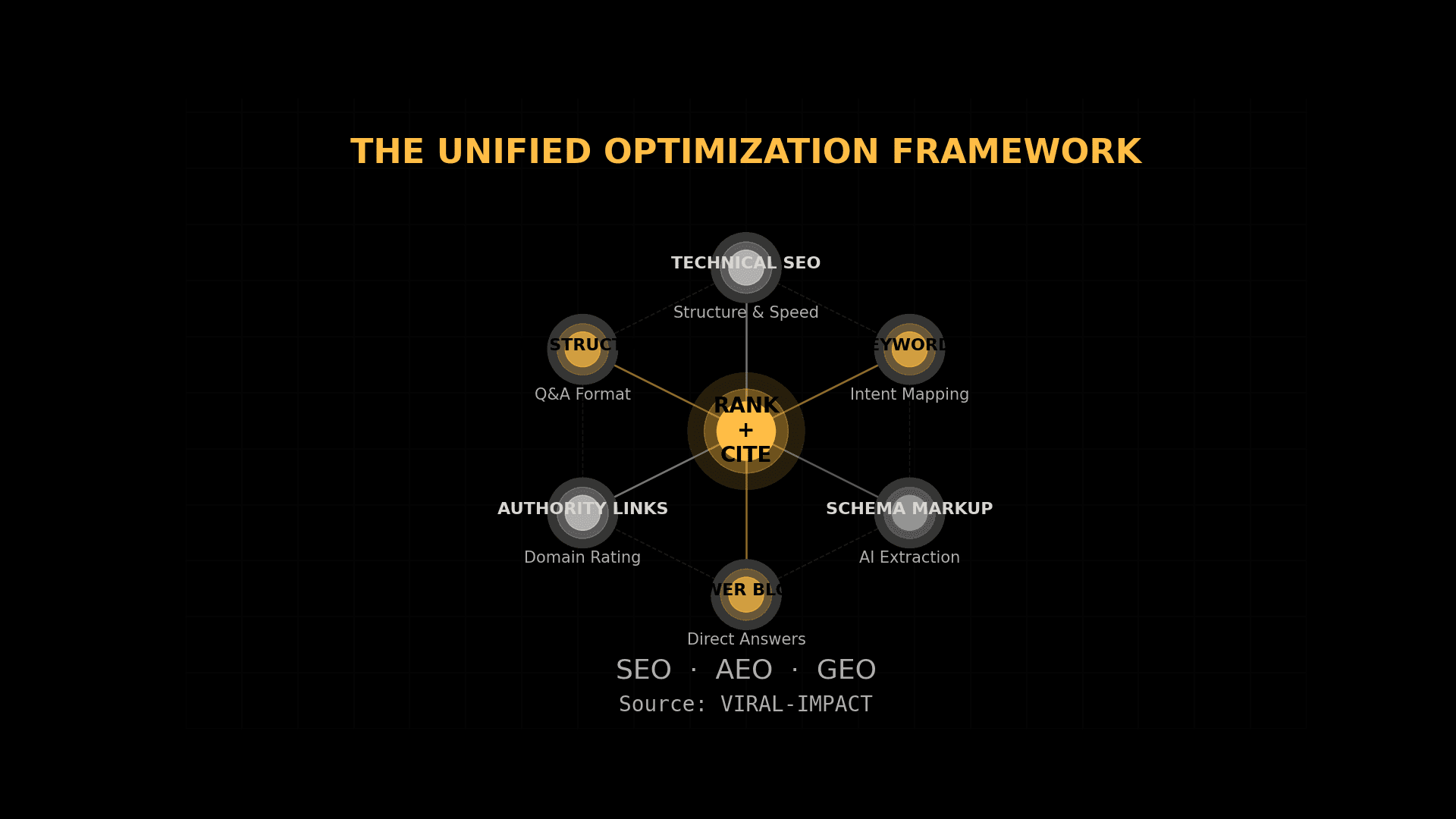
The startups winning in 2026 are not choosing between ranking and being cited; they are building content that does both. That means question-based headings, direct answer blocks at the start of each section, structured data markup, and topical authority built across a cluster of interlinked pages. Each piece of content should serve both purposes simultaneously.
A strong organic growth strategy treats SEO and AEO as the same content investment with two payoff channels: ranked traffic and AI-cited visibility. The production cost is the same; the return compounds.
How Google AI Overviews Are Reshaping Search Traffic
Google AI Overviews now appear in approximately 45% of all Google searches, according to 2024 data from Semrush. For commercial-intent queries, the searches your potential customers run that percentage is higher. The impact on organic click-through rates is direct and measurable.
A page ranking in position three but not optimized for AI extraction now receives less traffic than it would have two years ago. The AI Overview answers the query at the top of the page, reducing the need to click through. According to Search Engine Land, AI Overviews reduce organic clicks by up to 34% on informational queries.
This does not mean SEO is less valuable. It means success now requires both ranking and being extractable. A page that does both captures traffic from two channels simultaneously.
How to Optimize Your Startup Content for Both SEO and AEO
Most of the work required to optimize for AEO improves SEO performance at the same time. The two disciplines converge on well-structured, authoritative, specific content. Use this checklist to align both in every piece you publish:
1. Start every section with a direct answer. Write a 40–60-word response to the section's question before going deeper. AI platforms pull these answer blocks for citations.
2. Use question-based H2 and H3 headings. Match how your audience searches "How does X work?" performs better than "Overview of X" for both ranking and AI extraction.
3. Add structured data markup. FAQPage, HowTo, and Article schema give AI platforms structured signals about your content's format and purpose, increasing citation likelihood by 30–40%.
4. Include specific statistics with sources. Citing data increases AI visibility by up to 40% according to Princeton GEO research. Specific numbers beat general claims.
5. Build topical clusters. A single post does not build authority. A cluster of ten interlinked posts on the same topic signals depth and expertise to both Google and AI platforms.
6. Let keyword research drive every topic. Use keyword research data to identify what your audience searches for, then structure each answer block around those exact query patterns.
7. Display last-updated dates. Freshness signals matter to both Google and AI platforms. Undated content loses citation priority to dated content on the same topic.
Table 2: SEO vs AEO Performance Benchmarks
Metric | SEO Benchmark | AEO Benchmark |
Avg. time to first result | 3–6 months | 4–8 weeks |
Traffic source | Organic clicks from SERP | Referral from AI-cited pages |
Content citation rate (optimized) | N/A (ranking focus) | 3× higher than non-optimized |
AI Overview: appearance rate | ~45% of all Google searches | Up to 68% for structured Q&A |
Click-through rate impact | Position 1: 27.6% CTR (avg.) | AI citation adds a referral traffic layer |
Schema boost to visibility | +20% for rich snippets | +30–40% for AI citation rate |
Which One Should Your Startup Start With?
If your website has no domain authority, low organic traffic, and limited indexed content, start with SEO. Build the technical foundation, create topical clusters, and earn your first backlinks. Without this base, AEO-optimized content has nowhere to gain traction. AI platforms favor sources with established authority.
If your site has some authority but is not appearing in AI answers for queries you should own, layer in AEO. Audit your existing posts for direct answer blocks, add FAQ sections with schema markup, and restructure headings to match natural question patterns. According to Ahrefs, pages with clear definition paragraphs in the first 100 words are cited in AI Overviews at nearly double the rate of pages that open with general introductions.
The simplest framework: build SEO first, then optimize for AEO as you produce each new piece of content. The marginal effort to write for AEO is small. The marginal return traffic from AI platforms on top of ranked search compounds over time.
FAQs
Q1:What is the difference between SEO and AEO?
SEO optimizes content to rank in traditional search engine results pages. AEO optimizes content to be cited in AI-generated answers from platforms like Google AI Overviews, ChatGPT, and Perplexity.
Q2:Does AEO replace SEO for startups?
No. AEO builds on top of SEO, not in place of it. Without domain authority and indexed content from SEO, AEO-optimized pages have no foundation to be cited from.
Q3:How does Google AI Overviews affect organic traffic?
AI Overviews reduce click-through rates on informational queries by answering questions directly on the results page. Pages that rank and get cited in the AI Overview retain more traffic than those relying on organic position alone.
Q4:What content format works best for AEO?
FAQ-style content, comparison posts, definition articles, and how-to guides perform best. Each section should open with a direct 40–60 word answer, use question-based headings, and have the FAQPage or HowTo schema applied.
Q5:How long does AEO take to show results?
Well-structured AEO content can start appearing in AI citations within four to eight weeks faster than traditional SEO. Consistent citation over time, however, depends on domain authority built through ongoing SEO.
SEO and AEO are not a choice; they are a sequence. Every startup building visibility in 2026 needs both, because the two channels now divide the same audience: one group clicks organic results, the other reads AI answers and follows citations.
The work overlaps. Well-structured, authoritative content ranks on Google and gets cited by AI platforms. The investment is the same; the return is double. Explore what we do at viral-impact.
Viral Impact builds SEO and AEO content strategies for early-stage startups. We handle keyword research, content architecture, structured data, and outreach so you show up everywhere your audience is looking.
Explore our SEO strategy, AEO writing, keyword research, and organic growth services at viral-impact.
Read more
Learn which marketing skills remain irreplaceable as AI transforms search, content, and strategy for the next decade.
Learn how to reposition your startup brand after a pivot and maintain marketing momentum without losing your audience.
Learn the key differences between AEO and SEO and discover which strategy your startup should prioritize in 2026.