Building AI-Proof Marketing Skills for the Next Decade
AI is not replacing marketers. It is replacing average marketers who rely on repetition, templated thinking, and tool dependency. The next decade will separate professionals who understand strategy and human behavior from those who cannot work without a prompt to copy. This post covers the skills that will outlast every algorithm update and platform shift.
Here is a clear breakdown of where AI dominates versus where human marketers still lead:
Marketing Task | AI Capability | Human Advantage | Verdict |
Keyword research | High, pattern detection at scale | Low | AI-assisted |
Strategic positioning | Low, no business context | High | Human-led |
Content ideation | Medium, surface-level ideas | High, original angles | Human-led |
AEO content structuring | Medium, needs direction | High, intent clarity | Human-directed |
Data analysis & reporting | High-speed pattern recognition | Medium | AI-assisted |
Brand storytelling | Low lacks an authentic voice | High | Human-led |
Cold email personalization | Low generic by default | High | Human-led |
Technical SEO audits | High crawl and flag issues | Medium | AI-assisted |
Why Most Marketing Skills Are Already Fragile
Fragile skills are those built on tools, not understanding. A marketer who learned SEO by following checklists is in a worse position than one who understands why Google rewards certain content. The same applies to social media, paid ads, and email. When the tool changes, the skill disappears.
According to McKinsey & Company, up to 30% of marketing task hours could be automated by generative AI by 2030. Tasks most at risk include templated content creation, basic reporting, and A/B test execution.
What is not at risk: judgment, context, positioning, and trust-building.
The 6 Skills That Will Always Matter
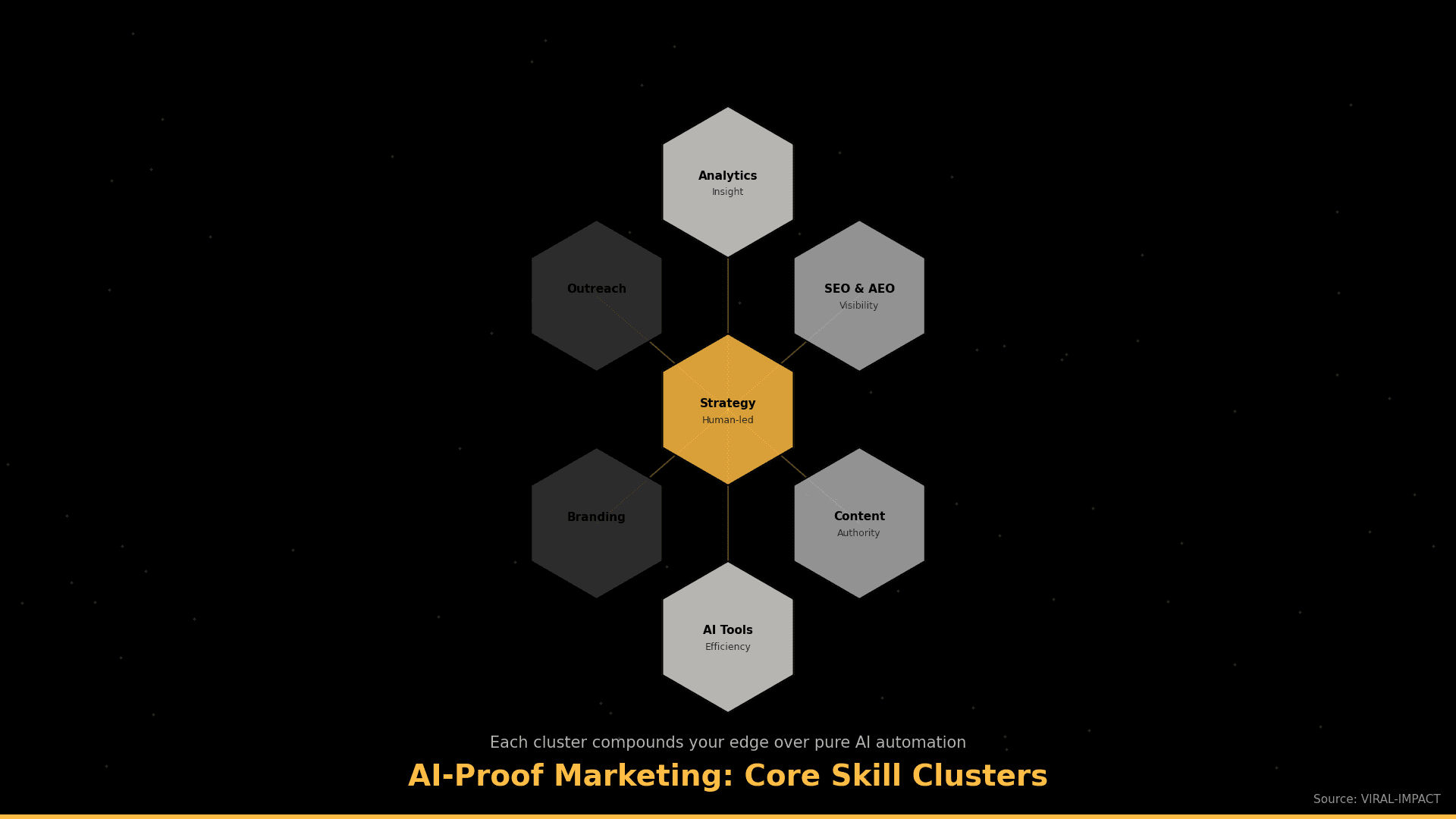
These six areas are where investment today pays off for the next ten years. Each one is either impossible to automate or actively penalized when AI tries to fake it.
1. Search Intent and Buyer Psychology
Understanding why someone searches, not just what they type, is the difference between content that converts and content that gets traffic with zero leads. AI can generate keyword clusters. It cannot tell you whether a CFO searching "reduce SaaS spend" is evaluating vendors, seeking budget approval, or panicking about renewals.
Pair this with an SEO strategy built around intent mapping, and you create a compounding advantage that AI tools alone cannot replicate.
2. Answer Engine Optimization (AEO)
AI Overviews now appear in roughly 45% of Google searches. Platforms like ChatGPT, Perplexity, and Gemini are actively pulling content into answers. Marketers who understand how to structure question-answer content, use semantic HTML, and target featured snippets will earn visibility that basic keyword optimization misses entirely.
Structured AEO writing is one of the fastest-growing needs across B2B and SaaS right now. Most competitors have not caught up.
3. Brand Positioning and Differentiation
Every AI tool trained on the internet produces generic positioning. "We help companies grow faster" is in thousands of brand decks. Real differentiation requires knowing what makes a specific business actually different, which requires conversations, customer research, competitive analysis, and judgment.
This connects directly to brand identity work. A logo is not a brand. A brand is a set of beliefs held by customers. Building that requires human understanding.
4. High-Converting Copywriting
AI writes at a surface level. It generates words that look right but often miss the psychological triggers that make someone click, sign up, or buy. Good copy addresses specific fears, names the specific outcome the reader wants, and removes the friction that stops them from acting.
The following elements of conversion copywriting still require significant human judgment:
• Headline specificity naming the exact outcome or fear.
• Voice and tone calibration matching the audience.
• Objection sequencing, knowing which doubts to address first.
• CTA psychology understanding why people hesitate.
A well-built landing page is one of the clearest examples of where human copy judgment outperforms AI output.
5. Data Interpretation and Strategic Insight
AI is excellent at spotting patterns in data. It is poor at knowing which patterns matter for a specific business in a specific market context. A 30% drop in organic traffic could mean an algorithm update, a technical crawl issue, a seasonal trend, or competitor content. Only a marketer with context can diagnose it correctly.
According to a 2024 HubSpot Marketing Report, 64% of marketing leaders say their biggest challenge is translating data into actionable decisions, not accessing data. That translation is entirely human.
6. Relationship-Driven Outreach and Authority Building
Mass automated outreach is getting cheaper and less effective simultaneously. Inboxes filter it. Recipients delete it. The counter-trend is specific, relationship-based outreach that treats the recipient as a person. This applies to cold email, guest posting pitches, and PR outreach.
Teams that invest in email outreach built around genuine relevance see reply rates 3 to 5 times higher than template-blast approaches. That gap is widening, not closing.
What AI Actually Does Well in Marketing
Avoiding AI is as foolish as depending entirely on it. The marketers who will thrive use AI to compress time on repeatable tasks while investing that freed time in the skills above. According to a Salesforce State of Marketing report, 72% of high-performing marketing teams use AI for at least five tasks. The keyword is "tasks," not strategy.
What AI handles well when properly directed:
• First-draft content generation from detailed briefs.
• Keyword clustering and content gap analysis.
• Technical SEO crawl and issue identification.
• A/B testing copy variations at speed.
• Summarizing research and competitive data.
What still breaks down with AI-only execution:
• Audience empathy and tone calibration.
• Original research and expert-level insight.
• Cross-channel strategic coherence.
• Genuine relationship building with media, partners, and customers.
Marketing skill investment priorities for the next decade, based on 2024 survey data:
Skill Area | AI Replaceability | Growth Demand 2024-2030 | Investment Priority |
AEO & GEO Optimization | Low | +82% projected (Gartner) | Critical |
Strategic Brand Positioning | Very Low | +61% projected | Critical |
Conversion Copywriting | Low-Medium | +55% projected | High |
Data Analysis & Insight | Medium | +48% projected | High |
Technical SEO | Medium-High | +30% projected | Medium |
Social Media Management | High | +22% projected | Selective |
Basic Content Writing | Very High | Declining | Deprioritize |
Building Your AI-Proof Skill Stack Step by Step
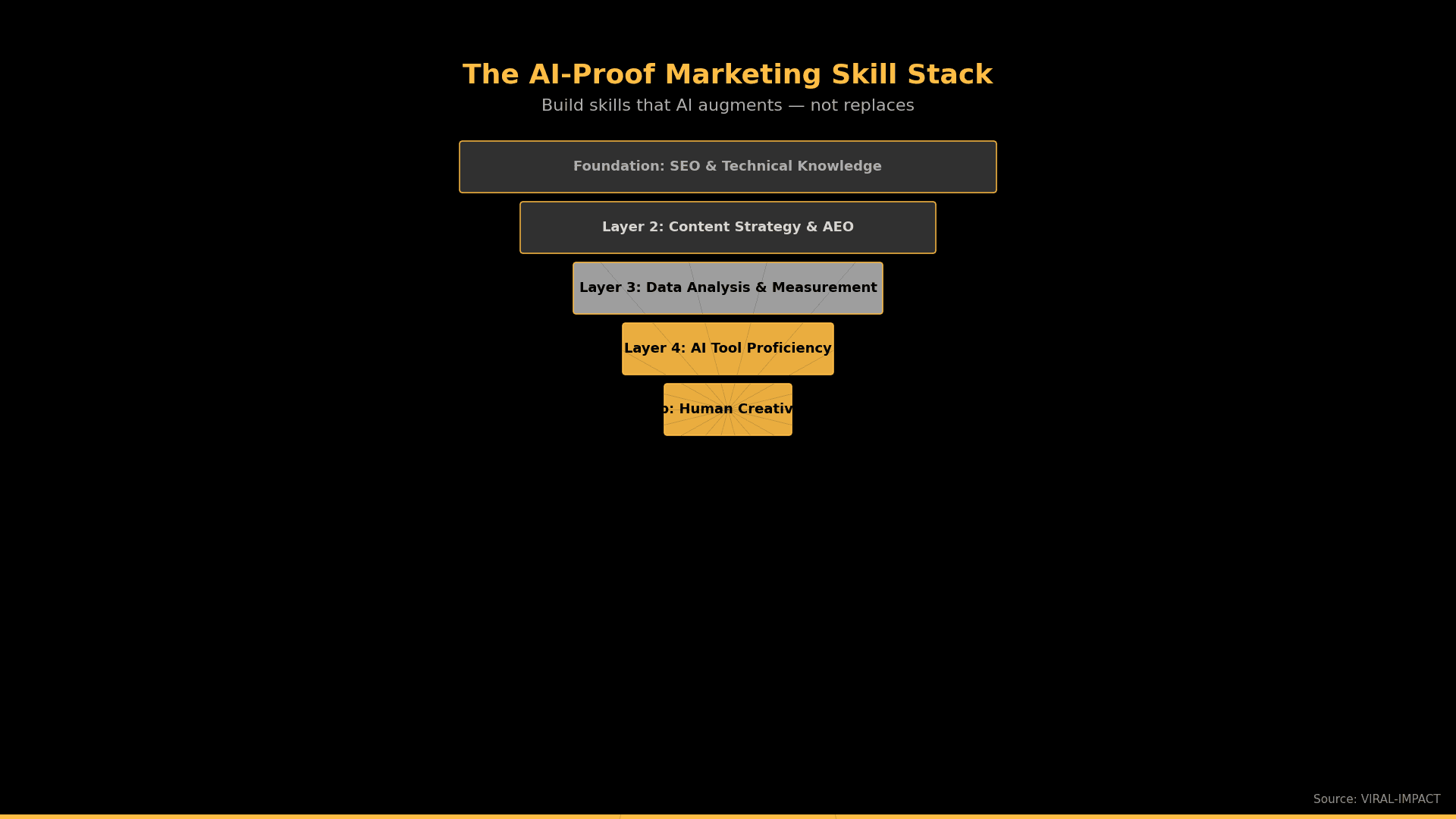
Start with the highest-leverage skills first. The order below reflects both job market demand and AI replaceability:
• Month 1–3: Master search intent analysis. Study 30 SERPs manually and understand why top results earn their position.
• Month 3–6: Learn AEO and structured content. Practice writing answer-first sections that target featured snippets.
• Month 6–9: Build conversion copywriting skills. Study landing pages, email sequences, and CTA psychology.
• Month 9–12: Add data interpretation using Google Analytics 4, Search Console, and attribution modeling.
• Year 2+: Layer in AI tool proficiency as an accelerator, not a replacement for the skills above.
The Compounding Effect of Real Marketing Expertise
Most marketing skills compound rather than add linearly. A marketer who understands brand positioning will write better copy, build more relevant outreach, and produce content that ranks without tricks.
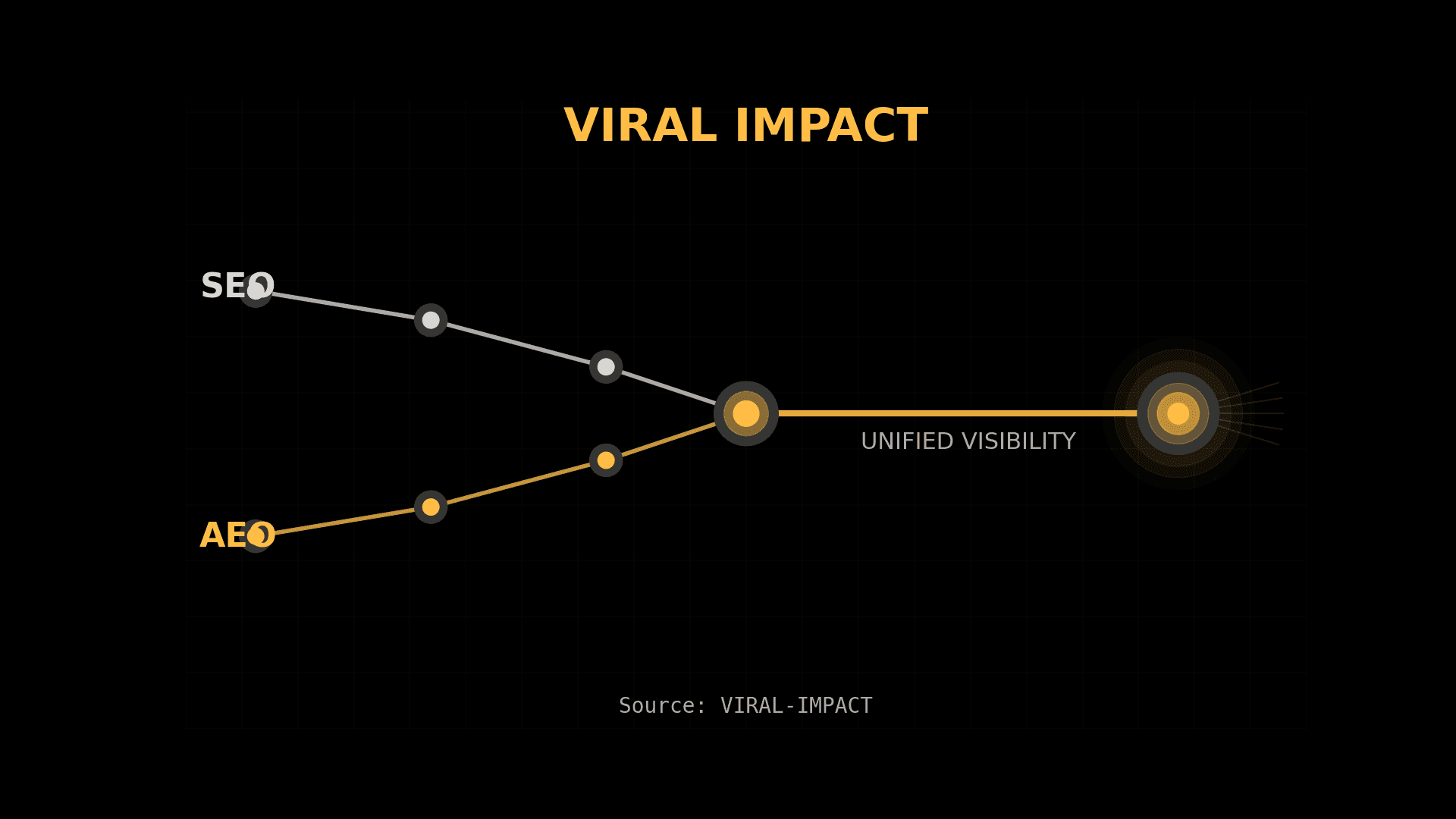
The cleanest example is SEO combined with AEO. A blog article optimized for both can rank in Google, appear in AI Overviews, and get cited by ChatGPT and Perplexity. That is three distribution channels from one piece of well-structured content. Learn more about this in our guide to blog content that ranks.
FAQs
Q1:Will AI replace marketing jobs entirely?
No, but it will replace specific tasks within those jobs. Marketers focused on strategy, judgment, and relationship-driven work will find that AI increases their output. Roles most at risk are built around repetitive, templated execution.
Q2:What is the single most important AI-proof marketing skill?
Search intent analysis. It underpins SEO, AEO, content strategy, and paid targeting. Understanding why people search specific terms lets you direct AI tools effectively and build content that earns organic authority.
Q3:How long does it take to build AI-proof marketing skills?
A focused 12-month program covering intent analysis, AEO structuring, copywriting, and data interpretation will put most marketers ahead of 80% of their competition. Depth matters more than speed.
Q4:What is AEO, and why does it matter for the next decade?
Answer Engine Optimization structures content so AI platforms extract and cite it. With nearly half of Google searches showing AI summaries, AEO-optimized content gets visibility that standard SEO alone misses.
Q5:Should startups invest in human marketers or AI tools?
Both, in sequence. Start with one skilled strategist. Use AI tools to scale their output. Without strategic direction, AI produces volume without growth.
The next decade will not reward the marketer who uses the most tools. It will reward the one who understands what to build, why it matters, and how to measure results. AI makes good marketers faster and average marketers more exposed.
Strategy, intent, copy, data, and relationship building are the foundation. AI is the accelerator. Build the foundation first.
If your startup needs a structured path to organic visibility, visit Viral Impact to see how we build growth systems that compound over time.
Read more
Learn which marketing skills remain irreplaceable as AI transforms search, content, and strategy for the next decade.

Learn how to reposition your startup brand after a pivot and maintain marketing momentum without losing your audience.
Learn the key differences between AEO and SEO and discover which strategy your startup should prioritize in 2026.