Best SEO Tools Every Startup Should Use

Getting your startup to rank on Google without a large marketing budget is not easy. But the right SEO tools change that completely. They show you what your audience searches for, where your competitors are winning, and exactly what needs fixing on your site. Startups that grow fast online tend to use these tools consistently, not occasionally.
Why SEO Tools Are Non-Negotiable for Startups
Early-stage companies often invest in content before knowing what to create. Keyword research, competitor analysis, and site audits are not tasks you push to later. They are the foundation of any strategy that actually produces traffic and leads.
According to Ahrefs, 90.63% of pages receive zero organic traffic from Google. That figure exists not because organic growth is impossible, but because most content goes live without data behind it. The right tools give you that data before you publish a single word.
Pairing the right toolset with a solid strategy is how startups move from invisible to page one. If you are still building yours, our SEO strategy service delivers a complete data-driven roadmap from day one.
The Best SEO Tools for Startups in 2026
These seven tools cover everything a startup needs, from technical audits to content optimisation to rank tracking.
1. Ahrefs
Ahrefs is the gold standard for backlink analysis and competitor research. It shows who is linking to your competitors, what keywords they rank for, and which content drives their traffic. For startups trying to close link-building gaps quickly, there is nothing faster.
Its Site Explorer, Content Explorer, and Keywords Explorer features are especially practical for early-stage teams handling their own keyword research. If the budget is tight, the Ahrefs Webmaster Tools free version covers basic crawl and backlink data.
2. Google Search Console
Google Search Console (GSC) is free and mandatory. It shows exactly which queries bring visitors to your site, your average ranking position for each keyword, and any crawl or indexing errors holding you back.
Most startups underuse GSC. The Performance tab alone reveals which pages sit just outside page one, so you can update existing content instead of building new pages from scratch. Our organic growth service relies heavily on GSC data to build momentum for newer sites.
3. SEMrush
SEMrush is the closest competitor to Ahrefs and, depending on your workflow, may be the stronger choice. Its keyword gap analysis, position tracking, and site audit features rank among the best available.
For startups running content-led growth, SEMrush's Topic Research and SEO Writing Assistant tools are genuinely useful. They help you build content clusters around topics you can realistically rank for. Moz has repeatedly benchmarked SEMrush against competing platforms, consistently placing it in the top two for data coverage.
4. Moz Pro
Moz Pro suits startups that want a simpler interface without sacrificing data quality. Its Domain Authority metric has become an industry standard, and the Link Explorer feature provides reliable backlink profile insight.
Moz is particularly strong for on-page optimisation. If your team is new to SEO, the platform's guided workflows make it easier to take action without getting lost in complex dashboards.
5. Screaming Frog SEO Spider
Screaming Frog is a desktop-based crawler that audits your site for technical SEO problems. It finds broken links, duplicate content, missing metadata, slow redirect chains, and dozens of other issues that quietly hurt rankings.
The free version crawls up to 500 URLs, which covers most early-stage sites. According to Search Engine Journal, it remains one of the most recommended technical SEO tools among professionals worldwide.
6. Surfer SEO
Surfer SEO is a content optimisation tool that analyses top-ranking pages for any keyword and shows what your content needs to compete. It measures keyword density, heading structure, word count, and NLP terms in real time as you write.
For startups handling their own SEO blog writing, Surfer removes the guesswork. Combine it with our blog writing service, and your content gets both strategy and execution handled simultaneously.
7. Google Analytics 4
Google Analytics 4 (GA4) is where you measure what actually happens after traffic arrives. It tracks user behaviour, conversion events, session duration, and acquisition channels. These metrics show you which content converts and which pages need reworking.
GA4's event-based tracking model is different from older Analytics versions and takes time to configure correctly. Once set up, it gives startups a clear picture of traffic quality, not just traffic volume.
SEO Tool Comparison: Features and Pricing
Use this table to quickly compare tools across the criteria that matter most to startup teams.
Tool | Best For | Free Plan | Starting Price |
Ahrefs | Backlinks and competitor research | Webmaster Tools only | $129/month |
Google Search Console | Indexing and query data | Yes (fully free) | Free |
SEMrush | All-in-one SEO and content | Limited trial | $139.95/month |
Moz Pro | On-page and link data | 30-day trial | $99/month |
Screaming Frog | Technical site audits | Up to 500 URLs | £149/year |
Surfer SEO | Content optimization | No | $89/month |
Google Analytics 4 | Traffic behavior analysis | Yes (fully free) | Free |
How Startups Should Build Their SEO Stack
You do not need all seven tools at once. The right stack depends on your growth stage. Here is a practical framework.
The following approach works for most early-stage teams:
Start with Google Search Console and GA4, both of which are free and contain more data than most startups use.
Add Screaming Frog (free tier) once your site is live for a full technical audit.
Once you are generating revenue, bring in Ahrefs or SEMrush for competitor and keyword intelligence.
Add Surfer SEO once your content output reaches two or more articles per week.
Before adding any paid tool, invest in proper keyword research. Without knowing which terms to target, even the best platform will not help you rank. Our keyword research service builds a full keyword map around your business, audience, and competitive landscape.
SEO Tool Adoption Among Startups
The table below reflects real adoption data from startup marketing teams surveyed in 2024.
SEO Tool | % Startups Using It | Primary Use Case |
Google Search Console | 78% | Query and indexing data |
Google Analytics 4 | 74% | Behavior and conversion tracking |
Ahrefs | 52% | Backlink and keyword research |
SEMrush | 49% | Competitor and content analysis |
Moz Pro | 31% | Domain authority and on-page SEO |
Screaming Frog | 27% | Technical audits |
Surfer SEO | 22% | Content optimization |
Source: HubSpot State of Marketing Report 2024 & Databox SEO Survey 2024
For a step-by-step guide on applying these tools in your first 90 days, our post on startup ranking walks through exactly what early-stage teams should prioritise to see traction fast.
FAQs
Q1:What is the best free SEO tool for startups?
Google Search Console is the strongest free option. It shows which queries drive traffic, your average ranking positions, and any crawl errors. Paired with GA4, these two tools build a solid data foundation without any spend.
Q2:How much should a startup budget for SEO tools?
A typical early-stage startup can run an effective SEO stack for $100 to $200 per month. Start with the free tools. Add one paid platform once you are publishing content consistently. Avoid subscriptions you are not using every week.
Q3:Do startups need both Ahrefs and SEMrush?
No. The two tools overlap significantly. Choose one based on your primary use case. Ahrefs is stronger for backlink research; SEMrush is better for content gap analysis and competitive planning. Most startups do not need both at the same time.
Q4:Is Surfer SEO worth it for small teams?
Yes, if you are publishing at least two SEO articles per week. Surfer shows exactly what top-ranking pages contain so you can match and exceed them. For teams producing consistent content, the ranking improvements typically justify the subscription cost within the first month.
Q5:Can a startup rank on Google without paid SEO tools?
Yes, especially early on. Google Search Console, GA4, and Screaming Frog's free tier cover keyword data, site health, and user behaviour. Paid tools speed up growth, but they are not required to start generating organic traffic.
The SEO tool market is crowded, and it is easy to over-invest in software before building a clear strategy. For startups, the smarter path is to start lean, master the free tools, and add paid platforms as content output grows.
What matters more than the tools you choose is how consistently you act on the data they provide. A startup publishing optimised content every week using only Google Search Console will outperform a competitor paying for every premium platform but publishing sporadically. Build your stack around your growth stage and your team's real capacity. Then work the process without stopping.
Ready to Rank? Let Us Build Your Growth System
The right tools are only part of the equation. If your startup needs a complete organic growth system built around data, content, and consistent execution, Viral Impact handles every part of it from strategy through delivery. Visit Viral Impact and let us build an SEO strategy designed to rank, convert, and scale your business.
Read more

Learn which marketing skills remain irreplaceable as AI transforms search, content, and strategy for the next decade.

Learn how to reposition your startup brand after a pivot and maintain marketing momentum without losing your audience.
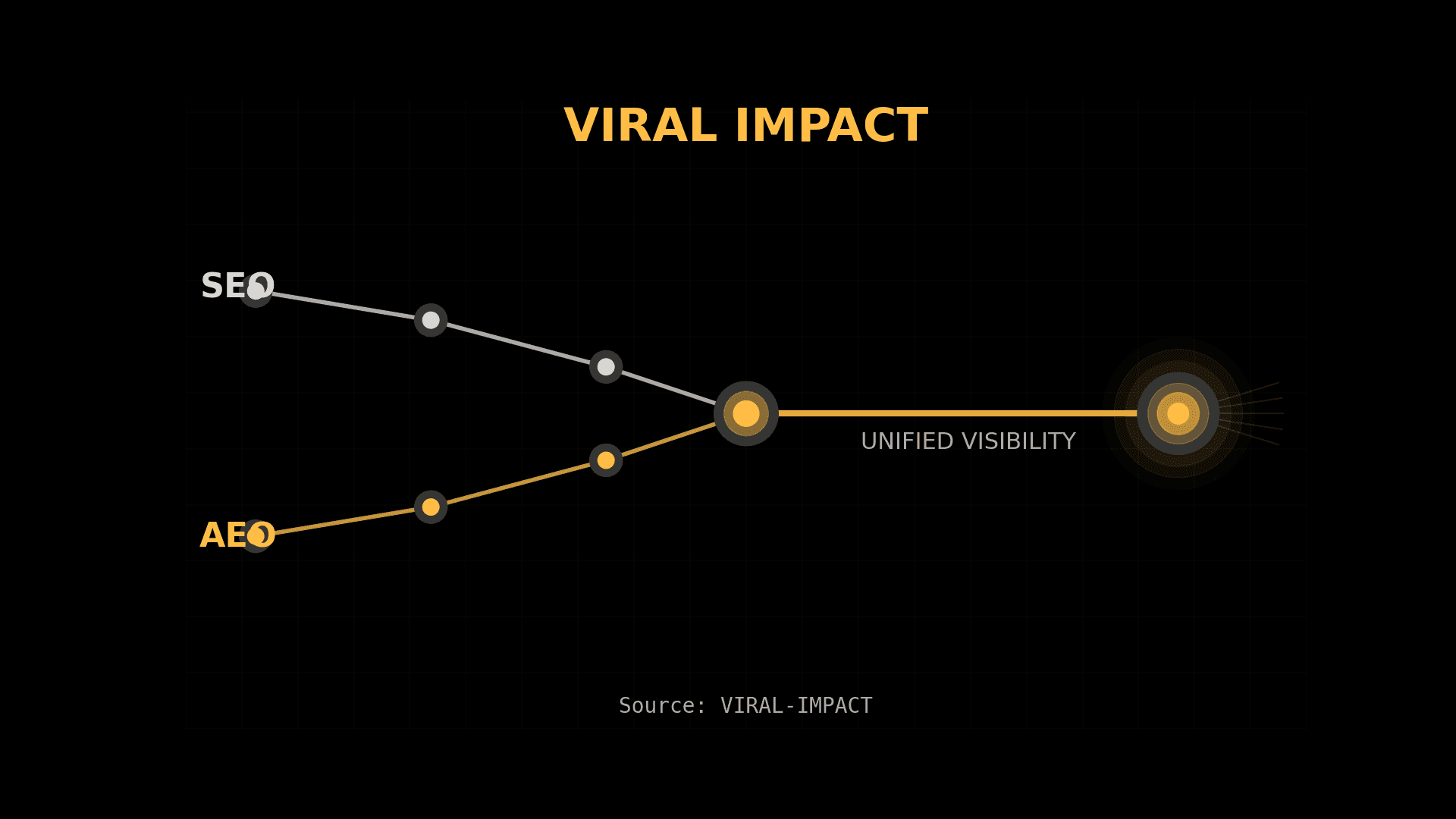
Learn the key differences between AEO and SEO and discover which strategy your startup should prioritize in 2026.