How Startups Can Get Their First 1000 Website Visitors

Getting your first 1000 website visitors comes down to a focused mix of SEO, content, and direct outreach before spending on paid ads. Most startups hitting this milestone within 90 days rely on organic channels, and this guide shows you exactly how.
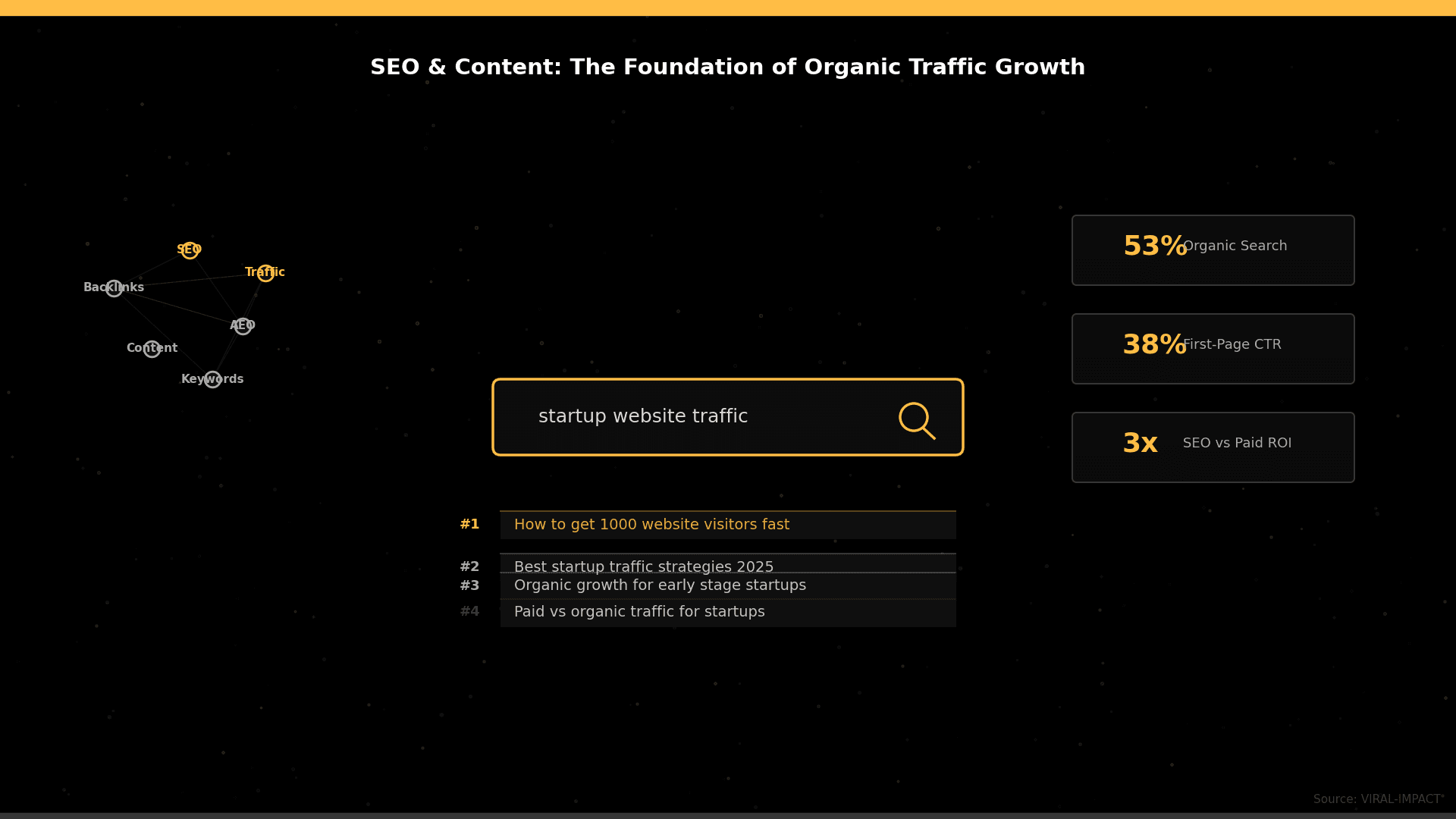
Building a startup audience from zero is one of the most frustrating early phases. You launch, you wait, and nothing moves. The reality is that sustainable website traffic comes from deliberate channel selection, not timing. According to BrightEdge research, organic search drives 53% of all website traffic, meaning there is a repeatable path to 1000 visitors that does not require a large ad budget.
Why the First 1000 Visitors Matter More Than You Think
Your first 1000 visitors are not a vanity milestone. They reveal which keywords attract your market, which content formats hold attention, and which traffic sources convert. The data collected here shapes every campaign you run for the next 12 months.
1. Build Your SEO Foundation from Day One
Most founders delay SEO because it feels slow. But the earlier you start, the sooner your pages accumulate domain authority, indexing depth, and keyword data that compounds over time. A well-structured SEO setup from launch is one of the highest-ROI early decisions a startup can make.
The core actions to prioritize immediately:
• Long-tail keywords with under 1,000 monthly searches are reachable for new domains to start there before chasing competitive head terms.
• Optimize all key pages with clear title tags, meta descriptions, and H1/H2 headers that match search intent.
• Publish content answering the exact questions your ideal customers are searching for in your niche.
• Internal links between related pages distribute authority and help crawlers map your site structure.
Working with an SEO strategy partner from the start ensures architecture and technical foundations are built correctly. Google's documentation confirms that clear site structure and descriptive URLs are among the most reliable early signals for organic performance.
2. Create Content Built Around Search Intent
Publishing without a keyword strategy means writing for no one. The gap between content that compounds traffic and content that sits unread almost always comes down to search intent matching done before writing begins.
How to build a content engine that delivers results:
• Start with 10 to 15 keyword-targeted articles covering specific, high-intent questions your audience searches regularly.
• Match content format to search intent: informational, navigational, and transactional queries each need a different structure.
• Include original data and real examples that make your content worth linking to and citing across other publications.
• Repurpose top-performing articles into social posts, short videos, and newsletter content to extend reach across channels.
Getting your blog writing strategy right in the first 90 days creates compounding returns. One well-ranked article can deliver hundreds of monthly visitors for years with zero ongoing spend.
Table 1: Traffic Channel Comparison for Early-Stage Startups
Channel | Time to Results | Budget | Traffic Quality | Scalability | Best For |
SEO / Organic | 3–6 months | Low | Very High | High | Long-term growth |
Guest Posting | 1–3 months | Low–Med | High | Medium | Authority building |
Cold Email | 1–4 weeks | Low | Very High | Medium | B2B leads |
Social Media | 2–6 weeks | Free–Low | Medium | High | Brand awareness |
Product Hunt | 1–2 days | Free | High | Low | Launch spike |
Paid Ads | Immediate | High | Medium | High | Fast validation |
3. Build Authority Fast Through Guest Posting
Guest posting delivers two things simultaneously: high-authority backlinks that lift domain ratings, and referral traffic from established audiences in your niche. For startups with near-zero authority, consistent placements are the fastest available lever for ranking improvement.
What separates effective guest posting from wasted effort:
• Target publications your ideal customers actually read, not just sites with high domain ratings.
• Pitch specific, data-backed article ideas rather than vague topic suggestions that every editor receives weekly.
• Include a contextual link to a relevant page on your site, placed naturally within the article body.
• Prioritize sites with a domain rating above 50; these placements produce measurable ranking and traffic impact.
According to Ahrefs data, backlinks from relevant, authoritative domains remain one of the top three Google ranking factors. A focused Guest Posting program can compress months of organic timeline into weeks.
4. Use Cold Email for Immediate, Targeted Traffic
Cold email generates high-intent traffic within days, not months. The approach is precision targeting 50 to 100 personalized emails to people who match your ideal customer profile, with a specific reason to visit your site.
Elements of a cold email sequence that drives click-throughs:
• Subject line under seven words speaking directly to a specific pain point the recipient faces.
• An opening sentence referencing something real and specific about their business, not a generic compliment.
• One clear call to action: read a resource, try a tool, or book a call. Multiple CTAs destroy response rates.
• Two to three follow-up emails spaced three to five days apart. Most replies come after the second touch.
A professional Email Outreach service maintains deliverability rates and structures sequences for replies. A well-run campaign drives 200 to 400 targeted visitors within the first two weeks.
5. Tap Into Communities and Social Platforms
Before SEO rankings arrive and email sequences warm up, social media and niche online communities deliver your earliest traffic. The rule: be helpful before being promotional. Genuine participation builds recognition. Promotional posts without value get scrolled past.
The platforms that consistently deliver for B2B and SaaS startups:
• Reddit: answer questions in relevant subreddits and link to your content when it adds genuine value to the thread.
• LinkedIn: publishes founder insights and educational posts consistently to build authority in your space.
• Twitter/X: engage in active industry conversations and use niche hashtags to extend the reach of each post.
• Product Hunt: A well-timed launch generates concentrated, high-intent traffic within 24 to 48 hours.
6. Optimize Your Landing Page Before You Scale Traffic
Traffic without a converting landing page is an expensive bounce-rate exercise. Startups focused entirely on traffic acquisition and ignoring on-page experience lose leads they already worked to attract.
The non-negotiable landing page fixes:
• Load time under 2 seconds on mobile, each extra second costs roughly 7% of conversions.
• A headline above the fold stating your core value proposition in under 10 words, without jargon.
• One prominent call to action above the fold that removes all decision friction.
• Social proof testimonials, logos, or results data that builds trust with first-time visitors.
Table 2: Median Time to First 1000 Website Visitors by Strategy (2024–2025)
Strategy Used | Median Weeks | Top 20% | Key Success Factor |
SEO Only | 20–30 weeks | 12 weeks | Content volume + domain age |
Content + Guest Posts | 8–16 weeks | 5 weeks | DR 50+ placements + consistent output |
Cold Email + Content | 3–6 weeks | 2 weeks | List quality + deep personalization |
Social + Communities | 4–8 weeks | 2 weeks | Consistency + niche community focus |
Full Multi-Channel | 2–5 weeks | 1 week | Cross-channel coordination + strong offer |
Track Results and Double Down on What Works
Once traffic flows from multiple channels, use Google Analytics and Search Console to identify which sources drive high-quality visitors with long sessions, multiple page views, and low bounce rates. Cut what is underperforming and reinvest in what is working.
Most startups find that two or three channels account for 80% of meaningful traffic. A well-built Organic Growth strategy does not stop at 1000 visitors; it builds the infrastructure to reach 10,000. The guide on startup SEO breaks down the exact timelines and tactics that got startups to page one within 90 days.
FAQs
Q1:How long does it take a startup to reach 1000 website visitors?
Multi-channel startups combining SEO, cold email, and guest posting can reach 1000 visitors in two to five weeks. SEO alone typically takes four to six months, depending on content volume and keyword competition.
Q2:What is the best free traffic source for an early-stage startup?
Organic search and online communities like Reddit and LinkedIn are the strongest free channels. SEO delivers compounding returns at scale. Community participation produces faster early results. Running both simultaneously covers short-term and long-term traffic.
Q3:Does SEO work for brand-new websites with no domain authority?
Yes, when targeting the right keywords. Long-tail keywords with under 1,000 monthly searches are reachable within 60 to 90 days on new domains. Pair smart keyword targeting with early link building through guest posts to accelerate results.
Q5:How many blog posts do I need to drive 1000 monthly visitors?
Most startups reach 1000 monthly visits within three to six months with 10 to 15 keyword-targeted articles. One strong article ranking on page one consistently outperforms 30 poorly targeted posts with no backlink strategy behind them.
Wrapping It Up
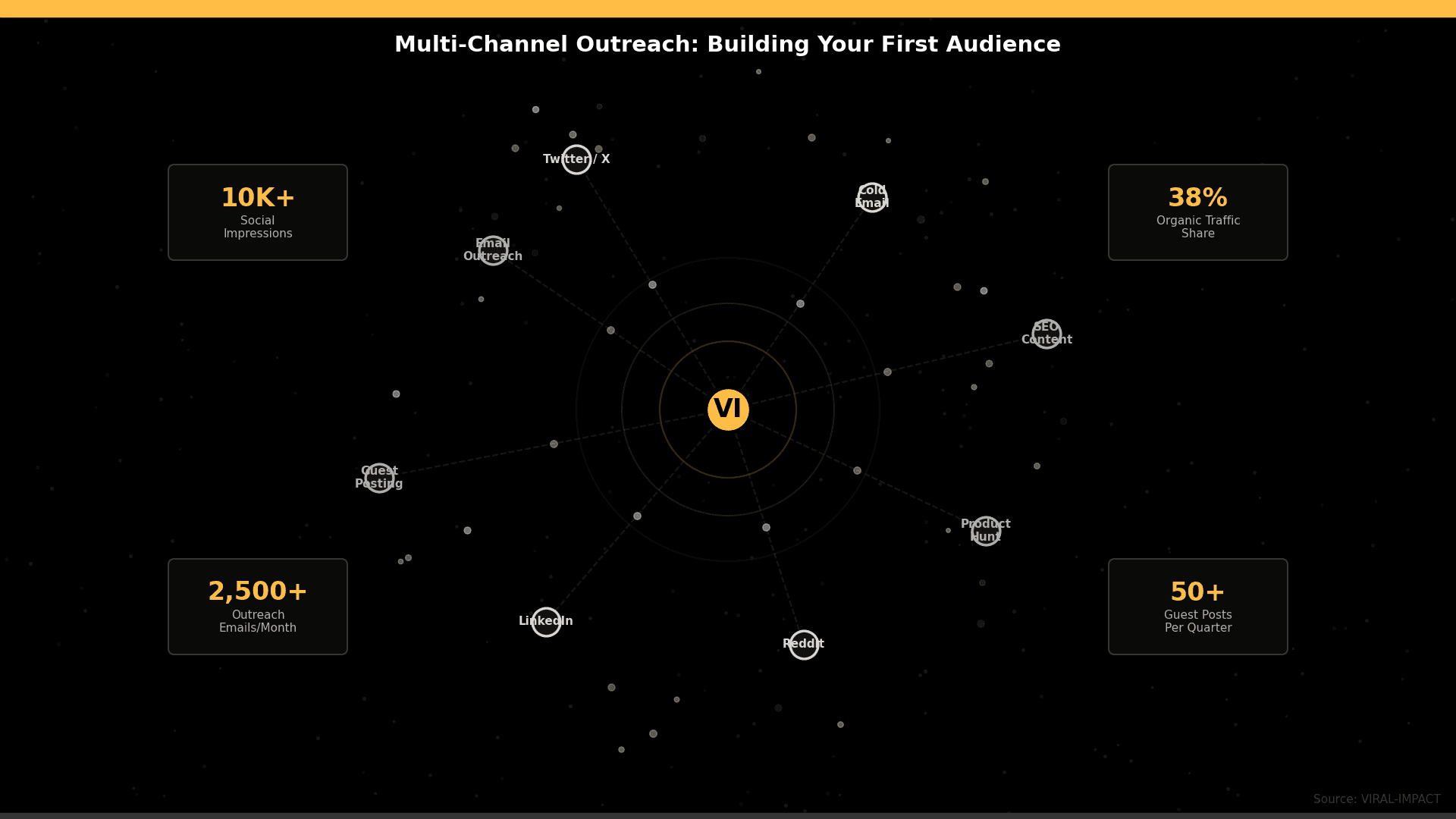
Getting to 1000 visitors is the output of several channels working together, not one campaign. SEO builds the long-term engine. Guest posting accelerates authority. Cold email delivers traffic within days. Social media creates awareness in the gaps. Startups that hit this milestone fastest combine all four from day one.
Ready to Drive Your First 1000 Visitors?
Viral Impact runs the full playbook: SEO, content, guest posting, and email outreach, so you can focus on your product. Visit Viral Impact and start building real, compounding traffic today.
Read more

Learn which marketing skills remain irreplaceable as AI transforms search, content, and strategy for the next decade.

Learn how to reposition your startup brand after a pivot and maintain marketing momentum without losing your audience.
Learn the key differences between AEO and SEO and discover which strategy your startup should prioritize in 2026.