The AI Marketing Stack: Tools That Actually Deliver ROI
Most marketing teams have tried at least one AI tool and come away disappointed. The pitch sounds convincing until the content generator produces flat copy, the scheduling platform posts at the wrong moment, and the analytics dashboard shows data with no link to revenue. AI marketing tools are only as effective as the strategy behind them. This guide focuses on what actually moves the needle, where each layer of an AI marketing stack belongs for startups and B2B companies, and what realistic returns look like.
What Makes an AI Tool Actually Worth Using?
The market is crowded with products that add “AI” to their homepage without automating anything meaningful. The tools that genuinely improve revenue share a distinct profile.
Tools worth adding to your stack tend to:
Reduce the time from brief to published output without sacrificing content quality
Connect directly to measurable outcomes like leads, conversions, or organic rankings
Improve over time using your own performance data, not only generic training inputs
Integrate cleanly with the platforms your team already uses day to day
If a tool cannot meet at least three of these benchmarks, it is adding complexity rather than ROI. Cut it.
AI Tools for Content Creation and SEO
Content creation and SEO account for the largest share of marketing budgets at early-stage companies, making this the highest-impact category in any AI stack. According to HubSpot's 2024 State of Marketing report, 64% of marketers investing in AI tools say content generation is their primary use case. The returns come not from replacing writers but from compressing the research, briefing, and optimization cycles that drain the most time.
The standout tools in this category include:
Surfer SEO for real-time content scoring against top-ranking competitors.
Clearscope for semantic keyword coverage and topical depth analysis.
Jasper for first draft generation built from structured content briefs.
Frase for combining SERP research with automated outline creation.
Strong organic search rankings depend on consistently answering specific questions at scale. Learning to rank on Google today means recognizing that modern algorithms reward topical authority. A well-managed SEO strategy builds compounding visibility rather than isolated traffic spikes.
AI Tools for Email and Outreach Automation
Email marketing holds one of the strongest ROI figures in digital channels. Litmus research puts the average return at $36 for every dollar spent. AI raises that figure by enabling personalization at scale without expanding headcount.
The most effective tools in this category are:
Instantly.ai for high-volume cold outreach with warm-up infrastructure built in from day one
Apollo.io for AI-enriched prospect research, combined with multi-step sequence automation
Smartlead for inbox rotation and deliverability management across multiple sending domains
Lavender for real-time email coaching and reply rate prediction before you send
The difference between a campaign that builds a pipeline and one that burns your sender domain comes down to targeting, timing, and message fit. Managed email outreach through a system that handles deliverability variables outperforms one-off manual sends at every volume level.
AI Tools for Paid Ads and Social Content
The creative side of marketing has seen the fastest AI adoption over the past two years. McKinsey's 2024 AI in Business report found that companies using AI for creative production cut time to market for new ad variants by 30 to 50%, while improving click rates by testing more combinations than human teams can produce manually.
The most useful tools in this category include:
AdCreative.ai for generating ad visuals paired with built-in performance score predictions
Pencil for video ad scripting and automated variant testing at scale
Predis.ai for social post generation aligned with engagement forecast data
Canva Magic Studio for rapid brand-consistent design production without a dedicated designer
All four work best alongside a tight creative brief and a human review before anything goes live. AI generates the options. Your team makes the final call.
AI Tools for Analytics and Conversion Optimization
Building a stack without strong measurement means running blind. Conversion rate optimization and analytics tools close the loop between content published and revenue generated. Without this layer, the rest of the stack produces activity reports rather than growth data.
The leading tools in this area include:
Hotjar AI for session recording summaries that surface specific friction points in minutes
Heap for automatic behavioral event capture and multi-step funnel analysis
6sense for intent data layered across account-based marketing workflows
Mutiny for AI-driven website personalization, segmented by visitor type and buying stage
Salesforce's State of Marketing 2024 report found that top-performing marketing teams are 2.9 times more likely to use AI for data analysis than average-performing ones. That gap reflects disciplined measurement from the start, not just better tooling.
Building organic growth through a structured content and distribution system produces compounding returns that no paid solution can replicate.
How to Build the Stack Without Overcomplicating It
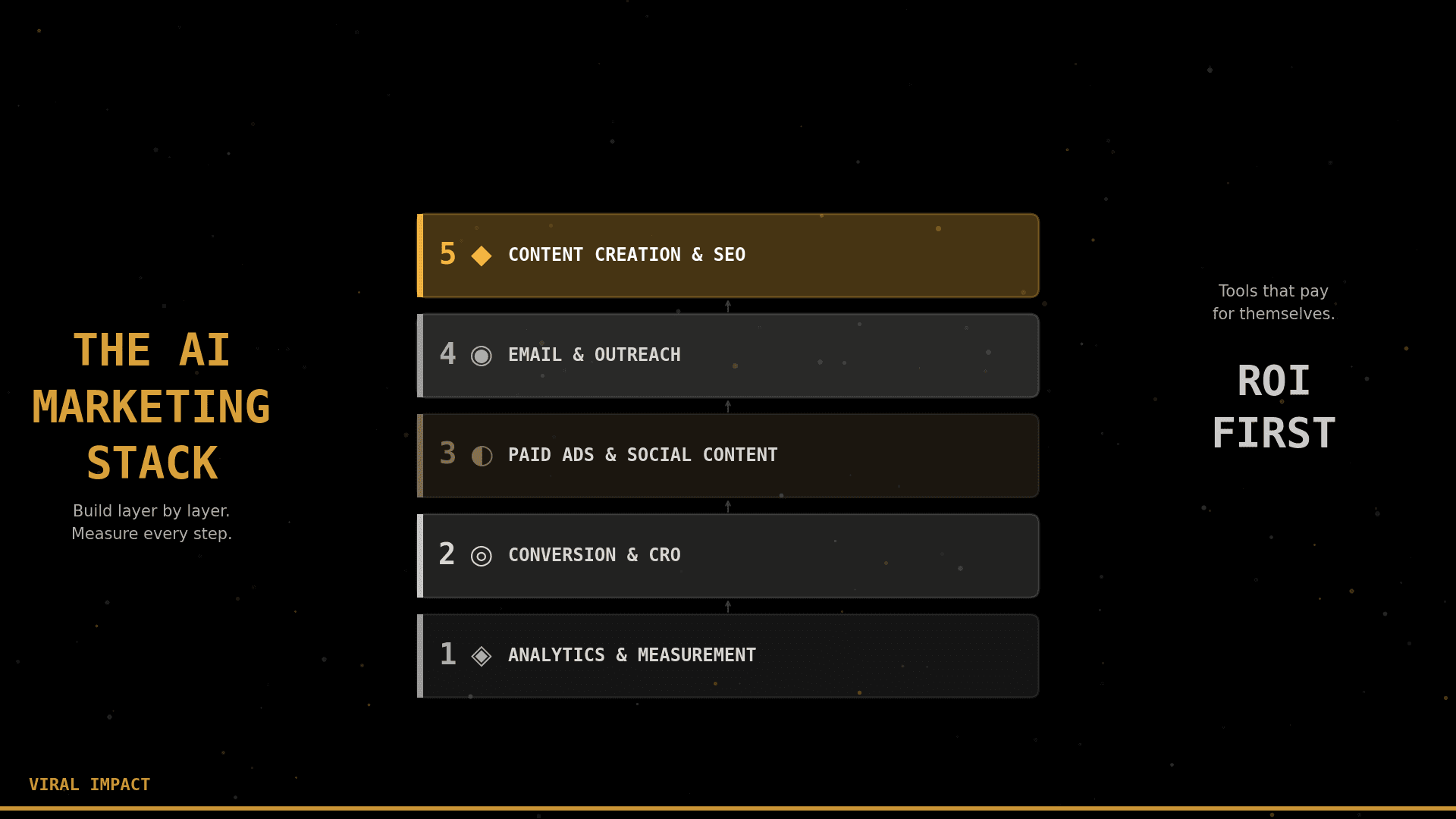
The most common mistake startups make is adopting too many tools at once. A five-tool stack used with discipline outperforms a fifteen-tool stack nobody fully understands. Start with one tool per category, measure what it produces, and only add the next layer once the first generates a clear return.
AEO-optimized content through AEO writing is a direct example. A single, well-structured piece built to answer AI-generated queries can drive qualified traffic for months without extra spend, consistently outperforming generic posts that never appear in Google AI Overviews.
Table 1: AI Marketing Tool Comparison (2024–2025)
Tool | Category | Primary Function | G2 Rating | Starting Price |
|---|---|---|---|---|
Surfer SEO | Content / SEO | On-page content scoring vs. competitors | 4.8 / 5 | $89 / mo |
Jasper | Content AI | First draft generation from briefs | 4.7 / 5 | $49 / mo |
Instantly.ai | Email Outreach | Cold outreach at scale with warm-up | 4.8 / 5 | $37 / mo |
Apollo.io | Sales Intelligence | Lead enrichment and sequence automation | 4.8 / 5 | $49 / mo |
AdCreative.ai | Paid Ads AI | Ad visual generation with performance data | 4.5 / 5 | $21 / mo |
Hotjar AI | Analytics / CRO | Session analysis and friction detection | 4.3 / 5 | $32 / mo |
Table 2: AI Marketing ROI Benchmarks by Category
Category | Time Saved | ROI Metric | Adoption Rate |
|---|---|---|---|
Content Creation & SEO | 42% | +28% organic traffic (HubSpot 2024) | 64% of B2B teams |
Email Outreach | 35% | $36 return per $1 spent (Litmus 2024) | 58% of B2B teams |
Paid Ad Creative | 47% | 30–50% faster creative production | 52% of B2B teams |
Analytics & CRO | 39% | 2.9x performance gap (Salesforce 2024) | 61% of B2B teams |
Social Content | 33% | +24% engagement rate average | 55% of B2B teams |
FAQs
Q1:What is an AI marketing stack?
An AI marketing stack is a coordinated set of AI-powered tools that handle specific functions across your marketing workflow from content creation and SEO through to email outreach, paid advertising, analytics, and conversion optimization. The goal is to reduce time spent on execution-layer tasks and improve output quality without proportionally increasing headcount.
Q2:Which AI marketing tool delivers the best ROI?
Email automation tools return the highest immediate ROI in dollar terms, with Litmus reporting $36 per $1 spent on average. Content AI tools like Surfer SEO deliver strong compounding returns through sustained organic ranking improvements over six to twelve months, making them the better long-term investment for startups focused on inbound growth.
Q3:Do AI marketing tools replace human marketers?
No. They reduce time spent on specific, repeatable tasks. But strategic direction, audience understanding, and quality judgment still require human input. The strongest teams use AI to accelerate execution while keeping human effort focused on positioning, messaging, and decisions that require genuine customer insight.
Q4:How many AI tools does a startup actually need?
Start with three to five. One for content and SEO, one for outreach or email, and one for analytics. Fully integrate those before adding more. Additional tools bring additional integrations to manage, and integration failures routinely erase the time savings the tools were originally deployed to deliver.
Q5:Is AI marketing worth the investment for early-stage startups?
Yes, especially for SEO and email, where tools produce measurable outcomes quickly. Select tools tied to clear KPIs rather than tools that generate activity without linking it to revenue. Track cost per lead from month one.
Start Building a Stack That Pays for Itself
If your current marketing setup relies on manual processes and disconnected tools, you are spending more time on execution than strategy. The right AI marketing stack removes that constraint. Explore how Viral Impact builds performance-focused organic marketing systems for startups; visit viral-impact.com to get started today.
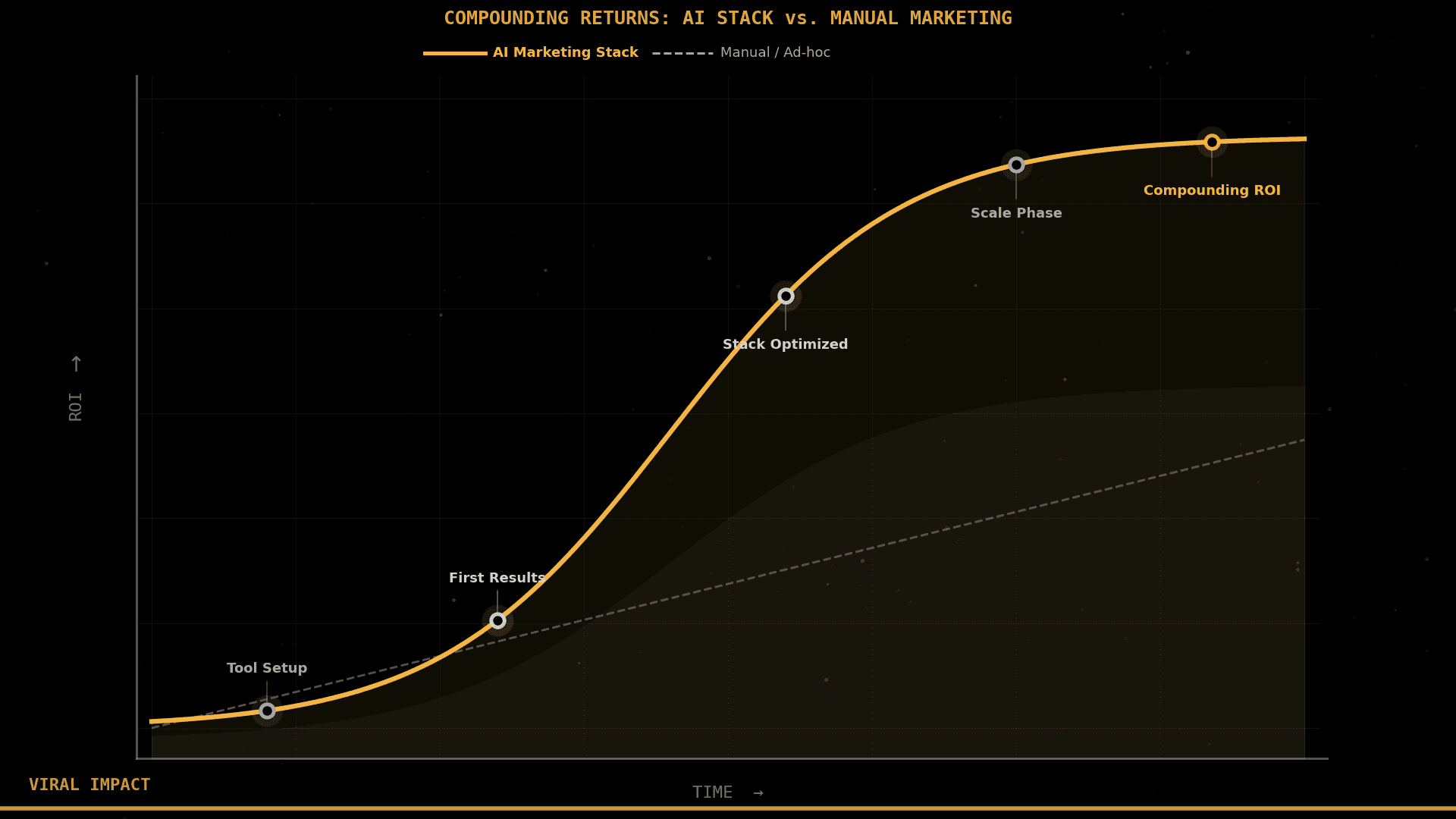
The AI marketing category moves fast, but the underlying principle has not changed. Tools that do not connect to measurable outcomes are not worth keeping. The stack outlined here represents the best available combination of capability, integration quality, and demonstrated ROI as of 2025. The real work is in implementation, linking each tool to your goals, tracking changes month over month, and cutting anything that does not justify its cost.
Startups that build this discipline early gain a compounding advantage. Businesses still treating AI as an add-on will compete against teams running optimized stacks for two or three years. That gap already shows in organic rankings and pipeline data for companies that invested in structured marketing systems in 2023.
Read more

Learn which marketing skills remain irreplaceable as AI transforms search, content, and strategy for the next decade.

Learn how to reposition your startup brand after a pivot and maintain marketing momentum without losing your audience.
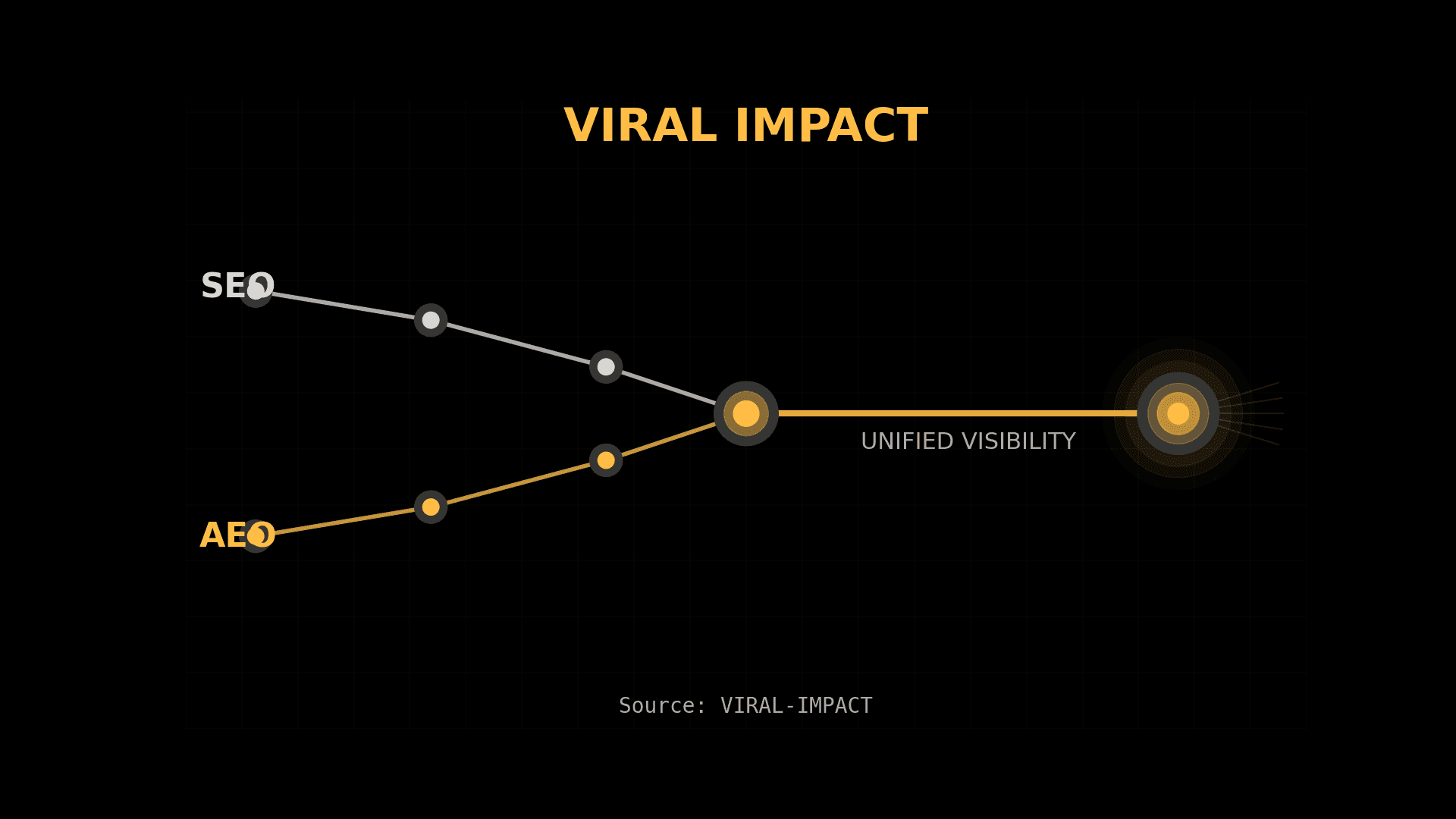
Learn the key differences between AEO and SEO and discover which strategy your startup should prioritize in 2026.