The Entity-First SEO Strategy That Outperforms Keywords
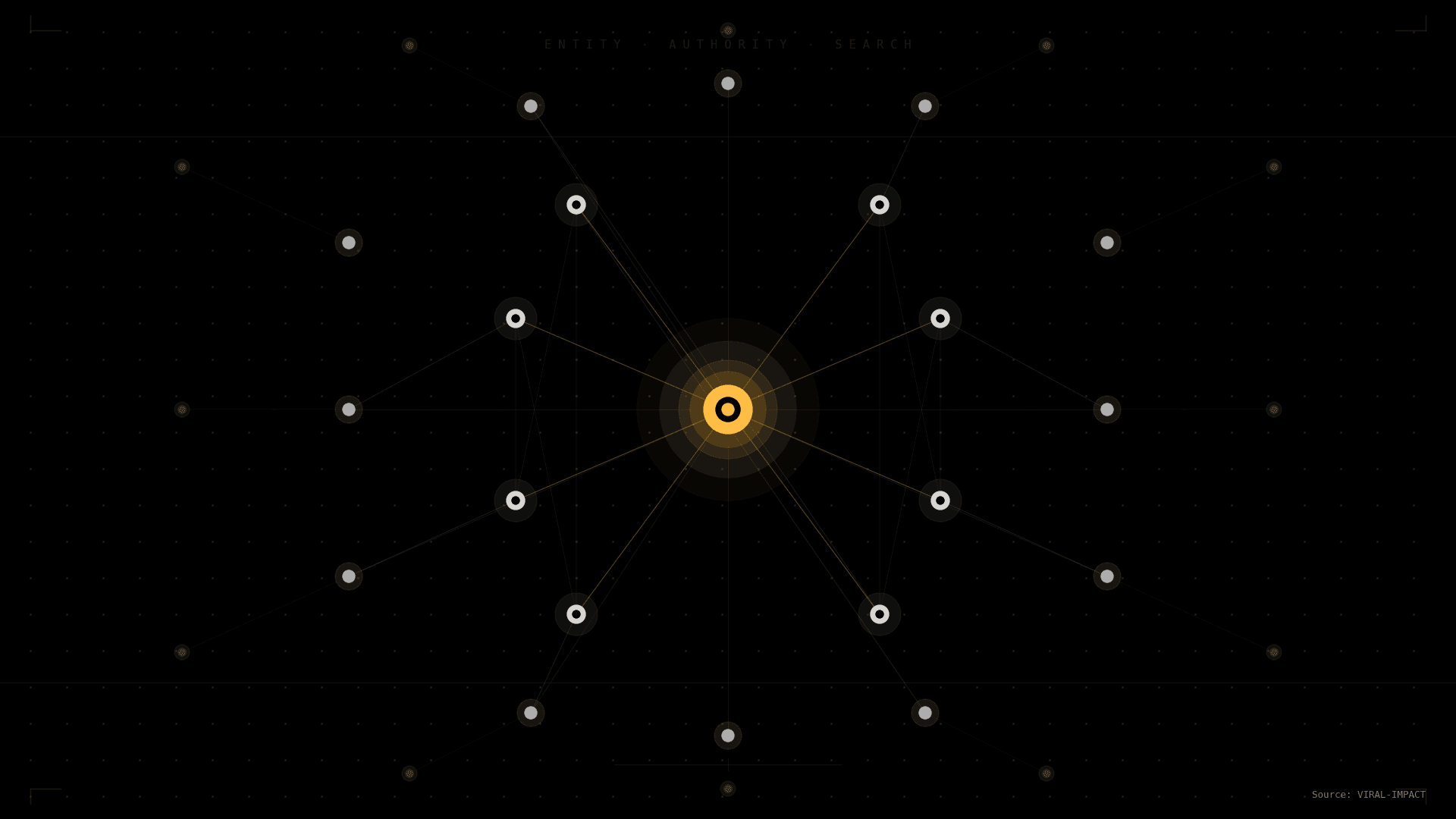
Search has moved beyond matching words on a page. Google now thinks in entities, real-world people, organizations, topics, and concepts it can verify and connect within its Knowledge Graph. Brands that understand this hold a structural advantage that keyword optimization alone cannot produce.
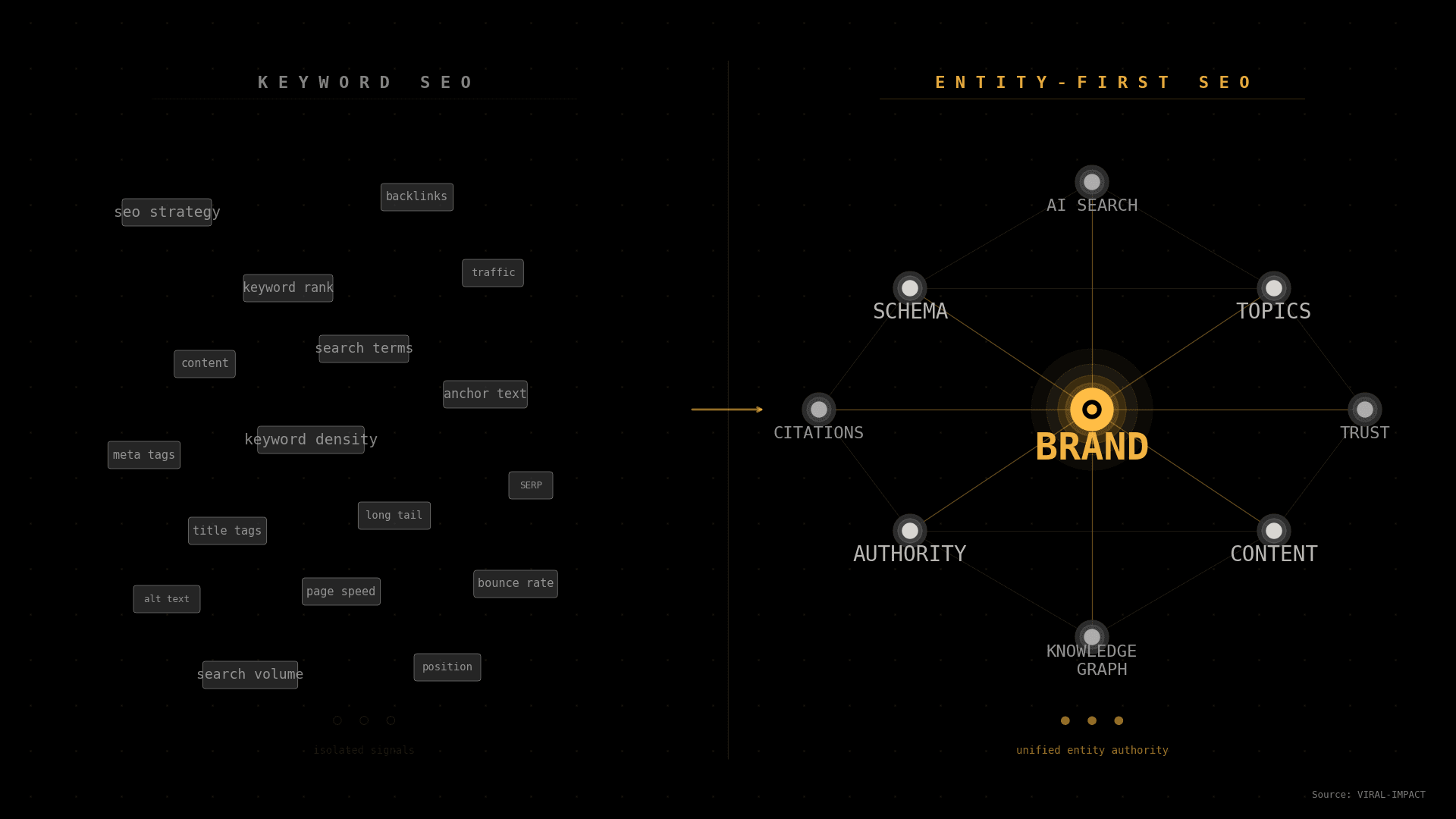
Entity-first SEO is the practice of building your brand as a recognized, trustworthy entity within Google's semantic systems rather than competing purely on keyword frequency. Done right, it delivers stable rankings, stronger AI search visibility, and a compounding competitive position.
Why Keywords Alone No Longer Cut It
Google's introduction of RankBrain, followed by BERT and MUM, shifted the algorithm from pattern-matching to semantic understanding. Today, the question is not whether your page contains the right words; it is whether your content represents a trusted, authoritative voice on a topic.
According to SparkToro, over 58% of Google searches end without a click because Google resolves queries directly from entity knowledge. Brands without entity authority are invisible in these moments.
Three signals confirm how far the shift has gone:
• AI Overviews now appear in approximately 45% of all Google searches, pulling answers from recognized entity sources.
• Google uses entity signals to power Knowledge Panels, People Also Ask, and featured snippets.
• Topical authority consistently outperforms exact-match keyword targeting in competitive SERPs.
What Is an Entity in SEO?
Google's structured data documentation defines entities as distinct objects with verifiable attributes and clear relationships to other entities in its knowledge systems. Any uniquely identifiable thing qualifies.
For a startup, the most relevant entities include:
• Brand identity: your company name, logo, founding date, and corporate profile.
• Personnel: founders and key team members with cross-referenced public profiles.
• Topics and concepts: the knowledge domains your content establishes authority in.
• Products and services: defined offerings with categorized attributes and use cases.
When Google recognizes your brand as an entity, it cross-references your signals across millions of web properties. This is the foundation of Knowledge Panel appearances, AI citation eligibility, and featured snippet dominance.
How the Knowledge Graph Changed Everything
Google's Knowledge Graph holds over 500 billion facts about billions of entities. Every Knowledge Panel, structured answer, and People Also Ask result draws from it. When crawlers encounter your brand across Wikipedia, LinkedIn, Crunchbase, and industry publications, those signals are aggregated into a single entity profile.
Brands with a strong presence in this graph benefit from:
• Automatic association with related topics and entities in the same knowledge space.
• Higher AI search visibility across Google Overviews, Perplexity, and ChatGPT.
• Greater resistance to algorithm volatility versus keyword-dependent pages.
Table 1: Keyword SEO vs. Entity-First SEO
Factor | Keyword SEO | Entity-First SEO |
Core focus | Keyword repetition | Semantic identity |
Algorithm | Pattern matching | Meaning and context |
AI visibility | Low | High cited in AI Overviews |
Ranking stability | Volatile after updates | Stable and compound-growing |
Knowledge Panel | Not achievable | Yes, with entity recognition |
Featured snippets | Moderate potential | High with schema and AEO |
Brand trust | Weak | Strong and cross-validated |
Building Your Entity-First SEO Strategy
Entity authority develops through consistent, structured signals across multiple channels. A well-coordinated SEO strategy aligns these signals into a unified authority framework rather than treating each channel in isolation.
Five foundational steps make the strategy actionable:
1. Claim entity profiles: Verify your brand on Crunchbase, LinkedIn, Google Business Profile, and Wikidata. Consistent name, description, and founding details drive entity recognition.
2. Deploy structured data: Add Organization, Website, and Article schema to core pages. Schema.org vocabulary communicates entity attributes in machine-readable form.
3. Build brand citations: Earn mentions in authoritative publications and trade directories. Unlinked brand mentions on high-authority domains contribute meaningfully to entity recognition.
4. Develop a topical cluster: Cover your core topic through interconnected content. Scattered keyword articles fragment entity signals; tightly built clusters consolidate them.
5. Earn entity-validated backlinks: Links from recognized entity domains carry far more authority weight than generic backlinks.
Structured Data: The Direct Line to Google
Schema markup eliminates the need for Google to infer your entity attributes from scattered signals. Pairing AEO writing best practices with schema implementation means your content is built for AI extraction from the ground up.
The highest-priority schema types for startups:
• Organization schema brand name, headquarters, founding date, and contact details.
• Website schema enables the Sitelinks search box and establishes brand SERP ownership.
• Article schema connects content to recognized author and publisher entities.
• FAQPage schema feeds answers directly to People Also Ask and Google AI Overviews.
Pages with proper schema show 30 to 40% higher visibility in AI-generated results, according to Princeton GEO research published at KDD 2024.
Content Clusters and Topical Authority
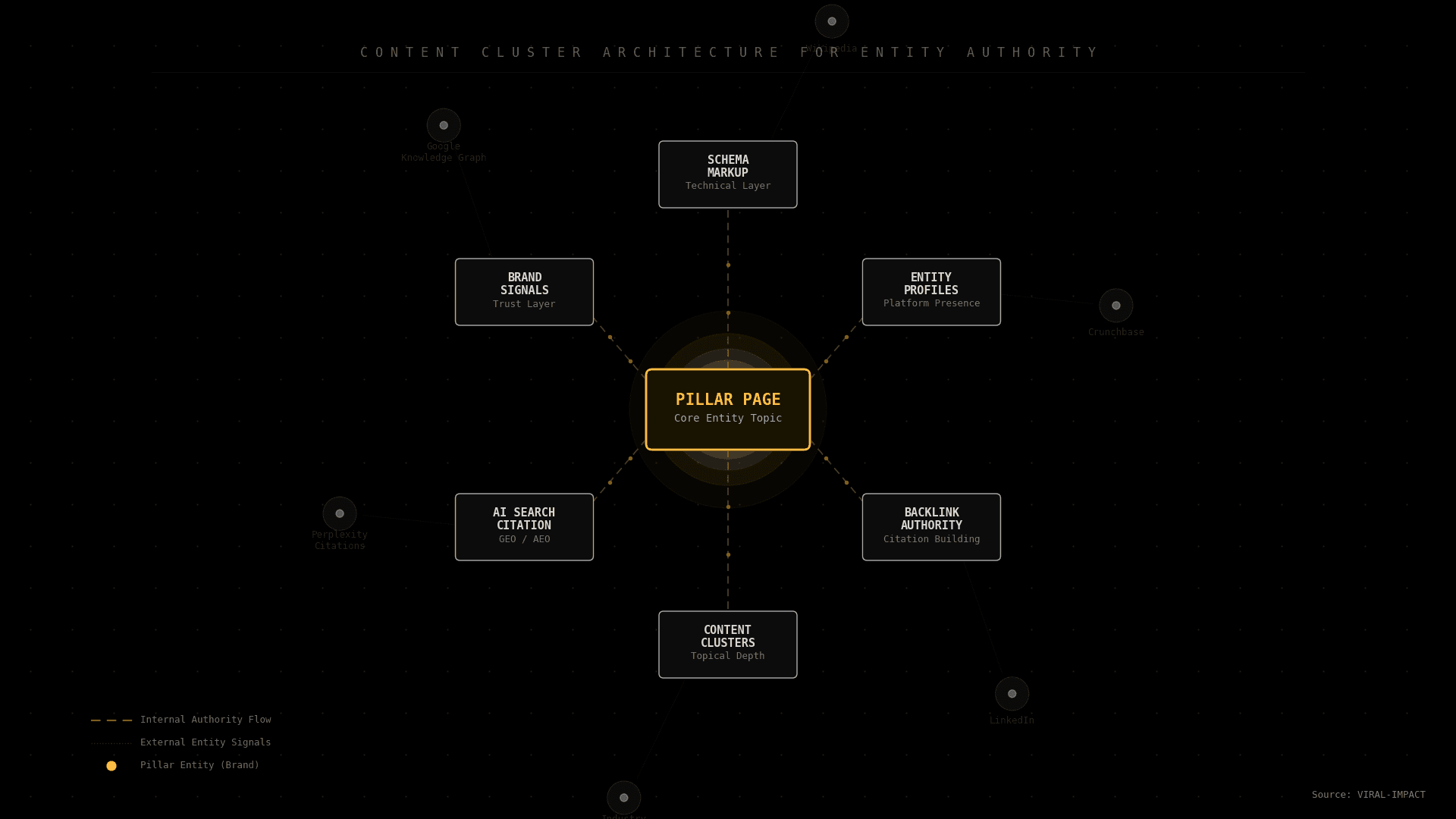
Entity authority accumulates through a dense network of interconnected content demonstrating genuine expertise across an entire topic space. A well-built cluster does this more efficiently than any standalone article.
The four-layer cluster model:
• Pillar page covers the core entity at a high, comprehensive level.
• Cluster pages address specific subtopics with detailed, standalone coverage.
• Internal links reinforce the topical hierarchy connecting cluster content to the pillar.
• External citations authoritative third-party sources that validate the knowledge hierarchy.
Your keyword research should map the full semantic territory your entity needs to own, not just high-traffic terms, but synonyms, adjacent questions, and entity co-occurrences across your topic space.
Measuring Entity SEO Performance
Entity authority shows up in metrics that traditional keyword dashboards miss entirely. Tracking these signals gives a more accurate picture of your organic search health:
• Knowledge Panel appearances for your brand name in direct Google searches.
• AI Overview citations tracked through Otterly, Peec AI, or monthly manual checks across platforms.
• Branded search volume growth in Google Search Console over rolling 3-month periods.
• Referring to domain diversity, showing how broadly your entity is mentioned across the web.
Table 2: Entity SEO Metrics and Tracking Tools
Metric | Tracking Tool | What It Signals |
Knowledge Panel | Google Search | Brand entity recognition |
AI Overview citations | Otterly / Manual | Entity trust for AI systems |
Branded search volume | Search Console | Brand awareness growth |
Featured snippets | Ahrefs / Semrush | Topical authority depth |
Referring domain count | Ahrefs | Entity mention breadth |
Entity SEO, AEO, and GEO: One Unified Strategy
Entity-first SEO connects directly to AEO and GEO outcomes. AI systems, including Google AI Overviews, Perplexity, and ChatGPT, build their answers from trusted, recognized entities. When your brand is entity-recognized, and your SEO content is structured for extraction, you become a source these systems actively pull from.
The startup SEO playbook has shifted. Ranking for keywords drives traffic. Building entity authority gets your brand cited in AI answers that your audience reads before they ever click a link.
FAQs
Q1:What is entity-first SEO?
Entity-first SEO focuses on building Google's recognition of your brand as a structured entity within its Knowledge Graph, rather than optimizing purely for keyword matches. It treats your brand and expertise as knowledge objects that Google can verify and connect to related concepts.
Q2:How is entity SEO different from keyword SEO?
Keyword SEO targets search phrases through on-page signals. Entity SEO builds your brand as a recognized semantic object in Google's knowledge systems. Both approaches work together, but entity SEO delivers more stable rankings and far higher AI visibility.
Q3:Does entity SEO help with Google AI Overviews and AI search results?
Yes, directly. AI systems pull answers from trusted, recognized entities. Brands with strong entity signals schema markup, third-party citations, and consistent profiles appear substantially more often in AI Overviews and Perplexity answers than brands relying on keyword optimization.
Q4:How long does it take to build entity authority?
Initial signals are established within weeks through schema and platform profiles. Knowledge Panel recognition follows after 3 to 6 months. Full topical entity authority for a content cluster generally takes 6 to 12 months, compounding as citations and depth increase.
Keyword optimization is not obsolete, but it is no longer sufficient on its own. Google's systems now reward topical mastery, brand authority, and entity recognition over keyword frequency. Brands that build entity authority today are establishing positions competitors cannot replicate through content volume or keyword targeting alone.
Every schema annotation, brand citation, and cluster page adds to a knowledge graph presence that grows more valuable over time. In a search environment where AI Overviews appear in nearly half of all queries, entity-first SEO is the baseline for any brand serious about durable visibility.
Your brand's entity strength determines how Google and AI systems understand, trust, and recommend you. Viral Impact builds entity-first SEO strategy for startups that want durable rankings, AI citations, and compounding organic growth. Explore our services and take control of how search sees your brand.
Read more
Learn which marketing skills remain irreplaceable as AI transforms search, content, and strategy for the next decade.

Learn how to reposition your startup brand after a pivot and maintain marketing momentum without losing your audience.
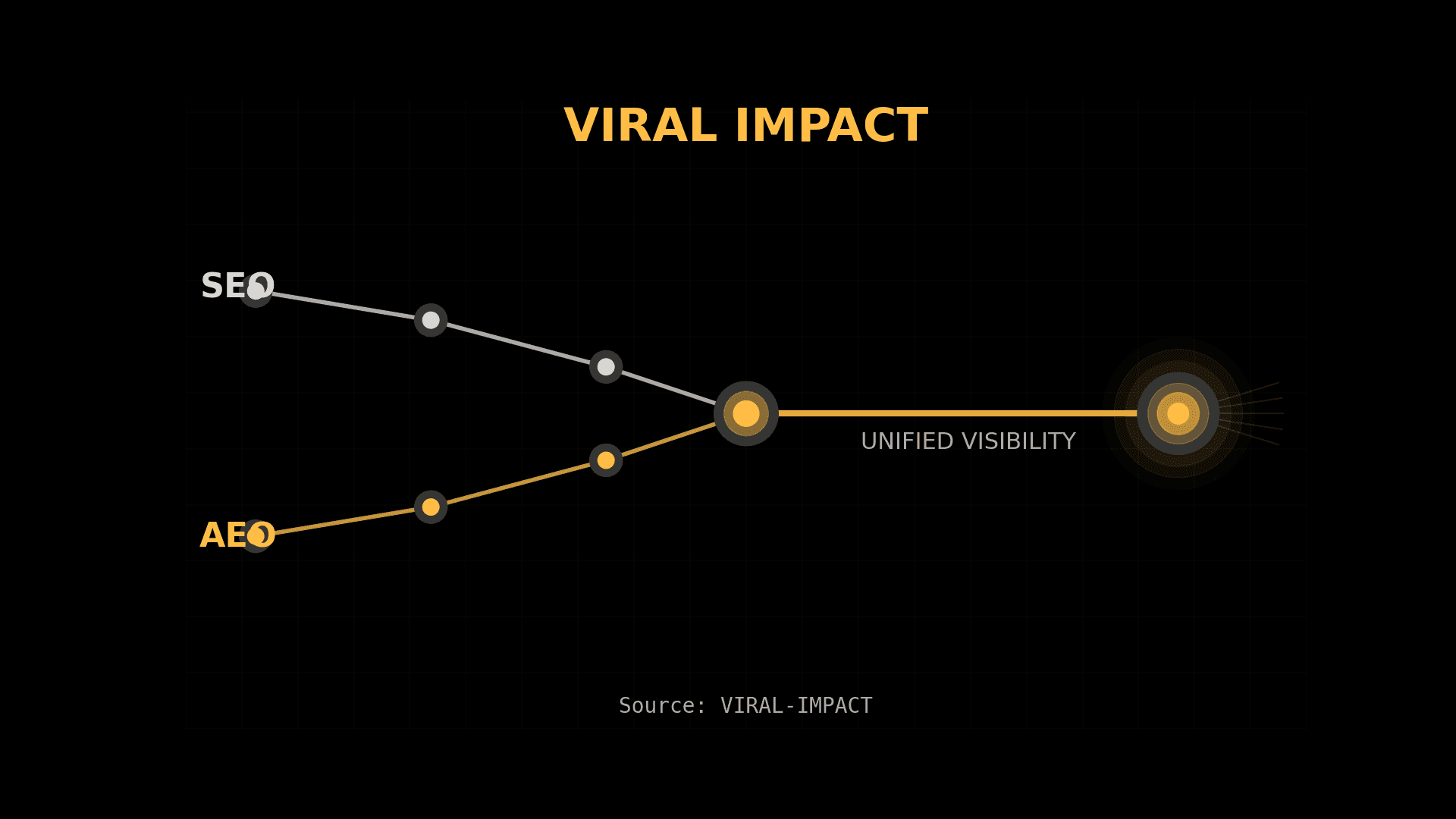
Learn the key differences between AEO and SEO and discover which strategy your startup should prioritize in 2026.