Why SEO Is a Long Term Investment for Startups

Every founder wants fast results. That is understandable when the runway is tight, and investors want proof of traction. But one channel consistently outperforms every short-term tactic over a 12 to 36-month search engine optimization window. Unlike paid ads that vanish when you cut the budget, SEO builds a compounding asset. For startups in crowded markets, understanding why SEO is a long-term investment separates those who scale sustainably from those who stall.
The Compounding Nature of SEO Returns
SEO works more like a savings account than a light switch. Early deposits feel modest, but by month 18, returns start snowballing. A single well-structured page can rank for dozens of related search queries and generate qualified traffic for years without additional spend.
According to BrightEdge research, organic search drives 53 percent of all website traffic across industries, outpacing paid, social, and direct combined. That figure tells every startup founder where to direct early marketing investment.
The compounding effect is activated through three mechanisms:
Topical authority: Publishing consistent content around a subject signals expertise, pushing related pages higher across the board.
Passive backlink accumulation: Quality content earns referring domains over time, raising domain rating and amplifying every page on your site.
Brand recognition lifts CTR: Frequent search appearances build familiarity, improving click-through rates even on newly published content.
Why Paid Ads Fall Short Without an SEO Foundation
Paid campaigns generate fast visibility but carry a critical dependency. The moment your budget drops, traffic disappears entirely, no residual value, no asset carried forward. For a startup with tight capital, that model is fragile.
According to HubSpot data, inbound leads from organic search cost 61 percent less than outbound leads from paid campaigns. That advantage compounds as a startup scales and its content library deepens.
Key structural weaknesses of paid-only strategies:
No equity built: Ad spend produces traffic only while the budget runs. Stop paying, and visibility resets to zero.
Rising cost per click: B2B keyword CPCs have climbed over 20 percent annually, reducing ROI with every passing quarter.
High ad skepticism: Senior buyers increasingly ignore sponsored results. Organic presence carries stronger editorial credibility in B2B.
Brittle to budget fluctuations: Any tight month eliminates digital presence without an organic foundation underneath.
Table 1: SEO vs Paid Ads (Head-to-Head Comparison)
Factor | SEO (Organic) | Paid Ads |
Time to results | 6 to 12 months | Immediate |
Cost per lead | Low compounds over time | High ongoing spend |
Traffic when paused | Continues for years | Stops immediately |
User trust | High editorial credibility | Moderate and skepticism |
Long-term value built | Yes grows monthly | No resets each cycle |
Ideal startup stage | Start early, scale from Series A | Short-term campaigns |
How Long Does SEO Actually Take for a Startup?
Results depend on domain authority, content quality, and competitive landscape. A realistic framework helps set expectations and secure buy-in from your team before results appear.
Research from Ahrefs found that fewer than 6 percent of pages rank in the top 10 within a year of publication. Those that do tend to hold positions for three or more years, and that durability is where the real ROI compounds.
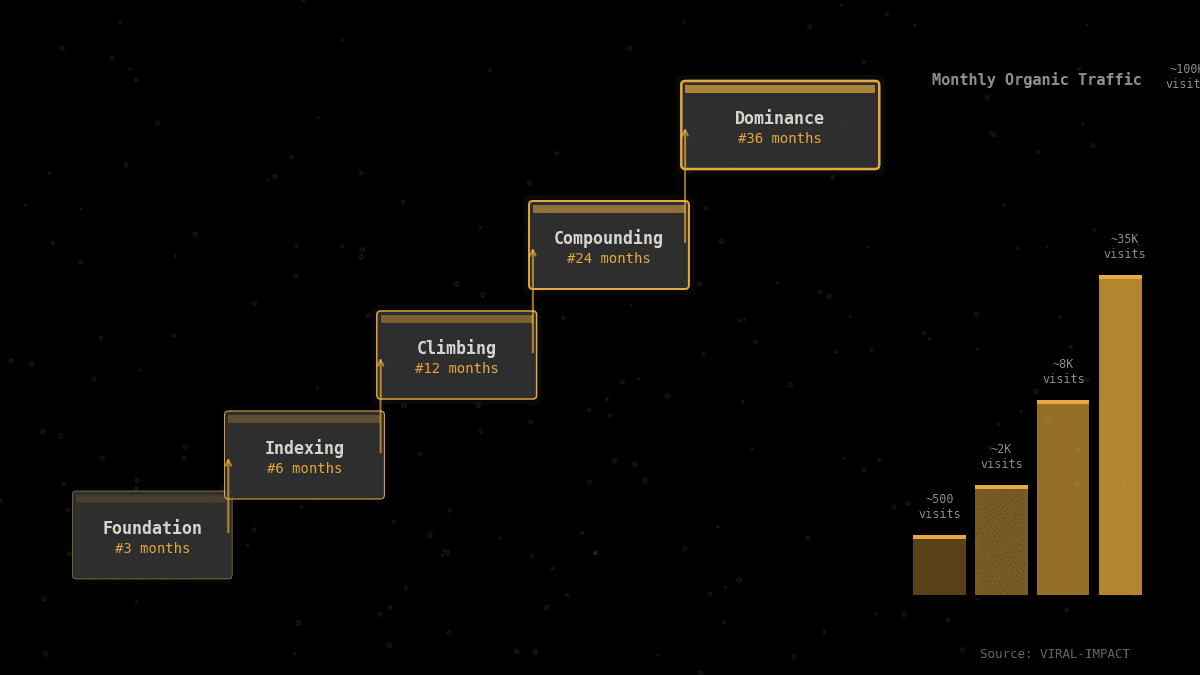
A realistic SEO timeline for most B2B startups:
Months 1 to 3: Technical foundation, keyword research, and on-page setup. Minimal traffic yet.
Months 3 to 6: First pages index. Long-tail queries generate small, consistent traffic volumes.
Months 6 to 12: Mid-competition keywords climb. Organic becomes a trackable acquisition channel.
Months 12 to 24: Compounding activates. High-performing pages earn backlinks that boost newer content.
Month 24 onward: With consistency, SEO typically becomes the highest-ROI acquisition channel available.
The ROI Numbers Startups Should Know
Organic search leads carry a 14.6 percent close rate compared to 1.7 percent for outbound leads. The quality gap exists because organic visitors arrive actively looking for what you offer, pre-qualified, before the first conversation.
For startups, this ROI plays out structurally. Customers acquired through organic growth carry lower acquisition costs over a 36-month horizon. Prospects who find you through search trust your expertise before the first conversation, shortening the sales cycle.
The return curve over three years follows a consistent pattern for startups that stay committed:
Year 1: Investment phase: Content is being created, indexed, and beginning to rank. Revenue attribution is limited, but foundations are being set.
Year 2: Returns exceed costs: Rankings drive qualified leads at a fraction of paid-channel costs. Customer acquisition cost declines.
Year 3: Lowest-cost channel: Organic search outperforms all paid channels in lead volume and closes at a lower cost per acquisition.
Table 2: Organic Traffic Growth Milestones for B2B Startups
Timeline | Monthly Sessions | Domain Authority | Ranking Keywords |
Month 3 | 200–500 | 5–15 | 50–200 |
Month 6 | 800–2,000 | 15–25 | 300–700 |
Month 12 | 3,000–8,000 | 25–40 | 1,000–3,000 |
Month 24 | 12,000–35,000 | 40–55 | 5,000–12,000 |
Month 36 | 40,000–100,000+ | 55–70 | 15,000–40,000 |
*Median performance ranges for B2B startups with consistent content production and link building.
The Four SEO Pillars Startups Must Build in Parallel
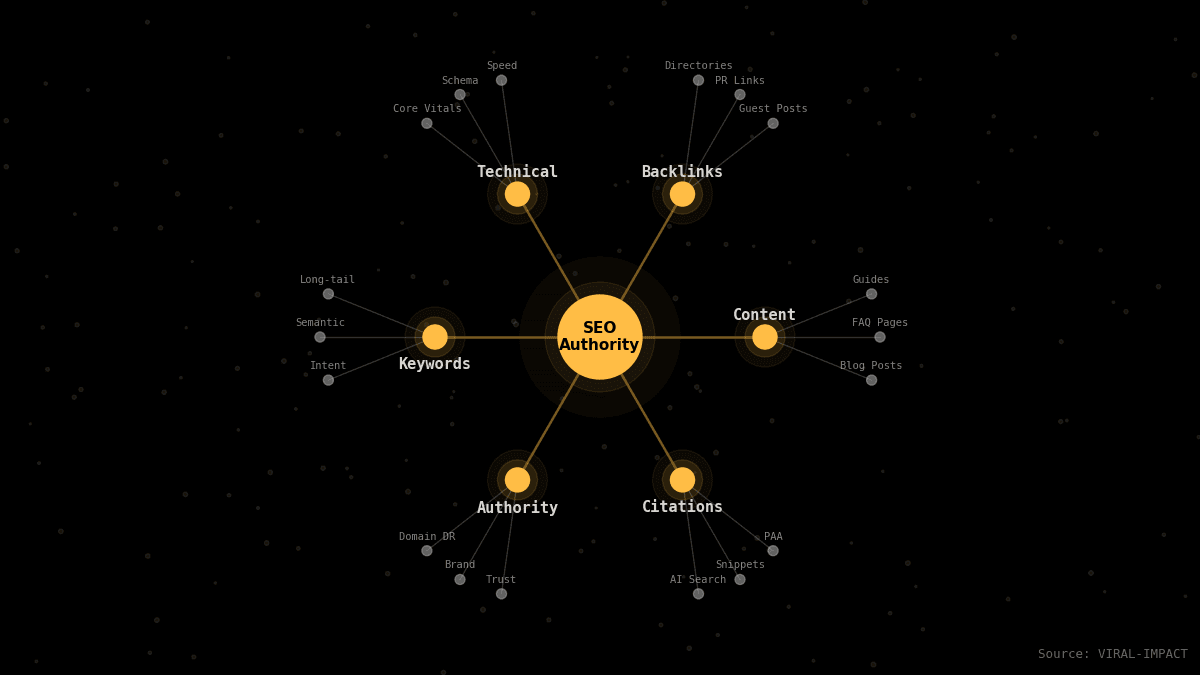
The best long-term results come from a structured program, not random publishing. A coherent SEO strategy covers four pillars that need to function simultaneously for compounding to activate.
The four pillars every startup SEO program needs:
Technical SEO: Site speed, mobile-first indexing, crawlability, and Core Web Vitals. Without clean technical infrastructure, quality content rarely reaches its ranking potential.
On-page optimization: Every page must target a specific keyword cluster with optimized titles, headers, meta descriptions, and internal linking across related content.
Content production: Consistent blog writing targeting buyer questions builds topical authority and captures long-tail demand from conversion-ready prospects.
Off-page authority: Strategic guest posting on high domain rating sites and press placements earn backlinks that strengthen your entire domain.
Each pillar feeds the others. Content with zero backlinks ranks slowly. Strong technical SEO with thin content stalls. Compounding only activates when all four run in sync.
Treating content as something you produce to feed an algorithm is a mistake. Content is the moat. Google's Helpful Content updates have rewarded depth, genuine expertise, and real reader utility consistently. Thin, keyword-stuffed articles no longer hold rankings in competitive verticals.
What actually drives rankings for startups in 2026:
Long-form content that answers specific questions with real depth and supporting data, not surface-level summaries
Semantically structured content covering full topic clusters, not single keywords in isolation from related terms
Answer-engine formatting designed to appear in AI Overviews, Featured Snippets, and People Also Ask boxes
Tightly interlinked content clusters where pages reinforce each other and guide buyers naturally deeper into your site
Startups that invest in quality startup SEO from their earliest months consistently outcompete larger incumbents by Series A. The moat deepens with every piece you publish.
FAQs
Q1:How long does SEO take to show results for a new startup?
Most startups see measurable organic traffic growth between months 6 and 12. Significant ROI compounds from month 18 onward, depending on content consistency and starting domain authority. The earlier you begin, the steeper the return curve.
Q2:Is SEO worth investing in at the pre-seed or seed stage?
Yes. Starting early means domain authority and content library grow alongside your product. Founders who wait until Series A typically spend far more to reach the same visibility their earlier competitors built organically.
Q3:How much should a startup budget for SEO monthly?
Most early-stage startups allocate $1,500 to $5,000 per month on SEO, including content creation, technical work, and link building. This scales as growth targets increase and the program expands across more keyword clusters.
Q4:Can SEO eventually replace paid advertising for a startup?
Not immediately, but over time, SEO significantly reduces dependence on paid channels. A blended approach works best in the first 6 to 12 months. By year two or three, a mature organic program typically outperforms paid channels in qualified lead volume and cost per acquisition.
Conclusion: Start Investing in SEO Today
SEO is not a tactic you run for 90 days and evaluate. It is long-term infrastructure, the digital equivalent of building your own distribution channel, one that keeps delivering returns after the initial work is complete.
For startups in competitive markets, the question is not whether to invest in search engine optimization. It is how soon to start. Every month without it is a month your competitors are building the authority, backlink profile, and brand recognition you will need to match. The compounding math only works in your favor when you start early.
Our SEO strategy service gives your startup a complete roadmap for ranking on Google and getting cited across AI platforms. Built for founders who want sustainable, compounding organic growth, not rented attention from ad platforms.
Start Building at viral-impact.com
Call-to-Action
Looking to fast-track your SEO success? Contact us for a free consultation to create a personalized SEO strategy that drives long-term results. Let's grow your startup together!
Read more

Learn which marketing skills remain irreplaceable as AI transforms search, content, and strategy for the next decade.

Learn how to reposition your startup brand after a pivot and maintain marketing momentum without losing your audience.
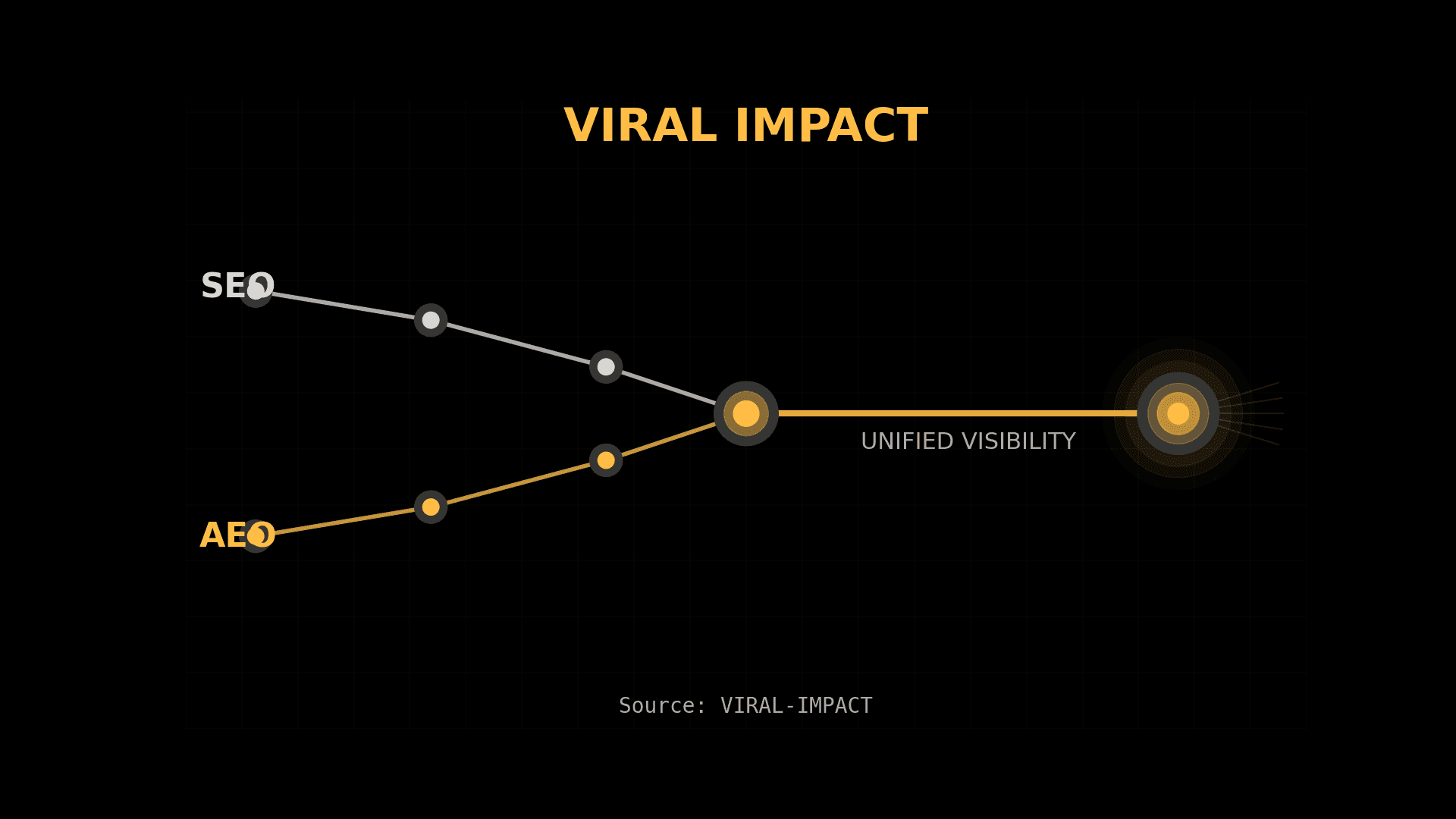
Learn the key differences between AEO and SEO and discover which strategy your startup should prioritize in 2026.