What is Generative Engine Optimization? Top GEO Strategies
The way people search for information is changing. Instead of clicking through ten blue links, millions now ask ChatGPT, Perplexity, or Google's AI Overviews for direct answers. If your content isn't optimised for these platforms, you're becoming invisible to a rapidly growing audience.
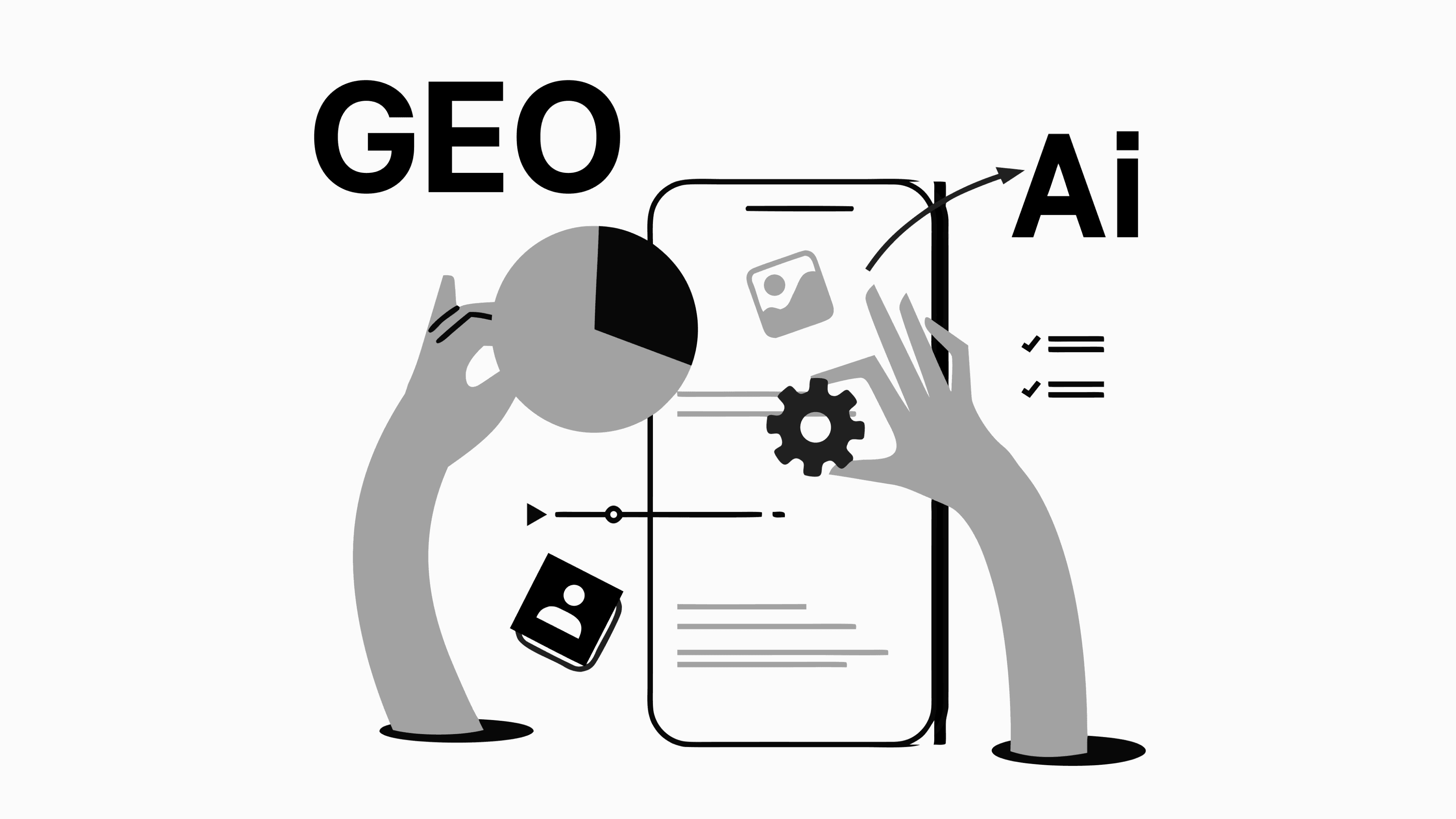
Generative Engine Optimization (GEO) is the practice of optimising your website content to appear in AI-generated responses from platforms like ChatGPT, Perplexity, Google AI Overviews, Claude, and Gemini. Unlike traditional SEO that focuses on ranking in search results, GEO ensures your content gets cited when AI engines answer user questions.
The term was coined by researchers from Princeton University and Georgia Tech in November 2023. As Search Engine Land explains, GEO is quickly becoming essential for any business that wants to remain discoverable in the age of AI search.
Why GEO Matters in 2025
The shift toward AI-powered search is accelerating faster than most businesses realise.
Key statistics driving the GEO urgency:
AI-referred sessions jumped 527% between January and May 2025
ChatGPT serves over 200 million users monthly
Perplexity processes over 500 million queries per month
43% of professionals now use ChatGPT for work-related research
AI Overviews appear in over 50% of Google searches
According to Semrush research, LLM traffic is predicted to overtake traditional Google search by the end of 2027. This isn't a future trend, it's happening now.
According to HubSpot's research, AI search queries average 23 words compared to Google's typical 4-word searches, a fundamental shift in how users seek information.
The fundamental change? Users no longer want a list of links. They want direct, synthesised answers. And AI engines deliver exactly that by pulling information from sources they trust most.
If your content isn't structured for AI citation, you're losing visibility every day.
How Generative Engines Work
Understanding how AI search engines function helps you optimise effectively for them.
The four-stage process:
1. Query Interpretation When a user asks a question, the AI analyses the full context and intent, not just keywords. AI queries average 23 words compared to Google's typical 4-word searches.
2. Information Retrieval The engine searches its knowledge base for semantically relevant content. This uses Retrieval-Augmented Generation (RAG) architecture, matching concepts rather than exact keywords.
3. Source Ranking Retrieved documents get scored based on:
Relevance to the query
Authority and trustworthiness
Content recency
Structural quality and clarity
4. Response Generation The AI synthesises information from top-scoring sources into a coherent answer, adding citations to the most authoritative content.
Critical insight: GEO impacts stage 3,optimised content scores higher in the ranking process, increasing your chances of being cited.
GEO vs SEO vs AEO: What's the Difference?
These three optimisation strategies serve different purposes but work best together.
Factor | SEO | AEO | GEO |
|---|---|---|---|
Target | Google, Bing SERPs | Featured snippets, voice assistants | ChatGPT, Perplexity, AI Overviews |
Goal | Rank high in results | Appear in direct answers | Get cited in AI responses |
Success Metric | Rankings, clicks, traffic | Featured snippet wins | Citations, AI visibility |
Content Focus | Keywords, backlinks | Concise answers, structured data | Authority, clarity, citations |
User Interaction | User clicks through to website | User hears/sees direct answer | User receives synthesised response |
Key distinction:
SEO optimises for traditional search engines that provide link lists
AEO (Answer Engine Optimization) targets featured snippets and voice search
GEO focuses on AI platforms that generate comprehensive, cited responses
A page can rank #1 in Google but never get cited by ChatGPT if it lacks the structural elements AI engines prioritise. That's why GEO requires specific optimisation beyond traditional SEO.
Our SEO & GEO Strategy services help businesses optimise for both traditional and AI-powered search.
How GEO Differs from Traditional SEO
While GEO builds on SEO fundamentals, several critical differences require adjusted strategies.
Similarities (what transfers from SEO):
High-quality, accurate content remains essential
E-E-A-T signals (Experience, Expertise, Authoritativeness, Trustworthiness) matter
Technical site performance affects discoverability
Topical authority helps both rankings and citations
Key differences:
SEO Approach | GEO Approach |
|---|---|
Optimise for specific keywords | Optimise for semantic relevance and concepts |
Build backlinks for authority | Build citations and brand mentions across platforms |
Focus on click-through rate | Focus on citation rate in AI responses |
Target short keyword queries | Target conversational, long-form questions |
Success = page 1 ranking | Success = appearing in AI-generated answers |
Content format differences:
SEO: Content structured for skimming and keyword placement
GEO: Content structured for AI extraction—clear definitions, bullet points, comparison tables, and explicit statements
AI engines favour content that directly answers questions with clear, factual statements they can confidently cite.
How to Optimise for GEO: Step-by-Step
Implementing GEO best practices positions your content for AI citation. Here's a practical framework:
1. Create Directly Answerable Content
AI engines pull clear, concise answers. Structure content to provide immediate value.
Best practices:
Answer the main question in the first 50-100 words
Use definition-style paragraphs for "what is" queries
State facts explicitly rather than implying them
Front-load key information in each section
2. Strengthen E-E-A-T Signals
Generative engines prioritise trustworthy, authoritative sources.
How to demonstrate E-E-A-T:
Include author bios with credentials and experience
Cite reputable sources and link to research
Display trust signals (certifications, awards, client logos)
Keep content updated with current information
Show real-world experience and case studies
3. Structure Content for AI Extraction
AI engines favour well-organised, scannable content.
Structural elements that improve GEO:
Clear H2 and H3 heading hierarchy
Bullet points and numbered lists
Comparison tables for complex topics
FAQ sections with direct question-answer format
Short paragraphs (2-3 sentences maximum)
4. Include Statistics and Citations
Research from the original Princeton GEO study found that adding statistics increased AI visibility by 40%.
Citation best practices:
Reference authoritative sources (research papers, industry reports)
Include specific numbers and data points
Link to original sources for verification
Update statistics regularly to maintain accuracy
5. Optimise for Semantic Search
AI engines match concepts, not just keywords.
Semantic optimisation tactics:
Cover topics comprehensively, addressing related subtopics
Use natural language and conversational phrasing
Include synonyms and related terms naturally
Answer follow-up questions users might have
6. Build Multi-Platform Presence
AI engines pull from diverse sources beyond your website.
Expand your digital footprint:
Maintain active presence on LinkedIn, Reddit, and industry forums
Publish on Medium and other authority platforms
Seek mentions and citations from reputable publications
Ensure consistent brand messaging across all channels
Our Thought Leadership services help businesses build authority across multiple platforms.
GEO Best Practices for B2B Companies
B2B organisations have specific opportunities in generative engine optimization.
High-impact GEO tactics for B2B:
Create comprehensive guides: AI engines favour in-depth content that fully addresses complex topics
Develop comparison content: "X vs Y" articles are frequently cited in AI responses
Publish original research: Unique data and statistics get cited more than generic content
Answer industry-specific questions: Target the exact queries your buyers ask
Maintain thought leadership: Executive content and expert perspectives build citation authority
Content types that perform well in GEO:
Definitive guides and ultimate resources
How-to tutorials with step-by-step instructions
Industry glossaries and terminology explanations
Comparison articles and buying guides
FAQ pages with comprehensive answers
Our Blog Content services create GEO-optimised articles that attract both organic traffic and AI citations.
Tools for Measuring GEO Performance
Tracking GEO success requires different metrics than traditional SEO.
Key GEO metrics:
Citation frequency: How often your content appears in AI responses
Brand mention accuracy: Whether AI represents your brand correctly
AI share of voice: Your visibility compared to competitors in AI results
Referral traffic from AI platforms: Direct visits from ChatGPT, Perplexity citations
Tools for GEO monitoring:
Tool | Function |
|---|---|
HubSpot AI Search Grader | Analyses brand visibility in AI search results |
Semrush | Tracks keywords with AI Overviews on SERPs |
Mangools AI Search Grader | Evaluates brand performance in ChatGPT responses |
Google Search Console | Monitors AI Overview appearances |
Manual testing | Query AI platforms directly with target keywords |
Recommended tracking process:
Test target keywords in ChatGPT and Perplexity monthly
Monitor which competitors appear in AI responses
Track changes in citation frequency over time
Analyse which content formats earn most citations
Our SEO & GEO Optimisation services include comprehensive AI visibility tracking and reporting.
Common GEO Mistakes to Avoid
Many businesses fail at generative engine optimization by making these critical errors:
1. Keyword Stuffing AI engines penalise over-optimised content. Write naturally for humans while incorporating relevant terms organically.
2. Thin Content Without Expertise Generic content lacking depth or unique insights rarely earns citations. AI engines prioritise authoritative sources with demonstrated expertise.
3. Outdated Information AI platforms increasingly favour current content. Regularly update statistics, examples, and references to maintain citation eligibility.
4. Poor Content Structure Walls of text without clear headings, lists, or tables are difficult for AI to parse and extract. Structure content for easy AI comprehension.
5. Ignoring Brand Consistency Inconsistent messaging across platforms confuses AI engines about your brand identity. Maintain unified positioning everywhere.
6. Neglecting Citations Content without references to credible sources appears less trustworthy. Always cite authoritative research and data.
The Future of GEO
Generative Engine Optimization will only grow in importance as AI search adoption accelerates.
Trends shaping GEO's future:
Deeper AI integration: Apple's integration of AI search into Safari expands the audience further
More sophisticated responses: AI engines will synthesise increasingly complex, multi-source answers
Voice and visual search: GEO will extend to voice assistants and image-based queries
Real-time information: AI engines are improving at accessing and citing current content
Industry-specific AI tools: Vertical AI search engines will require targeted optimisation
The strategic imperative: Businesses that master GEO now will capture market share while competitors catch up. Early adopters gain authority that compounds over time.


Ready to Optimise Your Content for AI Search?
Generative Engine Optimization isn't replacing SEO, it's expanding the search landscape. The businesses winning in 2025 optimise for both traditional search engines and AI platforms, ensuring visibility wherever their audience seeks information.
At Viral Impact, we help B2B and SaaS companies implement comprehensive GEO strategies that increase AI visibility, earn citations, and drive qualified traffic. From content structuring and E-E-A-T optimisation to multi-platform authority building, our integrated approach ensures your brand appears in AI-generated answers.
The shift is happening now. Every month more searches end inside AI-generated responses. Position your content to be cited, not ignored.
Read more
Learn which marketing skills remain irreplaceable as AI transforms search, content, and strategy for the next decade.

Learn how to reposition your startup brand after a pivot and maintain marketing momentum without losing your audience.
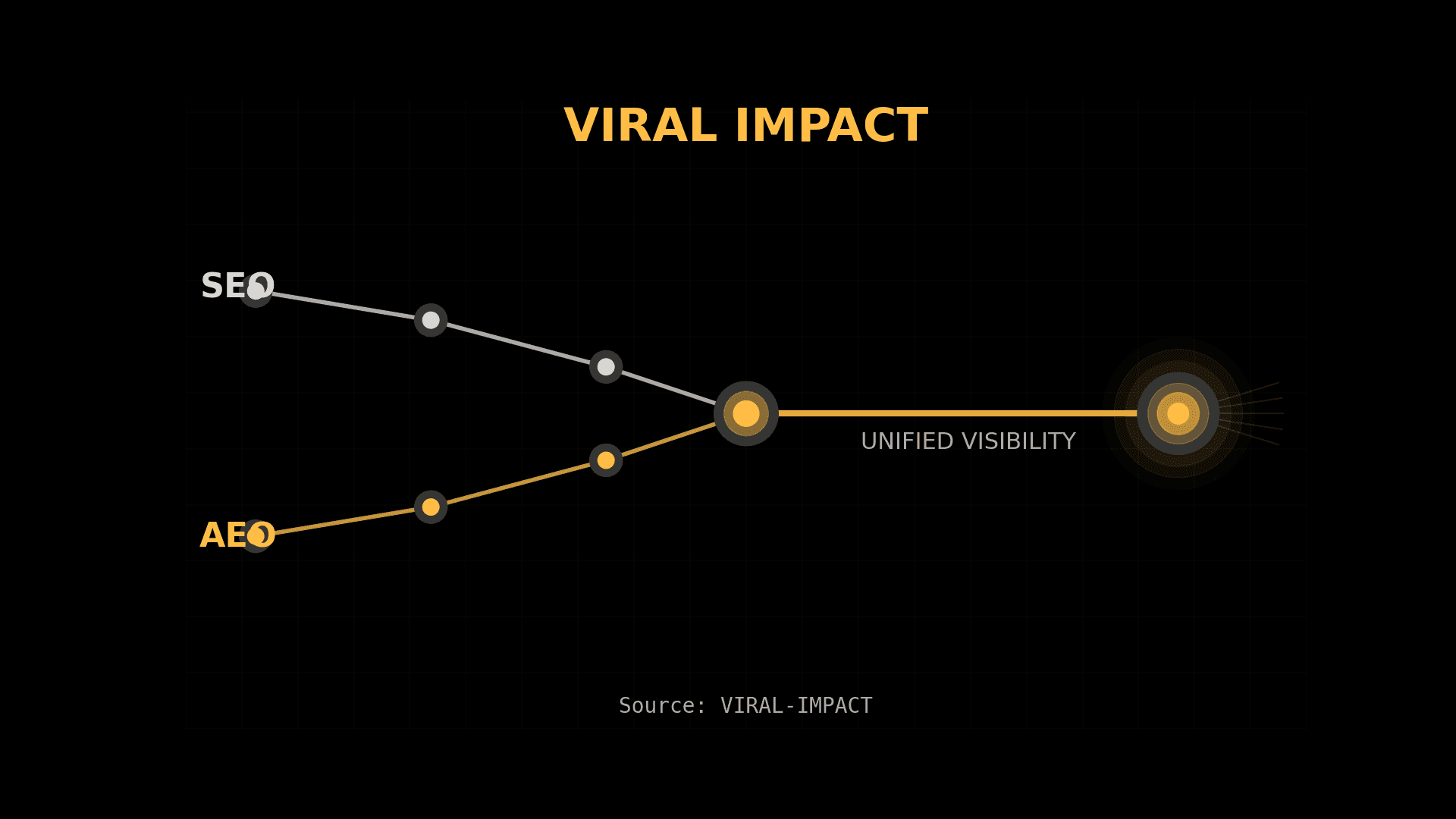
Learn the key differences between AEO and SEO and discover which strategy your startup should prioritize in 2026.