Building a Revenue Engine When Sales Meets Marketing
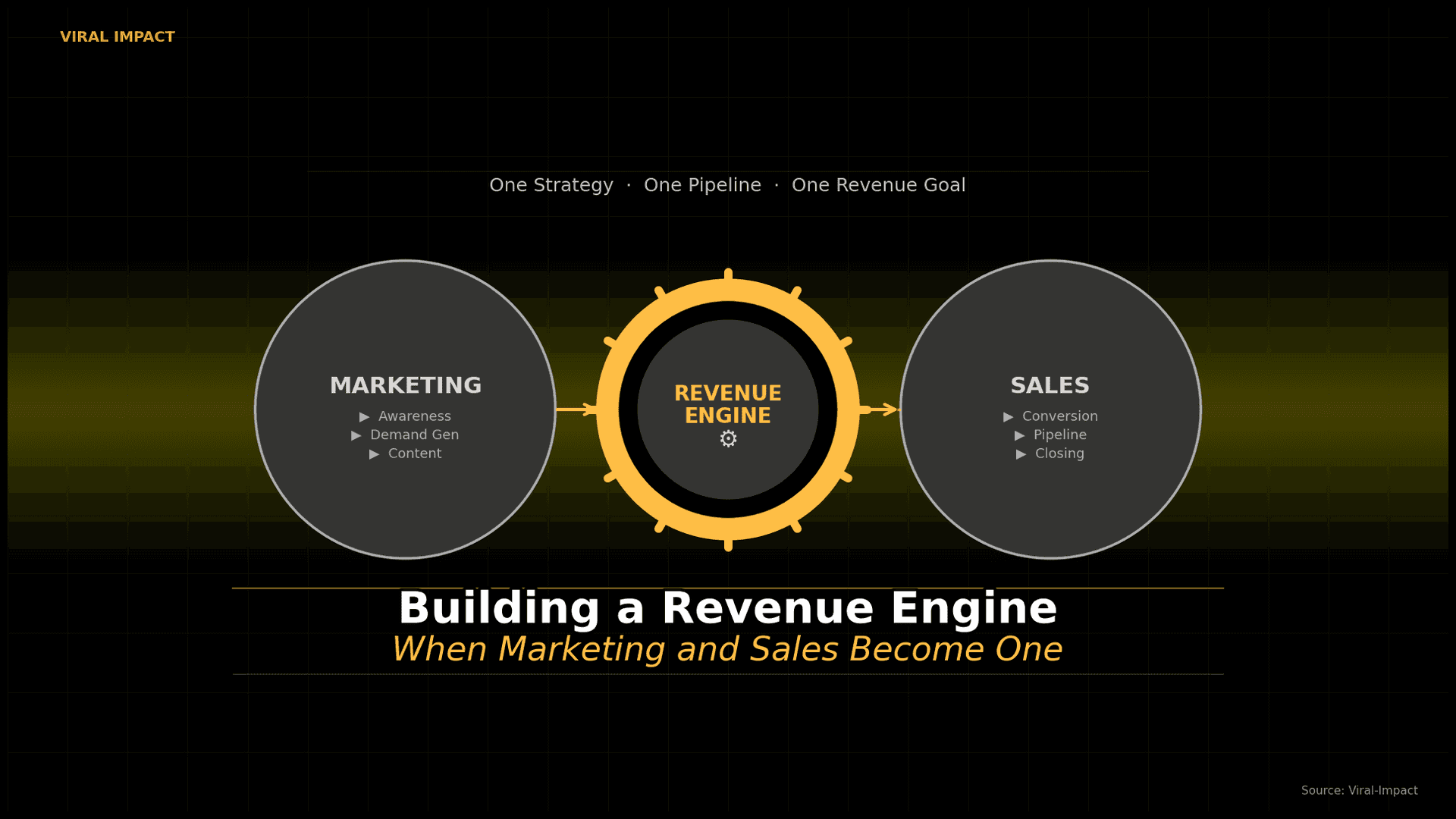
Most businesses treat marketing and sales as two separate functions with different goals, different tools, and different definitions of success. This fundamental disconnect silently kills revenue growth, creating friction throughout the buyer journey and leaving significant money on the table every month.
A revenue engine dissolves that divide. It is a unified, data-driven system where marketing generates qualified demand, and sales converts it efficiently, with both teams sharing the same strategy, metrics, and pipeline accountability. When this alignment clicks, companies close deals faster and build predictable, compounding revenue that competitors cannot easily replicate.
Table 1: Impact of Marketing and Sales Alignment on Business Performance (2024–2025)
Metric | Misaligned Teams | Aligned Teams | Source |
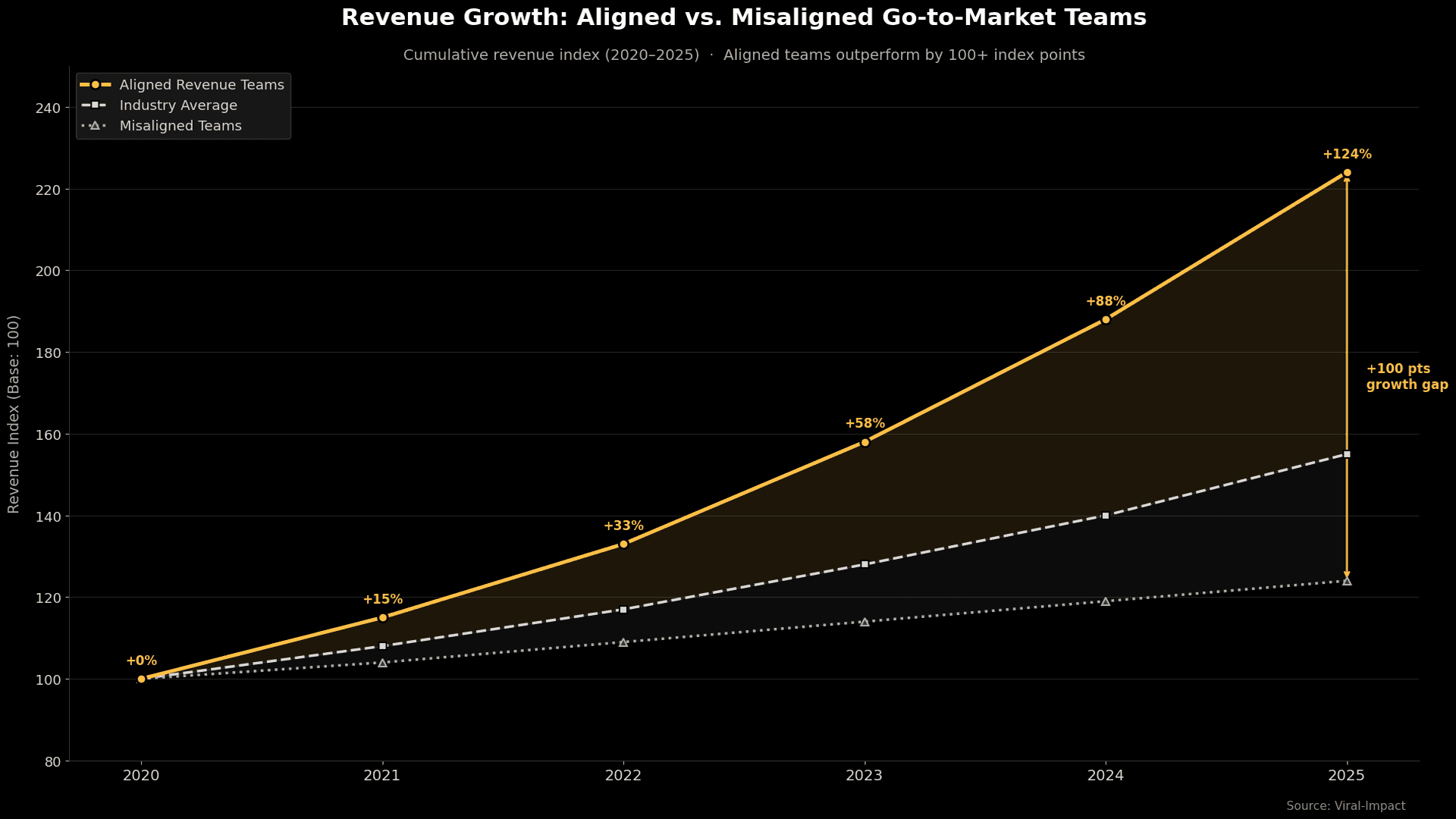
Annual Revenue Growth | 7–9% | 24–27% | LinkedIn B2B Research 2024 |
Deal Win Rate | 41% | 67% | HubSpot State of Sales 2025 |
Average Sales Cycle | 94 days | 58 days | Gartner GTM Report 2024 |
Customer Retention Rate | 73% | 89% | Forrester Alignment Study 2024 |
Marketing ROI Improvement | Baseline | +20% | Gartner GTM Report 2024 |
Lead-to-Revenue Conversion | 3.2% | 9.8% | Demand Gen Report 2025 |
What Is a Revenue Engine and Why Does It Matter?
A revenue engine is a framework that integrates every customer-facing activity, from first click to closed deal, into a single optimized system. Unlike siloed approaches, it treats the entire buyer journey as a shared responsibility between marketing, sales, and customer success. Companies that build one-stop competing internally and start compounding externally.
According to LinkedIn's B2B Institute, aligned companies achieve 24 percent faster revenue growth and 27 percent faster profit growth over three years. The components that make it work include:
• Shared Ideal Customer Profile (ICP) agreed upon by both teams.
• Unified lead definitions including MQL, SQL, and PQL thresholds.
• Integrated CRM and marketing automation with full funnel visibility.
• Collaborative content strategy supporting every sales conversation.
• Shared OKRs and revenue attribution, rewarding both teams for the same outcomes.
Why Marketing and Sales Misalignment Is Costing You Revenue
The cost of misalignment is measurable. Research from Forrester shows misaligned companies lose 10 percent or more revenue annually due to poor go-to-market coordination. Common failure points include:
• Lead leakage: High-intent prospects go cold because sales follow-up is too slow or never happens.
• Duplicated effort: Both teams build similar content and outreach sequences without coordination.
• Inconsistent messaging: Prospects hear a different story from a blog versus a sales call, eroding trust.
• Attribution chaos: Neither team can prove ROI, making budget decisions guesswork.
• Longer sales cycles: Without aligned nurture sequences, deals stall at every funnel stage.
These are structural problems that compound as your team scales and become exponentially harder to fix without deliberate architectural intervention.
The Four Pillars of a High-Performance Revenue Engine
Building a revenue engine requires deliberate architecture. Telling teams to work together without changing systems produces no lasting results. The four essential pillars are:
1. Shared data infrastructure: Both teams work from the same CRM data, attribution reports, and behavioral signals. Sales knowing which content a prospect engaged with transforms call relevance.
2. A unified content engine: Marketing creates battle cards, objection guides, and sequences built around real buyer questions. A solid content strategy mapped to each sales stage makes this scalable.
3. Revenue-focused SEO and AEO: Ranking for high-intent keywords brings prospects ready to buy. Connect your SEO strategy directly to the ICP-qualified pipeline to turn organic search into revenue.
4. Closed-loop feedback: Sales reports lead quality, objection patterns, and win rates back to marketing, enabling continuous targeting and campaign refinement.
How to Build Alignment Around a Shared Revenue Goal
Real alignment requires structural changes to how both teams are measured, not just better communication. Without shared accountability, each department optimizes for its own metrics. Proven steps include:
• Define pipeline goals in dollar terms, not lead volume or impressions shared by both teams.
• Create a formal SLA defining lead handoff criteria, follow-up time limits, and lead recycling rules.
• Hold weekly joint revenue syncs reviewing pipeline health, campaign conversion, and deal stage movement.
• Build a shared lead scoring model so both teams trust and act on the same quality signals.
• Invest in organic growth that builds brand at the top of the funnel while driving conversion content at the bottom.
According to Gartner, aligned companies see 15 to 20 percent better marketing ROI and up to 30 percent greater sales productivity. Structural alignment is a direct growth multiplier.
High-Impact Touchpoints That Accelerate Pipeline
A revenue engine identifies and prioritizes the touchpoints that actually move deals forward. High-impact investments include:
• Behavioral email outreach sequences triggered by specific signals, not just time-based drips.
• Landing page optimization addressing ICP pain points and eliminating friction at every conversion step.
• Decision-stage case studies provide the third-party evidence prospects need to finalize purchase decisions.
• Retargeting campaigns re-engaging warm prospects with messaging that reflects where they dropped off.
• Smart demo routing that connects prospects to the right sales rep based on company size and expressed intent.
Table 2: Revenue Engine Performance Benchmarks by Channel (2025)
Metric | Industry Average | Top Performers | Opportunity Gap |
MQL to SQL Conversion | 13% | 25%+ | +12 pts |
Lead Response Time | 42 hours | Under 5 min | 504x faster |
CAC Payback Period | 18 months | Under 12 months | −6 months |
Pipeline Coverage Ratio | 3x | 4.5–5x | +1.5x |
Content-Assisted Close Rate | 28% | 65% | +37 pts |
Email Outreach Reply Rate | 1–3% | 8–12% | +7–9 pts |
Revenue Engine Metrics That Drive Real Decisions
Vanity metrics are the enemy of a revenue engine. High-performing teams track metrics that create shared accountability and expose where the funnel breaks down:
• MQL to SQL conversion rate clearest signal of lead quality and sales-marketing agreement
• Sales cycle length shortening, this is the highest-leverage revenue optimization available
• Pipeline velocity stalling deals reveal content, enablement, or follow-up failures
• Customer Acquisition Cost (CAC) aligned teams consistently reduce this over time
• Revenue attribution by channel tells you which marketing investments generate actual closed revenue
Ready to Build Your Revenue Engine?
Aligning marketing and sales into a unified, compounding revenue engine is the highest-leverage growth investment a scaling startup can make. It reduces waste, accelerates pipeline, and creates predictable growth. At Viral Impact, we build exactly these systems for startups and B2B brands from SEO-driven demand generation to conversion-optimized outreach and content that enables your sales team at every stage.
Visit viral-impact.com today and let us build your revenue engine together.
FAQs
What is a revenue engine in B2B marketing?
A revenue engine is an integrated go-to-market system where marketing and sales share strategy, data, and pipeline accountability. Both teams contribute to the same revenue goal rather than operating separate funnels. It typically combines SEO, content marketing, outreach, and CRM automation into one connected framework that compounds over time.
How do you align marketing and sales teams effectively?
Start with shared revenue goals, not separate departmental KPIs. Create a formal SLA defining lead handoff criteria and follow-up expectations. Run weekly joint pipeline reviews, build a shared lead scoring model, and ensure both teams have full CRM visibility. Structural systems create lasting alignment more reliably than cultural initiatives alone.
How long does it take to build a revenue engine?
Most companies see meaningful pipeline improvement within 60 to 90 days of implementing core alignment systems. Full revenue engine maturity, including optimized attribution and content-enabled sales, typically takes six to twelve months. Startups that build early before scaling see the highest ROI and avoid costly misalignment as the team grows.
What metrics should a revenue engine track?
Track MQL to SQL conversion rate, sales cycle length, pipeline velocity, Customer Acquisition Cost, and revenue attribution by channel. These metrics surface bottlenecks, create accountability between teams, and enable confident, data-backed budget allocation decisions that drive continuous improvement.
What is the difference between demand generation and a revenue engine?
Demand generation creates awareness and interest at the top of the funnel. A revenue engine connects the demand to sales conversion, onboarding, and retention in a single system. While demand gen feeds leads into the pipeline, a revenue engine ensures those leads convert efficiently and contribute to sustainable long-term revenue growth.
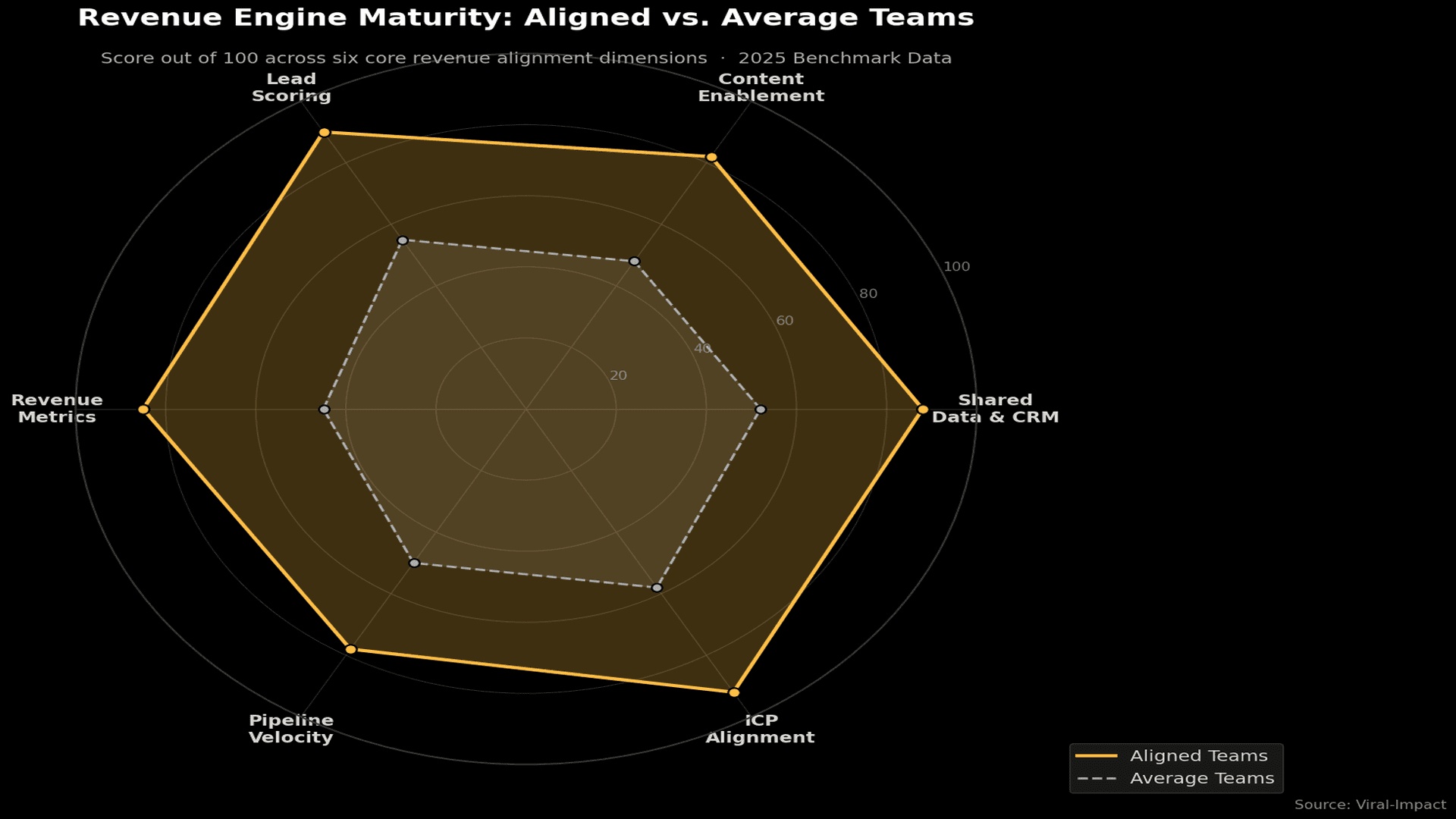
The companies that will dominate their categories are not the ones spending the most on ads or hiring the most aggressive sales reps. They are the ones that integrate marketing and sales into a single, intelligent revenue engine that compounds with every campaign, conversation, and closed deal.
The evidence is conclusive: aligned teams grow faster, win more deals, retain customers longer, and do it at significantly lower cost. The performance gap between aligned and misaligned companies will only widen as AI-powered buyers raise expectations for speed and relevance.
Building a revenue engine is an ongoing discipline, not a one-time project. It rewards companies willing to invest in shared systems, honest feedback loops, and structural accountability. Start with the fundamentals, measure relentlessly, and iterate with urgency. The revenue engine you build today becomes the competitive moat that is nearly impossible to replicate tomorrow.
Read more

Learn which marketing skills remain irreplaceable as AI transforms search, content, and strategy for the next decade.

Learn how to reposition your startup brand after a pivot and maintain marketing momentum without losing your audience.
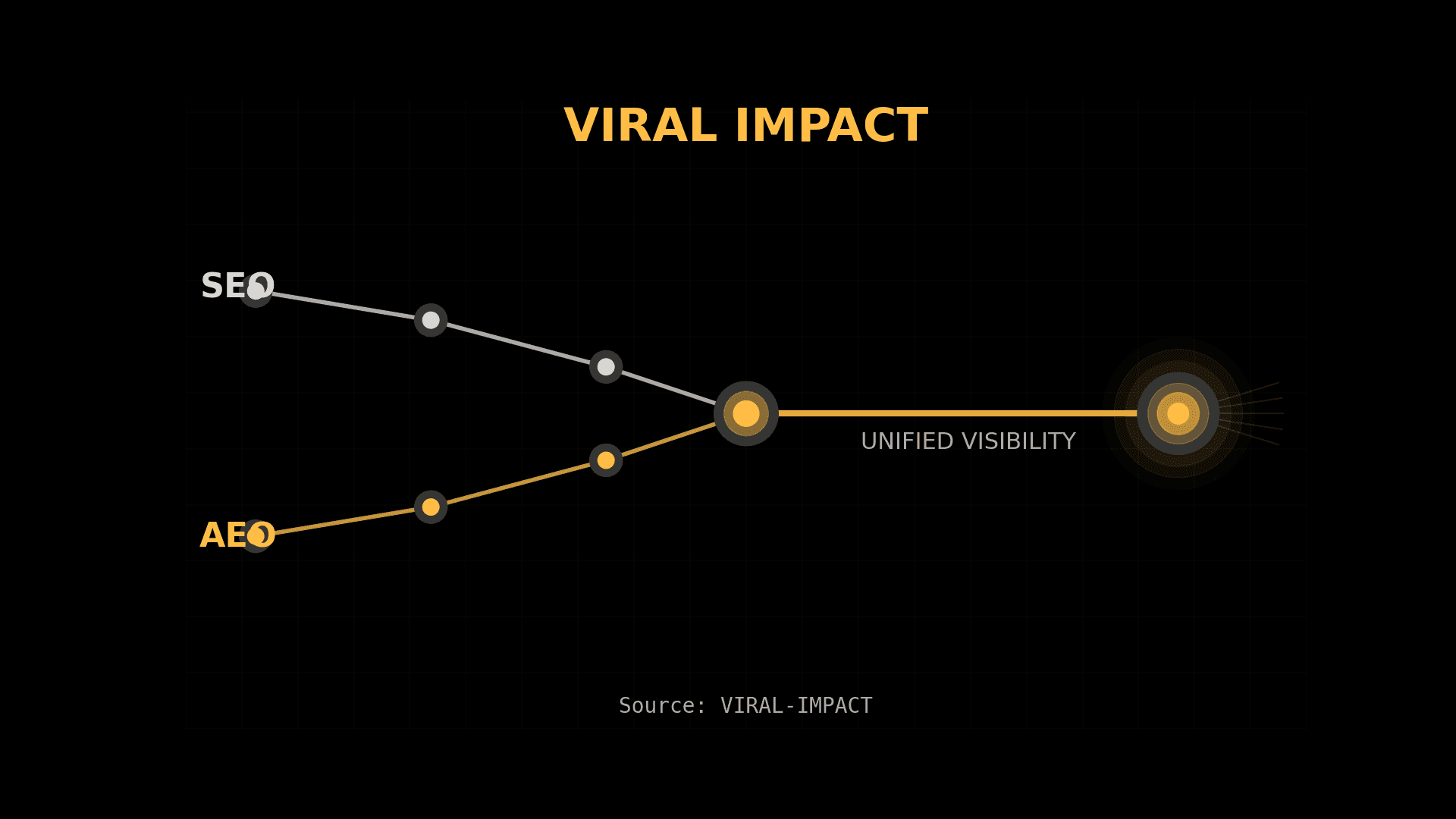
Learn the key differences between AEO and SEO and discover which strategy your startup should prioritize in 2026.