International AEO: Getting Cited by AI in Every Language
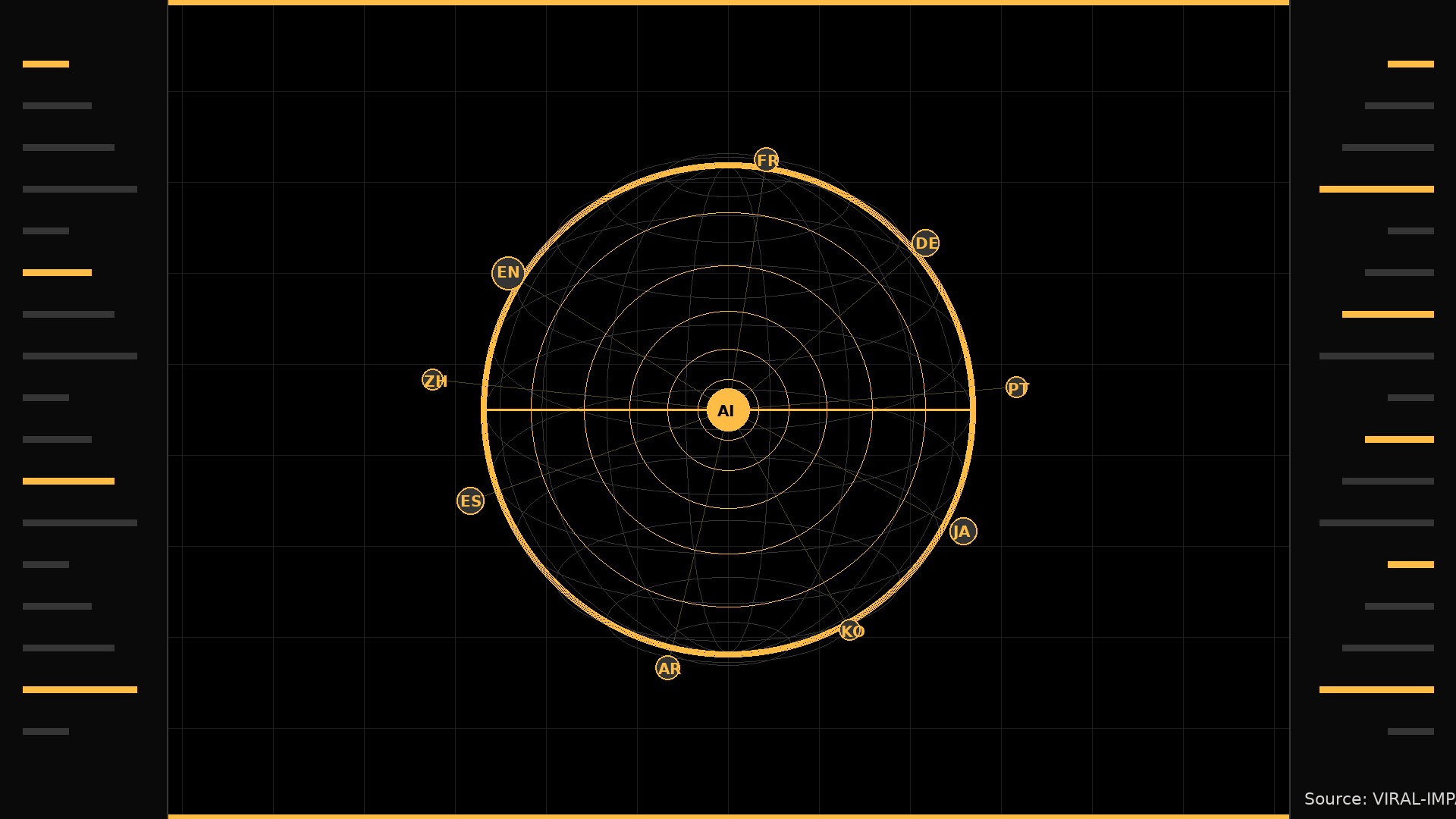
Getting cited by AI tools like ChatGPT, Perplexity, and Google AI Overviews is already a competitive edge in English. But if your business serves multiple regions, limiting your answer engine optimization efforts to one language means leaving real visibility behind in every market where competitors appear and you do not.
International AEO is the practice of structuring multilingual content so AI systems extract and cite it when users ask questions in German, Spanish, French, Japanese, Arabic, or any other language. It demands more than translation; the structure, authority signals, and query alignment must all be rebuilt for each target market.
Why International AEO Differs From Standard AEO
Standard AEO targets one language with predictable query patterns. International AEO introduces three compounding challenges. First, AI tools do not treat all languages equally. ChatGPT, Perplexity, and Google AI Overviews were trained predominantly on English text, making citation behavior more consistent there than elsewhere.
Second, search intent varies by culture. A German user searching for SaaS pricing expects different phrasing and a different depth of answer than an English-speaking counterpart. Third, domain authority does not transfer automatically across language versions. A strong English domain does not guarantee that your Spanish subfolders or French subdirectory will earn the same AI citation trust.
How AI Tools Handle Multilingual Content
Most major AI platforms support multiple languages, but vary significantly in their ability to cite non-English sources. These platform-level patterns are worth understanding before investing in multilingual content.
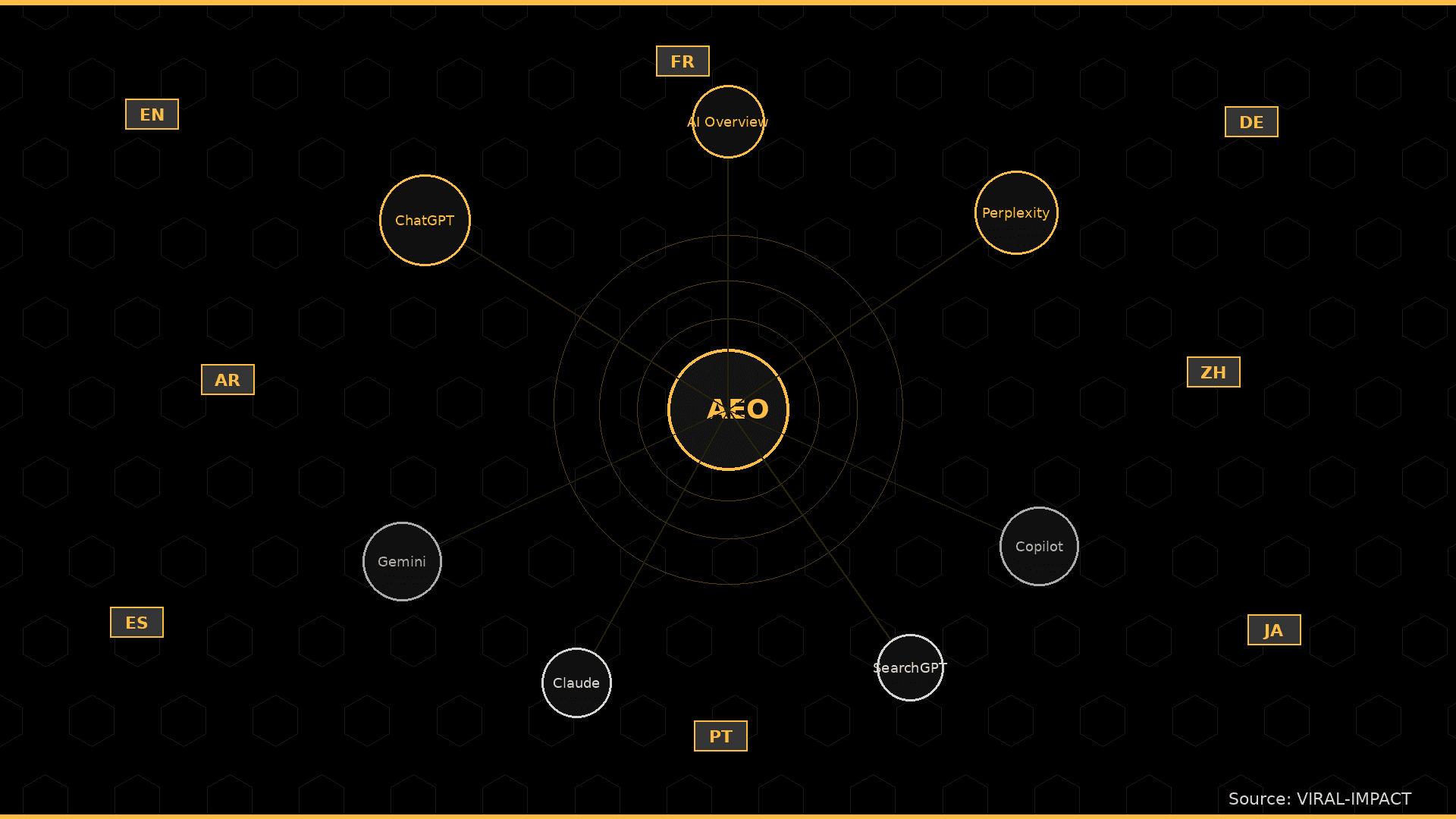
• ChatGPT: responds in the user's language but draws sources primarily from English and Western European content.
• Perplexity AI: has stronger multilingual citation behavior and regularly pulls from local-language sources across European and Asian markets.
• Google AI Overviews: tend to prioritize locally hosted or ccTLD domains for non-English queries.
• Gemini: has shown growing citation capability across Spanish, Japanese, French, and German through 2025 and into 2026.
According to Search Engine Journal, non-English AI citations are growing year over year as language model training datasets expand. The gap remains significant across B2B verticals and that gap is your opportunity.
The Languages Where AI Citations Matter Most
The highest-value markets for international AEO strategy in 2026 are driven by AI adoption rate, search volume, and content gap size. German and Japanese markets show very high B2B opportunities because AI-optimized local content is rare there, despite solid baseline content quality.
Language | AI Tool Coverage | Citation Gap vs. English | B2B Opportunity |
Spanish | High | Moderate | High |
German | High | Low to Moderate | Very High |
French | High | Moderate | High |
Portuguese | Medium | High | Medium |
Japanese | Medium | High | High |
Arabic | Medium | Very High | Medium |
Dutch | Medium | High | Medium |
Italian | Medium | Moderate | Medium |
Structuring Multilingual Content for AI Citations
Translation alone does not produce AI-citable content. Before expanding internationally, review how the AI-citable structure works in your base language by reading this guide on AI citations, then apply those principles per market using the requirements below.
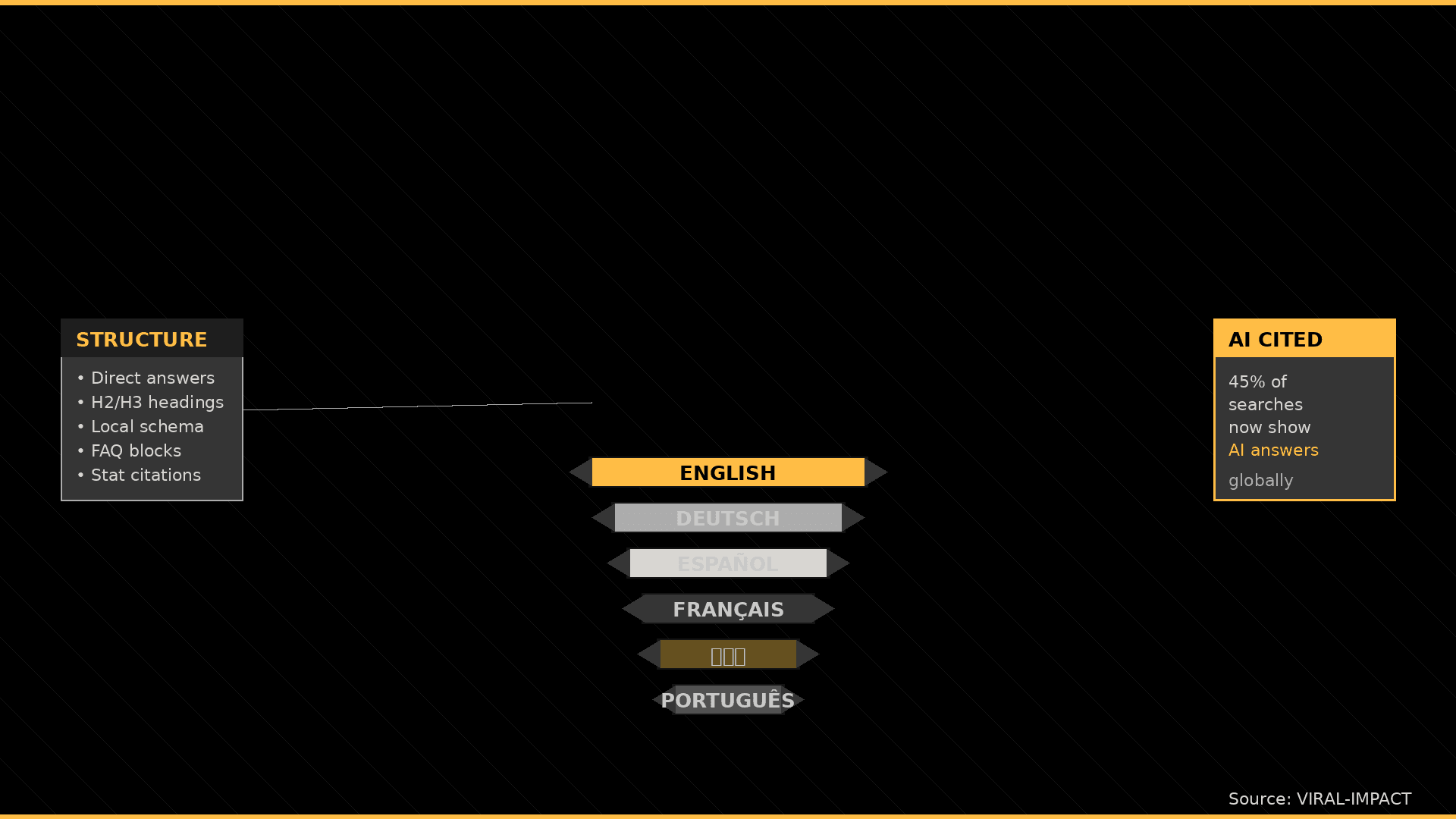
• Open with a direct answer to the primary query written naturally in the target language
• Use H2 and H3 headings that reflect how local users phrase their search questions do not translate English headings directly
• Include statistics from local or regional research, as AI tools weight locally relevant data more heavily in non-English responses
• Build FAQ blocks with questions phrased in conversational, culturally natural language for each market
One frequently missed technical element is hreflang tags. These tell AI crawlers which version of a page corresponds to which language and region. Missing or misconfigured hreflang is a leading reason multilingual content fails to earn citations. Ahrefs documents the most common hreflang errors and how to correct them.
Building Authority in Non-English Markets
Earning citation authority in non-English markets uses different signals than English, and for early-stage companies, those signals are often more accessible. The methods below consistently improve multilingual citation rates.
• Local press coverage: Country-specific tech publications signal regional authority to AI platforms
• Language-specific guest posting: High-domain blogs in German, Spanish, or French build multilingual backlink profiles that AI tools treat as trusted
• Localized directory listings: Clutch, G2, and regional equivalents carry citation weight in non-English AI responses for SaaS and B2B categories
• Wikipedia in target languages: Wikipedia is frequently cited across all AI platforms, and its non-English sections are thinner and easier to earn a relevant presence in
According to Moz, content earning citations from three or more local-language authority sources is significantly more likely to appear in AI-generated answers in that language. A structured organic growth plan must account for multilingual authority-building from the outset.
Common Mistakes in Multilingual AEO
Most businesses make the same errors when expanding internationally. The five below account for most failed multilingual AEO efforts.
1. Machine-translating pages without restructuring query alignment translated text often reads as translated to AI systems, reducing citation likelihood
2. Publishing in a new language once and never refreshing its freshness gaps causes AI platforms to deprioritize pages regardless of their structure
3. Ignoring local schema markup, FAQ, Article, and HowTo schemas need proper implementation on each language version
4. Skipping keyword research in the target language, English search terms rarely translate directly into the same queries
5. Treating subfolders and subdomains interchangeably, subfolders within an authoritative domain generally perform better for non-English AEO
Measuring International AEO Performance
Tracking multilingual citation performance requires both manual testing and platform tooling. Monthly reviews across your top two or three target languages surface pattern shifts faster than automated dashboards.
Metric | How to Track | Frequency |
AI citation rate by language | Manual queries in ChatGPT and Perplexity | Monthly |
AI Overview presence per country | Google Search Console and manual browser test | Monthly |
Referral traffic from AI platforms | GA4 filtered by page language and source | Weekly |
Organic traffic on non-English pages | Google Search Console segmented by page path | Weekly |
Backlink growth in the local language | Ahrefs or Semrush with a language filter | Monthly |
Featured snippet rate per market | Ahrefs keyword tracking per language market | Monthly |
Build Your International AEO Strategy Now
The citation gaps in German, Japanese, Spanish, and Portuguese are real, and early movers will hold an advantage that compounds as AI search adoption grows globally. For businesses starting fresh, the right move is picking one non-English market that aligns with your customer base, auditing what competitors are cited for, and building a focused set of well-structured pages before scaling.
Use Viral Impact's AEO strategy service to build a market-specific, data-driven foundation. If your multilingual pages already exist but lack AI visibility, our blog writing service can restructure them for AI extraction. Start at viral-impact.com and get your brand cited globally.
FAQs
Q1:What is international AEO?
International AEO is the practice of optimizing multilingual content, so AI tools cite it when users ask questions in languages other than English. It requires localized structure, query alignment, and authority signals, not just page translation.
Q2:Do AI tools cite non-English content?
Yes, though coverage varies. Perplexity and Google AI Overviews are strongest for non-English citations, particularly in European and Asian markets. ChatGPT primarily draws from English sources but continues expanding its multilingual citation behavior.
Q3:How do I know if my multilingual content is being cited?
Run manual queries in ChatGPT and Perplexity using target-language search terms. For Google AI Overviews, use a browser set to the target country and language. Tools like Otterly AI and Peec AI can automate tracking across multiple platforms.
Q4:Does hreflang affect AI citations?
Hreflang tells AI crawlers which page version corresponds to which market. Incorrect configuration is a leading reason multilingual content goes uncited despite strong writing. It does not directly trigger citations but removes a significant technical barrier.
Q5:Which languages offer the biggest AEO opportunity right now?
German, Japanese, and Portuguese have the largest citation gaps relative to AI search volume in those languages. Spanish is growing in competition but remains underdeveloped compared to English. Arabic represents a very high gap, but requires a different structural approach.
Bottom Line
International AEO is not a future strategy. It is an active gap that most businesses have not addressed. While competitors focus on English, the window to establish citation authority in German, Japanese, Spanish, and Portuguese remains open.
The technical requirements are consistent across languages: extractable structure, local authority signals, fresh content, and correct schema markup. What changes is the execution — the queries, the cultural context, and the sources AI systems trust in each market. Brands that move first will dominate AI citations in places their competitors have never considered.
Read more
Learn which marketing skills remain irreplaceable as AI transforms search, content, and strategy for the next decade.
Learn how to reposition your startup brand after a pivot and maintain marketing momentum without losing your audience.
Learn the key differences between AEO and SEO and discover which strategy your startup should prioritize in 2026.