The First 100 Days of Marketing for Startup Founders
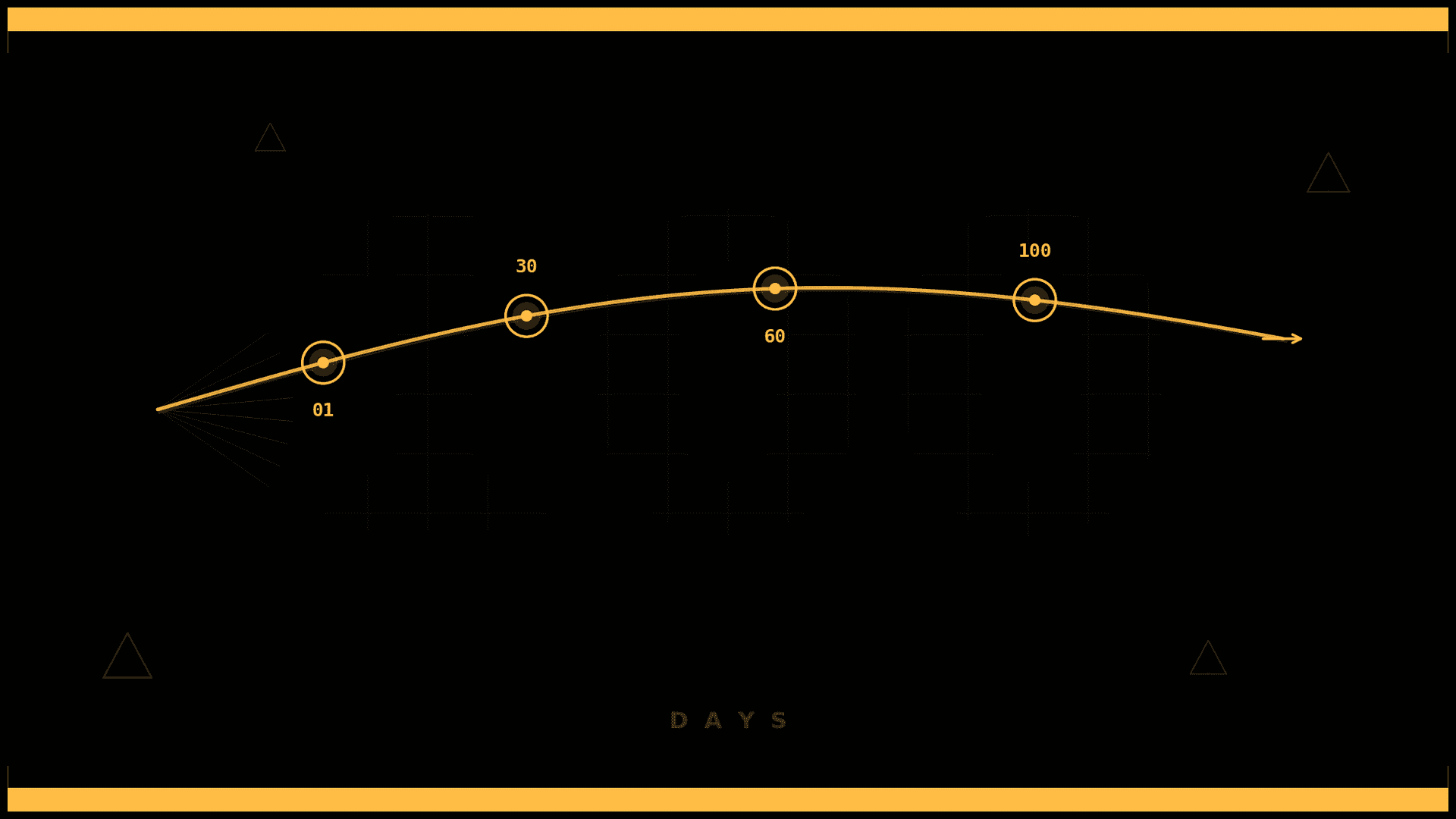
Most founders spend the first few months building a product and treating marketing like a problem they'll solve later. By the time it arrives later, competitors already own search visibility, a growing content library, and a warm inbound pipeline. You're starting from zero, playing catch-up on ground you could have been claiming from day one.
The first 100 days are not about going viral or spending large. They are about building the marketing infrastructure that compounds over time. Done right, this period sets you up for sustainable organic growth without draining your runway on channels that don't fit your stage or your audience.
Why the First 100 Days Actually Matter
Early-stage startups that establish a structured marketing foundation in the first three months grow search traffic nearly three times faster by month twelve than those who start later. The reason is not luck; it is that search engines and content platforms reward consistency and age. Every week you delay is a week of authority you cannot buy back later.
There is also a compounding psychology at play. Founders who start marketing early develop sharper messaging, a clearer ICP, and a better read on which content resonates, all before they've spent serious money. The result is a tighter funnel, less wasted budget, and faster feedback loops when scaling eventually begins.
Days 1 to 30: Build the Foundation Before You Build Traffic
The most common mistake early founders make is skipping straight to tactics. Before you write a single blog post or run a paid ad, you need a clear picture of who you're targeting and where they spend time online.
Your first 30 days should cover these fundamentals:
Define your ideal customer profile with enough precision to describe in one sentence exactly who you help and what outcome they need from you
Map out the specific search queries, communities, and platforms where your ICP looks for answers to the problems your product solves
Audit your website for technical SEO issues, including page speed, mobile responsiveness, crawlability, and structured data gaps
Set up Google Search Console and Google Analytics from day one to capture baseline data before any activity begins
Research your top three competitors and identify what they rank for, where they earn backlinks, and which content pieces drive the most traffic to their sites
According to HubSpot's State of Marketing Report, companies that publish consistent blog content generate 67% more monthly leads than those that don't. That advantage only materializes when your site is technically sound and ready to convert the traffic that content brings in.
Brand positioning also needs to be locked in before content creation starts. Every article you publish sends a signal to Google about what your site covers. Mixed signals during this early phase create an authority gap that can take several months to close.
Table 1: 100-Day Marketing Priority Matrix
Phase | Days | Primary Focus | Expected Output |
|---|---|---|---|
Foundation | 1 to 30 | ICP definition, technical SEO, competitor audit | Site audit complete, ICP documented, analytics live |
Visibility | 31 to 60 | Content creation, link building, cold outreach | 4 to 6 blog posts published, 5 to 15 new backlinks earned |
Scale | 61 to 100 | Double-winning content, conversion optimization | Qualified leads, measurable ranking movement |
Days 31 to 60: Start Building Visibility and Search Presence
Once the foundation is solid, you have what you need to start generating early search presence and brand awareness in the right channels.
Three areas deserve focused attention during this phase:
Organic search is your long-term compounding asset. Publish your first four to six keyword-targeted articles around the problems your ICP is actively searching for. Target long-tail, intent-rich phrases rather than broad, high-competition terms that take months to move on
Content distribution is where most founders leave traffic on the table. Share each published piece across LinkedIn, relevant Reddit communities, and niche Slack groups, not as promotional spam, but as genuine contributions to conversations already taking place
Link acquisition builds the domain authority that converts content into rankings. Get listed in startup directories, pitch niche industry blogs for guest placements, and earn your first credible backlinks from relevant, established domains
A structured content strategy does more than fill a blog. It positions your brand as the reference resource in your category before you have the budget to pay for attention at scale.
This is also the right phase to test cold outreach if you're in a B2B market. A well-targeted email outreach sequence built around a specific offer and clean, personalized copy can generate qualified conversations well before SEO has time to compound into meaningful traffic.
According to Ahrefs, 90.63% of pages on the web receive zero organic traffic from Google. The reason is almost always the same: there was no strategy behind the content, just publishing and hoping for results that never arrive.
Days 61 to 100: Double Down and Start Scaling
By day 60, you'll have real data to act on instead of assumptions. Analytics will tell you which topics bring traffic, which CTAs convert, and which channels send the right kind of visitors to your pages.
During this final phase, prioritize these moves:
Identify your two or three best-performing content pieces and expand them with updated statistics, additional depth, stronger examples, and deliberate internal linking throughout the rest of your site
Optimize your Google Business Profile if applicable, and submit to niche vertical directories that your target buyers actually use
Build a repeatable publishing cadence, one to two quality-focused articles per week, consistently outperforms six mediocre posts published in a burst and then forgotten
Add conversion infrastructure: a lead magnet tied to your ICP's biggest problem, a newsletter capture mechanism, and a clear journey from blog reader to booked call or trial signup
Organic growth compounds in a way that paid channels don't. Each piece of published content, every earned backlink, and every optimized page adds to a base that grows stronger the longer you maintain it.
Your SEO strategy at this stage should also account for answer engine optimization. AI Overviews and tools like Perplexity are reshaping how decision-makers find information. Getting your content cited in those results adds a second layer of visibility that most early-stage founders are still ignoring entirely.
According to Search Engine Journal, Google processes over 8.5 billion searches every single day. A portion of those queries belongs to buyers who are right now looking for exactly what you have built.
What Most Founders Get Wrong in This Window
Chasing too many channels simultaneously. Posting across every social platform without a clear distribution plan or ICP fit. Hiring a generalist agency before defining measurable goals or a coherent brief. Treating content marketing as a checkbox activity rather than a long-term asset that appreciates with consistent investment.
The founders who win in this 100-day window don't do more. They commit to fewer things, execute with sharper focus, and stay consistent longer than competitors are willing to. The first 100 days are not about traction; they're about building the machine that produces traction six, nine, and twelve months from now.
A focused blog writing program combined with a technically clean site, deliberate link building, and disciplined distribution creates a defensible position in search rankings, one that becomes significantly harder to displace the more time and effort you put into it.
Measuring Progress Without Obsessing Over Metrics
Founders often measure too early and draw wrong conclusions. Organic search takes time to reflect the work done. A better approach is to track leading indicators during the first 100 days rather than lagging ones.
Watch these signals instead of pure traffic numbers:
Number of pages indexed by Google each week, confirming your content is being discovered and crawled
Keyword rankings are moving from unranked to positions 20 to 50, which signals that Google is testing your content before committing to a higher position
Backlink acquisition velocity: How many new referring domains are linking to your site each month
Email list growth is a direct indicator of content that is resonating enough to earn genuine trust from readers
Qualified leads or booked calls attributable to content, even at low volume, confirming the funnel is working
Progress in search is not always visible in traffic data for the first two to three months. Founders who understand this build steadily and don't pull the plug before results have time to surface.
Table 2: Channel Performance Benchmarks for Early-Stage Startups
Channel | Time to Results | Cost Level | Scalability | Best Use Case |
|---|---|---|---|---|
Organic SEO | 3 to 6 months | Low | Very High | Long-term lead generation and brand authority |
Content Marketing | 2 to 4 months | Low | High | Trust building, search presence, audience growth |
Cold Email | 2 to 4 weeks | Low | Medium | B2B direct outreach and pipeline generation |
Paid Ads | Immediate | High | Medium | Short-term channel testing and retargeting |
Guest Posting | 1 to 3 months | Medium | Medium | Domain authority building and referral traffic |
The Compounding Advantage That Most Founders Miss
There's a version of your company that spent the first 100 days tweaking the product. And there's the version that spent those same days building distribution. Twelve months in, those two paths look completely different.
Content, backlinks, and email subscribers don't depreciate the way paid ad spend does. Every asset you build in these first 100 days is still working for you at month six, month twelve, and beyond. A well-optimized piece of content published in week four can rank higher at the end of year one than it did when it was first indexed.
The compounding nature of organic marketing is exactly why starting early matters more than starting perfectly. You don't need a flawless strategy on day one. You need a workable strategy executed consistently enough to accumulate data, ranking signals, and audience trust over time.
Founders who treat the first 100 days as a learning phase, publishing, measuring, adjusting, and rebuilding, end up with a clearer model, a warmer audience, and a much shorter path to scalable growth than those who wait for conditions to feel right before starting.
Suggested Data Visualizations for This Article
The following graph types are recommended to complement this content and reinforce key data points visually:
Radar Chart: Startup channel readiness score. Plot five dimensions: SEO readiness, Content output, Email outreach, Social distribution, and Paid testing. Show two overlapping profiles: Day 1 vs. Day 100 founders.
Donut Chart: Marketing budget allocation for early-stage startups in months 1 to 12. Segments: Content and SEO (40%), Outreach and PR (25%), Tools and Tech (20%), Paid Testing (15%).
Stacked Bar Chart: Monthly organic traffic growth trajectory across three founder types: those who started marketing in month 1, month 3, and month 6. Show 12-month timeline.
FAQs
What should a startup founder focus on in the first 30 days of marketing?
Your priority in the first 30 days is foundation, not traffic. Define your ICP, fix technical SEO issues on your site, install analytics, and audit what competitors are doing in search. You cannot build on unstable ground.
How long does it take for content marketing to show real results?
Most SEO-driven content takes three to six months to produce measurable organic traffic. However, early signals like indexation, ranking movement into positions 20 to 50, and email captures appear within the first 60 days if content is properly optimized.
Should a startup hire a marketing agency in the first 100 days?
It depends on execution capacity. If you cannot consistently produce and distribute content, an agency with startup experience is worth it early. The risk is hiring generalists without a clear brief. You need a team that understands your ICP and can tie everything back to organic growth metrics.
How do I know which marketing channels to prioritize as a founder?
Start with channels where your ICP already spends time and where intent is high. For most B2B SaaS founders, organic search and LinkedIn outreach deliver the best ROI in the first 100 days. Add channels only when you have data showing early traction on your core two.
What is the most cost-effective marketing strategy for early-stage startups?
Content-driven SEO combined with targeted cold outreach gives early-stage startups the strongest ROI against budget. Both compounds, over time and don't require ongoing ad spend to sustain momentum. The upfront investment is in strategy and content quality, not media budget.
The first 100 days will not make or break your startup. But they do set a trajectory. Founders who treat this window as a real marketing phase, not a warmup, enter month four with ranking content, active leads, and a clear view of what's working. Those who skip it spend that time rebuilding from zero.
There's no perfect playbook. But there is a proven sequence: fix the foundation, start building visibility, scale what the data tells you is working. Repeat consistently. The founders who follow this framework don't just survive the first 100 days; they build the kind of organic growth engine that keeps generating results long after the campaign ends.
Viral Impact works exclusively with SaaS startups and B2B tech companies ready to build real search visibility and organic momentum from day one.
Book a free strategy session at Viral Impact and get a custom roadmap built for your stage.
Read more
Learn which marketing skills remain irreplaceable as AI transforms search, content, and strategy for the next decade.

Learn how to reposition your startup brand after a pivot and maintain marketing momentum without losing your audience.
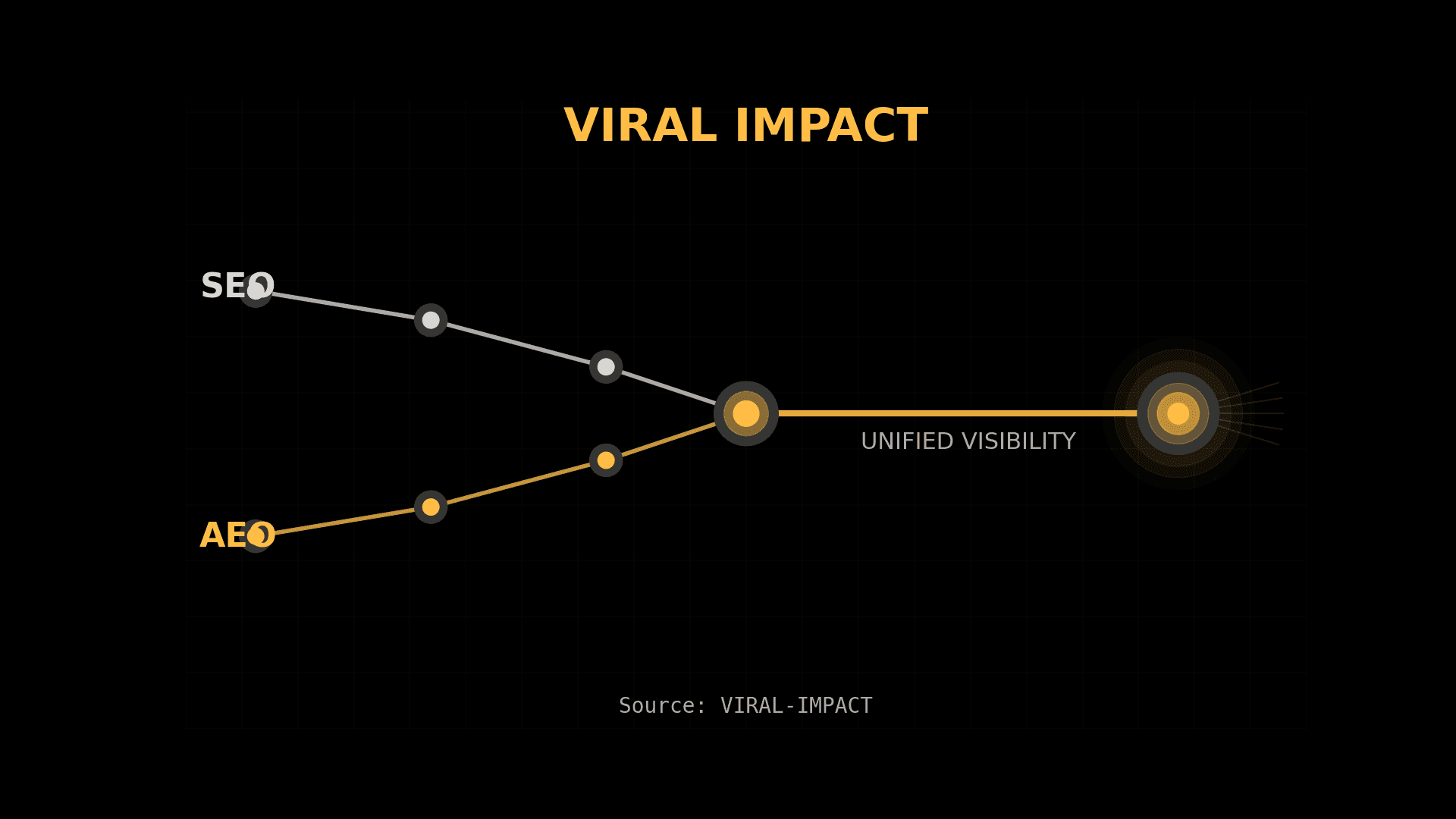
Learn the key differences between AEO and SEO and discover which strategy your startup should prioritize in 2026.